
In today’s world, one wrong headline, viral post, or sketchy association can unravel years of credibility.
A resurfaced tweet. A sealed court record. A “business partner” with an inflated resume. These aren’t rare cases; they’re reality.
We’ve seen celebrities lose endorsements, companies tank mergers, and high-profile professionals get blindsided, all because someone didn’t do their homework.
That’s where background investigations come in. Done right, they don’t just protect you; they help you make smarter, safer decisions. Whether you’re exploring a partnership, fighting some legal claims, or just putting suspicions to rest, real due diligence gives you peace of mind and evidence-based knowledge.
Ethical Background Checks: Using OSINT the Right Way
We lead with ethics—always. Every investigation we conduct is grounded in strict legal and ethical standards, respecting both privacy and the law at every step.
While there are plenty of ways to dig up information, we stick to public, open-source intelligence and official records.
Why?
Because transparency, accuracy, and trust matter more than ever.
The wild part? Most folks don’t realize just how much of their life is floating around online, buried in court filings, tucked into tax rolls, or hiding in a forgotten Facebook post from 2009. Today’s data-rich world means public information is everywhere; you just have to know where—and how—to look. Using OSINT, we comb through massive volumes of public data, connect the dots, and deliver clear, unbiased reports that help you make confident decisions.
We use no hacking and no shady tactics, just intelligence and the effective use of ethically sourced public data.
Not Sure Where to Start? Ask Yourself the Whys
Every productive investigation begins with a purpose.
Maybe you’re worried about whom you can trust. Maybe someone’s story doesn’t quite add up. Or maybe you just want to be sure before you sign that contract, make that hire, or put your name on the line.
Ask yourself:
- What do I need to know that I don’t already know?
- What’s the worst-case scenario I’m trying to avoid?
- Am I looking to relieve a gut feeling or clear up a blind spot?
Clarity matters here.
Without a clear why, investigations can become aimless and expectations can be shattered. With a clear goal, there are no questions of whether you did this or you looked there.
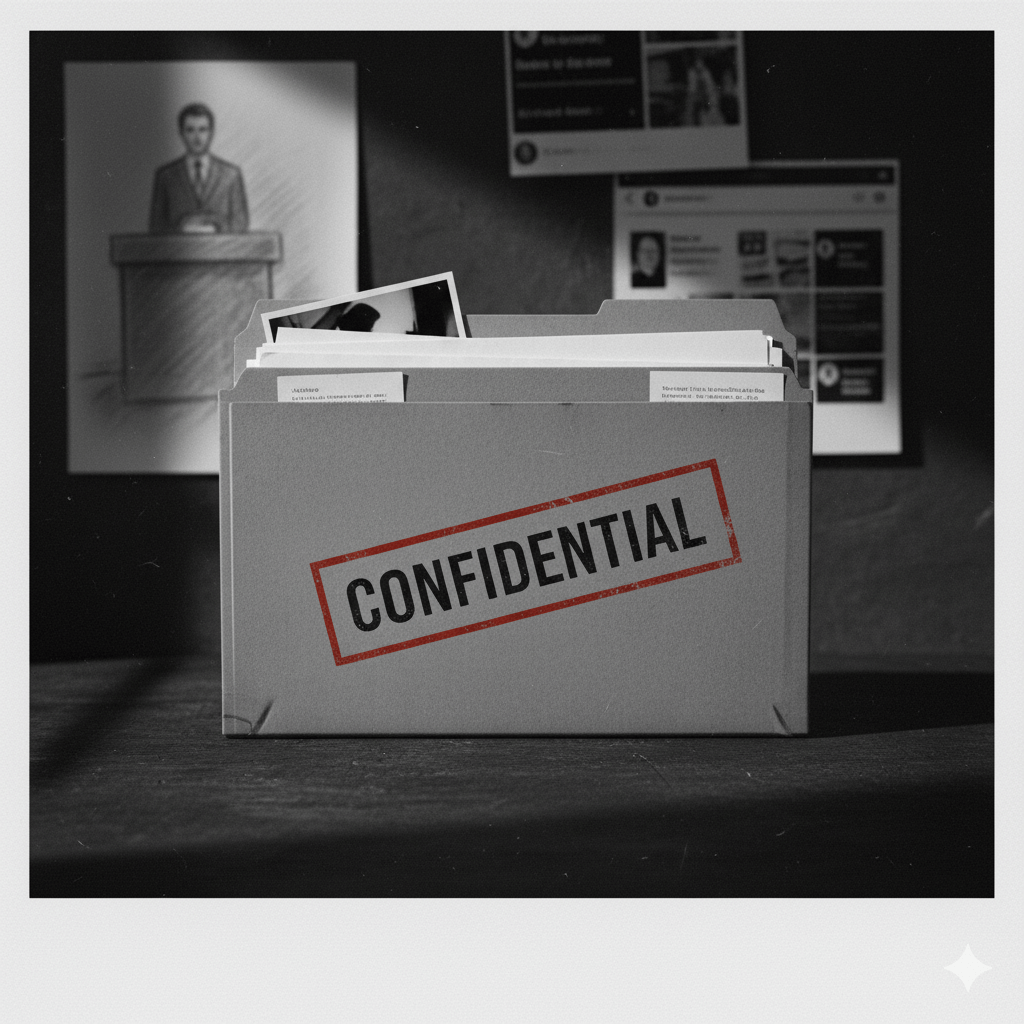
Here’s the thing: Most red flags aren’t hidden behind passwords. They’re sitting in plain sight in public records, social media, or official databases. The key is knowing what to look for, why it matters, and what to do with the findings.
Whether your goal is to verify, uncover, prevent, or protect, we align every part of our investigation with that north star. It keeps the research tight, relevant, and impactful.
Because when the stakes are high, the worst thing you can do is not ask the right questions.
Prefer to Start on Your Own?
At the most basic level, you can take the do-it-yourself approach. Not all investigations need to go full Sherlock Holmes mode off the jump.
Depending on what you’re trying to verify, sometimes you just want to take the first few steps yourself. And honestly, that’s not a bad move, because doing something is better than doing nothing.
Simple background checks can start with a well-crafted Google search. Social media profiles, news mentions, and even court records in some states are easily searchable online. Dozens of low-cost background check services can pull basic details like addresses, phone numbers, names of relatives, and criminal records.
Just keep in mind that these tools often provide surface-level or outdated info, and they don’t distinguish between someone with the same name in another state and your subject. We’ve seen automated reports miss glaring red flags or, worse, flag the wrong person entirely.
If you’re starting there, great. But if the results raise more questions than answers or if what’s at stake is worth taking seriously, it might be time to dig deeper with professional help.
When to Bring in the Pros
If you need real answers quickly and have a minimal budget, our Red Flag Background Investigation is often the best place to start.
It’s far more thorough than any generic online background check. We don’t rely on automated reports or surface-level snapshots. Instead, we methodically review the past 10 years of court filings, criminal records, professional licenses, and online behavior, looking for signs of deception, instability, or patterns that warrant concern.
This level of research is ideal when you need to confirm that someone’s clean or to know for sure if they’re not. We’re often brought in to vet potential investors, business partners, or plaintiffs in legal disputes before the pen hits paper. Think of it as your due diligence firewall—focused, fast, and able to catch what surface tools miss.
Here’s what that looks like in practice:
- A healthcare investor we work with acquires small medical clinics across the U.S. These aren’t massive deals, but they’re still high-risk matters in a highly regulated industry. A $20,000 investigation wouldn’t make sense, but neither would a quick Google search. That’s where we come in. We analyze court records, licensing boards, and social media to flag anything that might signal trouble. It’s just the right overview level to protect the deal without overextending the budget.
Red Flag Background Investigations are designed to surface the truths that change outcomes quietly, efficiently, and without breaking the budget—and before it’s too late.
Need a Deep-Dive Background Investigation?
When the stakes are higher—eight-figure investments, complex litigation, high-profile partnerships—you can’t afford to make assumptions. You need the whole picture.

Our Deep-Dive Background Investigation goes far beyond basic checks. We reach back 25 to 30 years or more, connecting the dots across assets, legal entanglements, business ties, behavioral patterns, and hidden risks. It’s not just about what someone has done—it’s about how their past could impact your future with them.
Here’s what that looks like in the real world:
- A global conglomerate asked us to vet the leadership team of a public company they were planning to acquire. The CEO looked perfect—until minor inconsistencies in his biographies led us to dig deeper. Yearbooks didn’t list him. Graduation records were missing. The truth? He never attended the school he claimed to have graduated from. That lie broke his credibility and the entire deal.
Unlike a Red Flag Background Investigation, a Deep-Dive Investigation goes that extra step to ensure no stone is left unturned and your concerns are turned into answers.
Let’s Start Digging
Public records are out there, but finding them is only half the battle. The real challenge? Knowing how to dig, verify, and understand court filings, property records, voter rolls, political donations, and business documents.
Official records like DMV data, degree verifications, or licensing checks are foundational. These concrete pieces of information add validity to data that may seem insignificant in the bigger picture, but if they’re incorrect, they can change an entire investigation.
To put it into perspective, a simple court record search for “John Smith” in New York can return hundreds of results. Using verified information and sorting through that noise take time, training, and a sharp eye.
Social media, meanwhile, gives us a candid window into someone’s life and relationships, affiliations, behaviors, and values. We’ve traced business investors back to high school friend groups, exposed lifestyle contradictions, and surfaced patterns no public record would reveal.
And increasingly, breach data has become a powerful investigative tool. When email addresses or usernames appear in data leaks—from forums, financial platforms, dating sites, or even adult websites—it can reveal associations most people would never disclose. These details can provide crucial links to hidden assets, business activity, or behavioral patterns.
If we feel our resources have been exhausted, another step we can take is to go directly to the source. Interviews are a powerful method of data collection that can confirm, challenge, or expand on what we’ve already uncovered, adding context, nuance, and occasionally the missing link that ties everything together.
Our comprehensive approach to investigations combines various tools and proven methods for cross-referencing records, spotting inconsistencies, and confirming identities.
The bottom line? Anyone can search, but making sense of what you find is where we come in.
Why Even the Best Background Checks Have Limits
Even the most rigorous background investigation isn’t a crystal ball.
You can dig deep into someone’s past and find a manicured lawn, a picket fence, and a picture-perfect appearance but still end up blindsided. A clean record doesn’t mean clean behavior forever. It just means nothing’s happened … yet.

We’ve seen people with spotless records spiral six months into a business deal. We’ve watched clients get burned by folks who “checked every box” on paper but whose judgment unraveled under pressure.
Even the most prestigious executives have made headlines after appearing on the jumbotron at a Coldplay concert, revealing their personal affairs. You can’t make this stuff up. Sometimes there were no warning signs.
The truth is due diligence is about reducing risk, not removing it. It gives you the best possible information today so you can make smart decisions tomorrow. But humans are unpredictable. That’s why context and patterns matter as much as data points.
Better Safe Than Sorry: Why This Work Pays Off
The truth is that most people aren’t hiding anything. But the ones who are often slip through the cracks simply because no one checked.
A thorough background investigation isn’t just smart; it’s often the difference between a smooth partnership and a PR nightmare.
We’re here to help you avoid that.
Let’s dig deeper, ask the right questions, and keep your reputation clean before it ever gets tested.