Posts

In today’s world, one wrong headline, viral post, or sketchy association can unravel years of credibility.

A resurfaced tweet. A sealed court record. A “business partner” with an inflated resume. These aren’t rare cases; they’re reality.

We’ve seen celebrities lose endorsements, companies tank mergers, and high-profile professionals get blindsided, all because someone didn’t do their homework.

That’s where background investigations come in. Done right, they don’t just protect you; they help you make smarter, safer decisions. Whether you’re exploring a partnership, fighting some legal claims, or just putting suspicions to rest, real due diligence gives you peace of mind and evidence-based knowledge.

Ethical Background Checks: Using OSINT the Right Way

We lead with ethics—always. Every investigation we conduct is grounded in strict legal and ethical standards, respecting both privacy and the law at every step.

While there are plenty of ways to dig up information, we stick to public, open-source intelligence and official records.

Why?

Because transparency, accuracy, and trust matter more than ever.

The wild part? Most folks don’t realize just how much of their life is floating around online, buried in court filings, tucked into tax rolls, or hiding in a forgotten Facebook post from 2009. Today’s data-rich world means public information is everywhere; you just have to know where—and how—to look. Using OSINT, we comb through massive volumes of public data, connect the dots, and deliver clear, unbiased reports that help you make confident decisions.

We use no hacking and no shady tactics, just intelligence and the effective use of ethically sourced public data.

Not Sure Where to Start? Ask Yourself the Whys

Every productive investigation begins with a purpose.

Maybe you’re worried about whom you can trust. Maybe someone’s story doesn’t quite add up. Or maybe you just want to be sure before you sign that contract, make that hire, or put your name on the line.

Ask yourself:

  • What do I need to know that I don’t already know?
  • What’s the worst-case scenario I’m trying to avoid?
  • Am I looking to relieve a gut feeling or clear up a blind spot?

Clarity matters here.

Without a clear why, investigations can become aimless and expectations can be shattered. With a clear goal, there are no questions of whether you did this or you looked there.
Here’s the thing: Most red flags aren’t hidden behind passwords. They’re sitting in plain sight in public records, social media, or official databases. The key is knowing what to look for, why it matters, and what to do with the findings.

Whether your goal is to verify, uncover, prevent, or protect, we align every part of our investigation with that north star. It keeps the research tight, relevant, and impactful.

Because when the stakes are high, the worst thing you can do is not ask the right questions.

Prefer to Start on Your Own?

At the most basic level, you can take the do-it-yourself approach. Not all investigations need to go full Sherlock Holmes mode off the jump.

Depending on what you’re trying to verify, sometimes you just want to take the first few steps yourself. And honestly, that’s not a bad move, because doing something is better than doing nothing.

Simple background checks can start with a well-crafted Google search. Social media profiles, news mentions, and even court records in some states are easily searchable online. Dozens of low-cost background check services can pull basic details like addresses, phone numbers, names of relatives, and criminal records.

Just keep in mind that these tools often provide surface-level or outdated info, and they don’t distinguish between someone with the same name in another state and your subject. We’ve seen automated reports miss glaring red flags or, worse, flag the wrong person entirely.

If you’re starting there, great. But if the results raise more questions than answers or if what’s at stake is worth taking seriously, it might be time to dig deeper with professional help.

When to Bring in the Pros

If you need real answers quickly and have a minimal budget, our Red Flag Background Investigation is often the best place to start.

It’s far more thorough than any generic online background check. We don’t rely on automated reports or surface-level snapshots. Instead, we methodically review the past 10 years of court filings, criminal records, professional licenses, and online behavior, looking for signs of deception, instability, or patterns that warrant concern.

This level of research is ideal when you need to confirm that someone’s clean or to know for sure if they’re not. We’re often brought in to vet potential investors, business partners, or plaintiffs in legal disputes before the pen hits paper. Think of it as your due diligence firewall—focused, fast, and able to catch what surface tools miss.

Here’s what that looks like in practice:

  • A healthcare investor we work with acquires small medical clinics across the U.S. These aren’t massive deals, but they’re still high-risk matters in a highly regulated industry. A $20,000 investigation wouldn’t make sense, but neither would a quick Google search. That’s where we come in. We analyze court records, licensing boards, and social media to flag anything that might signal trouble. It’s just the right overview level to protect the deal without overextending the budget.

Red Flag Background Investigations are designed to surface the truths that change outcomes quietly, efficiently, and without breaking the budget—and before it’s too late.

Need a Deep-Dive Background Investigation?

When the stakes are higher—eight-figure investments, complex litigation, high-profile partnerships—you can’t afford to make assumptions. You need the whole picture.

Our Deep-Dive Background Investigation goes far beyond basic checks. We reach back 25 to 30 years or more, connecting the dots across assets, legal entanglements, business ties, behavioral patterns, and hidden risks. It’s not just about what someone has done—it’s about how their past could impact your future with them.

Here’s what that looks like in the real world:

  • A global conglomerate asked us to vet the leadership team of a public company they were planning to acquire. The CEO looked perfect—until minor inconsistencies in his biographies led us to dig deeper. Yearbooks didn’t list him. Graduation records were missing. The truth? He never attended the school he claimed to have graduated from. That lie broke his credibility and the entire deal.

Unlike a Red Flag Background Investigation, a Deep-Dive Investigation goes that extra step to ensure no stone is left unturned and your concerns are turned into answers.

Let’s Start Digging

Public records are out there, but finding them is only half the battle. The real challenge? Knowing how to dig, verify, and understand court filings, property records, voter rolls, political donations, and business documents.

Official records like DMV data, degree verifications, or licensing checks are foundational. These concrete pieces of information add validity to data that may seem insignificant in the bigger picture, but if they’re incorrect, they can change an entire investigation.

To put it into perspective, a simple court record search for “John Smith” in New York can return hundreds of results. Using verified information and sorting through that noise take time, training, and a sharp eye.

Social media, meanwhile, gives us a candid window into someone’s life and relationships, affiliations, behaviors, and values. We’ve traced business investors back to high school friend groups, exposed lifestyle contradictions, and surfaced patterns no public record would reveal.

And increasingly, breach data has become a powerful investigative tool. When email addresses or usernames appear in data leaks—from forums, financial platforms, dating sites, or even adult websites—it can reveal associations most people would never disclose. These details can provide crucial links to hidden assets, business activity, or behavioral patterns.

If we feel our resources have been exhausted, another step we can take is to go directly to the source. Interviews are a powerful method of data collection that can confirm, challenge, or expand on what we’ve already uncovered, adding context, nuance, and occasionally the missing link that ties everything together.

Our comprehensive approach to investigations combines various tools and proven methods for cross-referencing records, spotting inconsistencies, and confirming identities.

The bottom line? Anyone can search, but making sense of what you find is where we come in.

Why Even the Best Background Checks Have Limits

Even the most rigorous background investigation isn’t a crystal ball.

You can dig deep into someone’s past and find a manicured lawn, a picket fence, and a picture-perfect appearance but still end up blindsided. A clean record doesn’t mean clean behavior forever. It just means nothing’s happened … yet.

We’ve seen people with spotless records spiral six months into a business deal. We’ve watched clients get burned by folks who “checked every box” on paper but whose judgment unraveled under pressure.

Even the most prestigious executives have made headlines after appearing on the jumbotron at a Coldplay concert, revealing their personal affairs. You can’t make this stuff up. Sometimes there were no warning signs.

The truth is due diligence is about reducing risk, not removing it. It gives you the best possible information today so you can make smart decisions tomorrow. But humans are unpredictable. That’s why context and patterns matter as much as data points.

Better Safe Than Sorry: Why This Work Pays Off

The truth is that most people aren’t hiding anything. But the ones who are often slip through the cracks simply because no one checked.

A thorough background investigation isn’t just smart; it’s often the difference between a smooth partnership and a PR nightmare.

We’re here to help you avoid that.

Let’s dig deeper, ask the right questions, and keep your reputation clean before it ever gets tested.

Enjoyed What You Read?

Join 2,000+ others to get insider tips and tricks delivered to your inbox from what has been voted the best blog in the investigative industry!

Have you ever tried to find someone, an ex-employee, a key witness, or someone who has gone dark, only to hit a wall, even after hiring a private investigator?

Why do most “locate reports” come up short when the person you’re trying to find actually doesn’t want to be found? And why is it so hard to get real answers when you need them most?

Last week, I shared some interesting case studies to find people, but in this article, I’ll share why most people-search services and investigative firms fail, even when they have access to professional databases. I’ll also show you the tools, methods, and decision-making frameworks we’ve used to locate individuals others could not, even after multiple firms had tried and failed to find these hard-to-find people.

 You’ll learn:

  • Why most locate reports are just data dumps (and what that really means for your case)
  • The tools we rely on when someone’s gone dark
  • Real-world tactics that go far beyond software or subscriptions

Because in the world of serious investigations, it’s not about magic tools—it’s about experience, strategy, and knowing where to look when the usual methods fall flat.

When Typical Locate Reports Fail

If you’re trying to track down someone like Jane—a stay-at-home mom who’s lived at the same address with her husband and kids for the last 15 years—then a standard locate report might actually work. Running her name through professional databases like IDI or TLO, or even a commercial subscription service like Intelius, TruthFinder, or Spokeo, could turn up the right address. These tools tend to do well when the person hasn’t moved much, has kept consistent records, and hasn’t tried to hide.

And then there are the cases where we’re given almost nothing to start with. A first name, maybe a city, a former employer, or sometimes just a vague connection. Like “He used to work construction in Phoenix,” or “She might’ve gone to school in North Carolina.” No last name, no date of birth, no address history. That’s when the real work begins. These aren’t just data searches; they’re puzzles. In those situations, it’s about pattern recognition, creative pivots, and looking where others never think to look. You can’t just run a report; you must build the story from scraps.

We get called in when the usual tools fall flat. When someone has changed names, moved without leaving a forwarding address, or deliberately scrubbed their digital footprint. That’s when the copy-and-paste locate reports from cheaper services not only fall short, they give a false sense of confidence. They tell you what might be true, not what’s provable. And in legal or high-stakes situations, “maybe” doesn’t cut it.

Common Mistakes Investigators Make, and How to Avoid Them

In the majority of failed investigations we’re called in to clean up, one thing stands out: the previous investigator relied on a single source of information and came up empty.

Law firms often send us the locate report from their last PI, and what we see is almost always the same: a cut-and-paste export from a professional database like TLO, IDI, or Delvepoint. That’s it. No verification, no context, no narrative. Just raw data that assumes the last known address is current and that every record is accurate.

Here’s the hard truth: dumping data into a PDF isn’t an investigation; it’s wishful thinking dressed up as a deliverable.

If you want real results, you have to think beyond the screen.

Common Mistakes That Cause Investigations to Fail

Below are some of the most common mistakes we see other investigators make, and why they fail:

Overreliance on a Single Database

Too many investigators pull data from one source, like TLO, and assume the most recent address or phone number listed is valid. But no single database has everything. Each pulls from different public records, credit headers, utility info, and scraping sources, all of which have gaps.

Why it fails: If the person has changed names, moved recently, or taken steps to avoid detection, that single-source data may already be outdated, or intentionally misleading.

No Cross-Verification of Key Data Points

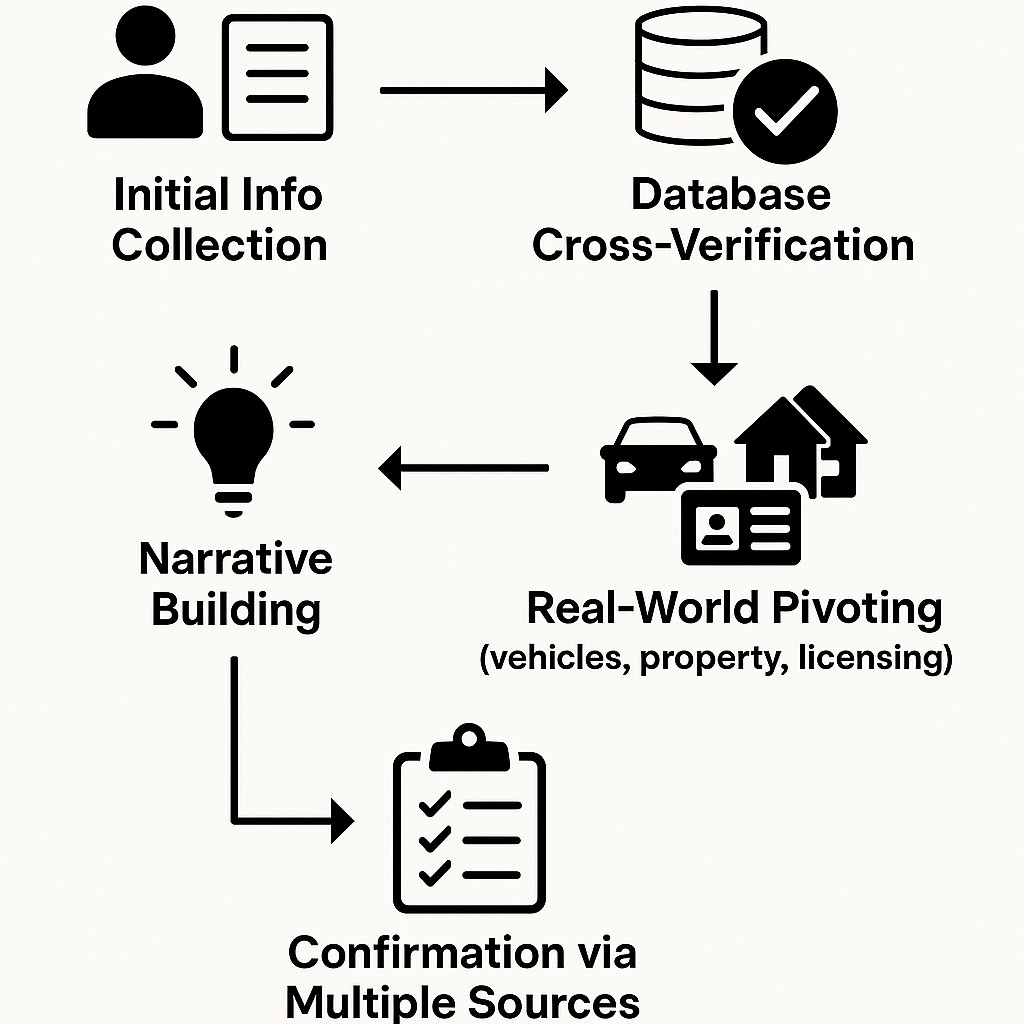
Even if you find an address in a database, that doesn’t mean the person lives there. Good investigators cross-verify that information with other records: DMV data, voter rolls, property deeds, court filings, and more.

Why it fails: Without a second or third source confirming the same address, you’re building your case on a maybe, and in legal or high-stakes matters, “maybe” isn’t good enough.

Lack of Context or Narrative

Dumping data ≠ solving the problem. Raw data can’t tell a story. It doesn’t explain why someone moved, or how different addresses might connect through a relative, job, or phone record. Or if the address is just one of many database errors. 

Why it fails: Dumping a dozen addresses into a report without explaining their timeline or relevance leaves clients confused and misled. Worse, it can send legal teams in the wrong direction.

Failing to Pivot When the Trail Goes Cold

When the database comes up short, some investigators stop. They assume that’s the end of the road, or the client is unwilling to pay for it. But real investigations are about creative pivots like using vehicle sightings, licensing records, breach data, or social media breadcrumbs to find a new lead.

Why it fails: People who don’t want to be found leave misleading trails on purpose. You can’t out-database someone who’s hiding. You need real-world logic and lateral thinking.

Assuming the Client Won’t Notice

Some firms cut corners, assuming the client won’t know the difference between a thorough search and a recycled report. This might be a news flash to some people, but law firms have access to TLO, just like investigative firms. That might work once, but not twice. Law firms, in particular, can spot a lazy locate when they see one, and if they’re sending that report to us, it means they already know it didn’t deliver.

Why it fails: Credibility matters. And once your client sees that all you did was regurgitate a database export, they won’t call again.

What Actually Works

There’s no magic tool or one-size-fits-all method. Real results come from layering multiple data sources, confirming what’s real, and using logic, pattern recognition, and persistence to build a narrative that makes sense.

It’s not about copying data. It’s about connecting dots.

How Real Investigations Begin: What You Need Before You Start

When I say I’ve been able to “find people,” I usually mean one of two things: I’ve got them on the phone, or I have an address, verified through multiple sources, in hand. While email addresses can be useful, in most of my work, they’re too easy to ignore to rely on.

To actually locate someone, you need more than just a name. One piece of information rarely does the job. But give me two or three reasonably solid identifiers, like where they lived, worked, or went to school, and things start to click. With three good data points, I can usually track someone down. With only one, it’s often a guessing game, unless the person has a unique name.

Too often, I see other investigators run a name through one or two databases like IDI, TLO, Delvepoint, or Tracers, grab the most recent address, and move on. That kind of surface-level work doesn’t cut it.

I believe in confirming everything. If I get an address, I want a second or third source to back it up. That might be voter rolls, DMV records, property deeds, or anything else official that strengthens the case. When you’re serious about results, you don’t settle for maybe, you prove it.

Is It Always Possible to Find Someone? Not Exactly.

I like to say everyone can be found with enough time, money, and persistence. But those things aren’t unlimited. Not every case allows for hours of stakeouts or deep dives into digital trails. The real skill lies in knowing the available tools and choosing the smartest, most efficient path forward.

That said, the idea that everyone is findable just isn’t true. Sometimes the details are too vague. Sometimes the request itself feels off. I’ve had more than a few people ask me to find someone they sat next to on a flight last Tuesday, or someone they “forgot” to get a number from after a two-minute conversation.

One person once asked me to find “a guy named Tony” whom they’d met at a music festival in 2017. No last name, no city, not even a photo—just a memory of him wearing a red flannel shirt and liking old cars. That’s not an investigation. That’s a long shot at best, and throws up some red flags at worst.

What It Really Takes to Track Someone Down

Most of my work focuses on U.S.-based cases, primarily involving white collar matters. I’m not chasing international scammers or fugitives from the Most Wanted list. My cases are more grounded, but no less complex.

Often, I’m hired to locate someone who needs to be served in a legal matter. It could be someone covering their tracks or simply hard to pin down due to limited details, a common name, or a transient lifestyle.

In other cases, it’s about finding potential witnesses in civil or criminal matters, like Mike, an Uber driver in Chicago, identified only by a blurry profile picture. Sometimes it involves tracking down former employees who may have crucial knowledge, like Jeffrey Jones from Walmart in Bentonville.

And every so often, the challenge is locating someone with a common name and almost no supporting details, the kind of search where experience, persistence, and a bit of intuition make all the difference.

The Best Tools Private Investigators Use to Find Someone

People always want the list. “What tools do you use?” Here’s the truth: it’s less about having access and more about knowing how to use what you’ve got.

Some of the tools below are not so secret, but they might not be used often to track down people. We’ve worked hundreds of complex people-finding cases, including those that other firms gave up on.

Here are some field-tested tools and techniques we regularly use:

Professional People-Finding Databases (IDI, Delvepoint, etc.)

Never rely on just one. Each source has gaps. Professional investigative databases such as IDI, TLO, Delvepoint, Tracers, and IRB Search will help get a fuller picture. (I’ve had mixed success with commercially available “investigative” database websites like TruthFinder, Spokeo, BeenVerified, and Intelius, so with those, I would proceed cautiously.) One might give you a phone number, another a linked address. You wouldn’t believe how many “unfindable” people pop up once you combine enough datasets together.

License Plate Reader and Vehicle Sightings Databases

LPR databases, like those from DRN or accessible for investigators through TLO, Delvepoint or IRB Search, can be game-changers. They track where a vehicle has been spotted on city streets, in parking lots, or in driveways, using a network of vehicle-capturing cameras that roam the streets. In tough cases, when nothing else is working, a single plate hit can confirm where someone actually is. People may ditch their phone or move without a trace, but most don’t give up their car. Following the vehicle often leads to the person.

Social Media OSINT Tools and Username Tracking

Some of the most powerful clues hide behind usernames, email addresses, and phone numbers. Tools like OSINT.Industries help link social media accounts to usernames, email addresses, and telephone numbers, and Skopenow can identify accounts. WhatsMyName is useful for finding usernames across platforms, and ShadowDragon is great for linking social media accounts and conducting sophisticated, deep analysis and tracing.

Litigation Research Tools (County Courts, Pacer, Judy Records, LexisNexis, etc.)

Local county courts are a great place to start. Even the most minute detail in a traffic infraction might reveal something crucial. For deeper research, check Pacer, Recap, or Judy Records. For more comprehensive litigation coverage, you can use paid databases like LexisNexis, BloombergLaw, or Westlaw.

DMV Records and Driver Data

With permissible purposes (see the DPPA), DMV driving records and vehicle data are powerful tools for locating people. Investigative databases such as IDI, TLO, Delvepoint, Tracers, and IRB Search have some data, but it’s better to go directly to the source. Logan Registration and Denspri are excellent options for accessing individuals’ state records.

Breach Data and Credential Leaks (e.g., Dehashed, Darkside)

In a world where apps get hacked constantly, old email addresses become breadcrumbs. We’ve cracked cases using login data from parking apps, pet sites, and other random corners of the web most people forget ever existed. There are reasonably priced commercially available tools like Dehashed and Snusbase, or more sophisticated tools like Darkside from District 4 Labs.

Facial Recognition Software (e.g., FaceCheck.ID and PimEyes)

Usage of facial recognition tools may be subject to legal regulations and ethical considerations, but a few to check out include FaceCheck.ID and PimEyes.

FOIL Requests

Freedom of Information Law (FOIL) requests can be a powerful way to access records that aren’t readily available online. They’re especially helpful for military service or regulatory complaints. The catch? They often take time, and in many cases, time is the one thing we don’t have.

Professional Licensing Records

Many professions require a state-issued license—everything from doctors and nurses to electricians and nail technicians. These records often include valuable details like middle names, education history, employment status, and sometimes even home addresses. When used correctly, licensing data can be the missing link in a search.

Property Records and Deed Searches

Property records, when combined with voting data or DMV hits, can identify exactly where someone is, even if they’re trying not to be found. The local county recorder’s office is a good starting point; more in-depth research can be done on platforms like LexisNexis or Westlaw, which have a vast collection of nationwide property records, where you might find that vacation property in a neighboring state.

Google Dorking and Advanced Search Tactics

Google remains a vital tool for connecting ideas, but most people only understand it in its simplest form. Knowing how to do proper Google dorking can be a key skill. I also like to use the site MillionShort, which effectively filters out sites with too much SEO that always rank at the top, by, for example, allowing you to disregard the top 100,000 most popular sites. It’s like digging for gold in the depths of the Internet.

Employment Information

This can be a tricky area to nail down. The major investigative databases, such as IDI, TLO, Delvepoint, Tracers, and IRB Search, often fall short when it comes to current employment data. But that doesn’t mean you’re out of options. Tools like ZoomInfo and other subscription-based platforms can offer employment history, titles, and contact details. Resume databases such as Monster and Indeed sometimes surface gold, especially if someone forgot an old resume that they posted years ago. And don’t overlook LinkedIn. A Sales Navigator subscription can be incredibly helpful for tracing work history and finding professional connections. Piecing this info together from multiple sources is often the key to confirming where someone works or worked recently.

Real-World Logic: Habits, Patterns, and Gut Instinct

Sometimes it’s not about the tools; it’s about the thing between your ears. Patterns matter. Habits don’t lie. Maintenance workers live close to their job sites. Ex-partners still pick up mail. Homeless individuals still check the same drop spots. Experience teaches you what to try when the software falls short.

What Situations Require More Than Google or a Database Subscription?

Let me be blunt for a second. If you’re relying on Spokeo, Intelius, or a cheap “people search” site to find someone who doesn’t want to be found, you’re wasting your time. These platforms pull from the same shallow public records and are often filled with outdated or incomplete data.

Google isn’t much better when the person you’re looking for has gone quiet, changed addresses, or actively taken steps to disappear. When you’re dealing with serious matters, a $29/month subscription isn’t going to cut it.

Even with a single-source professional database, you may also be wasting your time.

These cases demand layered investigation, access to professional-only databases, and field-tested strategies that uncover what software alone can’t. Real results don’t come from search bars, they come from experience, creativity, and knowing how to go far beyond the screen.

Why We’re Not the Right Fit for Every Case

More often than not, we succeed, not because we have access to some secret master list, but because we know how to think differently. We don’t rely on one tool or one database. We treat each case like a puzzle, and we know where to look for the missing pieces.

But we’re not the right fit for everyone. If you’re just curious about an old classmate, missed your chance to get someone’s number, or are looking for Jane—the stay-at-home mom who’s lived in the same house for 15 years—Google or a basic subscription site might be enough. In cases like that, you don’t need us.

We come in when the search actually matters: when it’s tied to a legal case, a financial stake, or a personal loss, and you’ve already tried the usual routes. That’s when our approach makes a difference.

A client once came to us after months of trying to serve court papers to a man who had vanished. They’d tried three different firms. Nothing worked. We found him in four days, because we didn’t stop at databases. We followed the trail until it made sense.

If your situation feels like that, and you’re ready for someone to actually solve the puzzle, we’re here. Just know that we can’t promise magic.

Final Thoughts: Finding People Takes More Than a Database

In the past, you may have tried to locate someone using online search tools or hired a firm that delivered little more than a database printout, only to end up with more questions than answers. And if the stakes were high, that kind of uncertainty probably wasn’t just frustrating but costly as well.

Now you’ve seen the difference that layered tools, strategy, and real investigative experience can make. Whether it’s identifying the right John Smith in a city of hundreds or tracking down someone who’s gone completely off the grid, the right process makes all the difference. Moving forward, if you’re facing a legal, personal, or financial matter where getting it right actually matters, and you’re tired of surface-level work, we’re here to help. We don’t deal in guesses. We deal in results.

Enjoyed What You Read?

Join 2,000+ others to get insider tips and tricks delivered to your inbox from what has been voted the best blog in the investigative industry!

For the first time in Diligentia Group’s history, we are hiring. 

Well, that’s sort of a lie. 

We are actually six people strong now, but we’ve never had an open job opening that we needed to fill. In the past, we have hired people I knew, or were at the right place at the right time. I’ve generally taken the approach of “hiring when it hurts,” which I learned from 37 Signals.

As a small business owner, my company is my baby, so finding the right person is just as much about finding the person with the right skillset, as it is about finding the right personality and fit. 

The work we do is pretty fascinating, has taken us to some pretty amazing places, and being part of a small team means we all get our hands dirty. 

And I mean that pretty literally.

We’re looking for a sharp, detail-oriented investigator with 2 to 5 years of experience, a strong background in public records research, OSINT, and data analysis to conduct deep-dive investigations, compile comprehensive reports, and present key findings with clarity and precision. 

The ideal person is a versatile problem-solver with excellent writing skills, hands-on experience with investigative tools, and the ability to juggle multiple projects while uncovering critical insights.

If that sounds interesting, you have the right set of skills, and you want to join a small but growing investigative firm, feel free to drop a line.

Maybe I’ll see you on the other side.


Diligentia Group Senior Analyst Job Opening – March 2025

Company Description

At Diligentia Group, we’re a small but growing investigative firm based in Westchester County, New York, specializing in due diligence, background investigations, and litigation support for businesses, law firms, and financial institutions. We’re all about delivering thorough, accurate, and actionable intelligence that helps our clients make smart decisions and manage risks effectively. Our team of sharp, curious professionals uses advanced research techniques and deep industry knowledge to uncover critical insights with precision and integrity.

Role Description

We’re looking for a Senior Analyst to play a key role in our investigative projects—think due diligence, litigation support, and complex research assignments. If you’re passionate about digging into the details, connecting the dots, and uncovering the bigger picture, this role is for you. You’ll dive into open-source intelligence (OSINT), apply advanced investigative methods, and deliver detailed, insightful reports that help guide strategic decisions and legal strategies. While this role is primarily research-focused, we’re a nimble, adaptable firm where versatility is key. You’ll have the opportunity to contribute to various aspects of investigative work—including conducting witness interviews, locating individuals, and engaging in fieldwork as needed. No two days are the same, and that’s exactly how we like it.

What You’ll Do

  • Conduct deep-dive research using public records, databases, and other sources to uncover relevant information.
  • Analyze data from social media, public records, and online sources to support investigative objectives.
  • Compile comprehensive background reports with clear, concise, and actionable findings.
  • Present key insights through well-crafted written reports and occasional verbal briefings to case managers and clients.
  • Juggle multiple projects simultaneously, meeting deadlines without compromising accuracy or attention to detail.
  • Versatility and adaptability to take on diverse tasks, from deep-dive research to conducting interviews, locating individuals, and occasional fieldwork.

What You Bring

  • Strong expertise in U.S. public records research—litigation documents, corporate filings, regulatory records, and more.
  • Skilled at navigating social media platforms and leveraging them for investigative purposes.
  • Hands-on experience with investigative tools like LexisNexis, Maltego, and other specialized databases.
  • Exceptional writing skills with a knack for turning complex investigative findings into clear, fact-based compelling narratives. If you can make legal jargon sound interesting (or at least readable), you’re our kind of writer.

Requirements

  • Bachelor’s degree in Journalism, Criminal Justice, Political Science, International Relations, or a related field.
  • Minimum of 2–5 years of experience in investigative research, due diligence, litigation support, or a related field, with a strong focus on open-source intelligence (OSINT) and data analysis.
  • Excellent internet research and data analysis skills, with a knack for finding and connecting critical information.
  • Strong analytical thinking with the ability to turn complex data into clear, concise reports.
  • Bonus points if you’re fluent in a second language.

Work Environment

We offer a hybrid work environment, giving you the flexibility to balance work and life. Diligentia Group provides competitive pay, profit sharing, a 401(k) plan, and medical benefits. Plus, you’ll be part of a dynamic, growing team where your work truly makes an impact.

Compensation: $75,000 to $95,000 plus profit sharing.

Apply at https://diligentiagroup.com/private-investigator-senior-analyst-2025/ or send a resume to hireme@diligentiagroup.com

Enjoyed What You Read?

Join 2,000+ others to get insider tips and tricks delivered to your inbox from what has been voted the best blog in the investigative industry!

At first glance, agreeing to work with nearly impossible deadlines and challenging objectives seems like a recipe for stress and potential failure.

For many, it might even seem crazy.

But for investigators, it’s often just another day on the job—and there are surprising positives to these situations.

Private investigators are often brought in as a last resort, not the first line of defense. This means we’re no strangers to unreasonable requests, tight timelines, and seemingly unattainable outcomes. Take, for instance, the calls we get with urgent deadlines like “I need this done yesterday” or expectations that feel borderline absurd.

Most people would say walking into a job with such odds isn’t good business practice.

After all, who wants to risk failure?

But here’s the thing: These challenges also bring unique opportunities.

Standing Out by Taking on the Tough Jobs

When faced with impossible tasks, you can only do what’s realistic. Transparency about what’s achievable is key. You can still make a lasting impression by managing expectations honestly and delivering your best effort. Clients begin to see you as someone willing to tackle challenges others avoid, an invaluable position.

Being their go-to resource for tough jobs means you stay at the top of mind, build trust, and earn repeat business (hopefully with less time-sensitive projects in the future).

A Boost to Your Bottom Line

Desperation often shifts the conversation away from budgets or rates. I’m not suggesting exploiting the situation, but time-sensitive, high-stakes work usually justifies premium fees. These jobs often require immediate, intensive effort, and the resources they demand can be profitable for your business.

When You Get to Be the Hero

Sometimes, you’re lucky enough to achieve the desired result, which feels incredible when it happens. Just recently, we faced one of those daunting tasks. With limited time and an already full plate, we were asked to find a 60-year-old grand jury case—that didn’t result in an indictment—related to a recently accused sexual abuser.

If you know anything about grand jury cases, you know how elusive they can be—especially when no charges were filed. These cases often vanish into thin air, with no public record available.

But in just two days, we found it.

The result? We uncovered critical information that might have otherwise remained buried and were able to play the role of heroes for the day.

Even When You’re Not the Hero

The truth is, you won’t always get the “win.” But even when you don’t deliver the impossible, your effort and willingness to give it a shot still speak volumes. Clients remember the people who step up when the stakes are high, and the reputation you build can drive future opportunities and long-term growth.

Taking on the “impossible” may not be ideal or easy—but when approached with the right mindset, it can be an opportunity to shine, build trust, and even strengthen your bottom line.

Enjoyed What You Read?

Join 2,000+ others to get insider tips and tricks delivered to your inbox from what has been voted the best blog in the investigative industry!

I spend a lot of time on LinkedIn. In part, I am on there to catch up on peers, colleagues and industry trends, but truth be told, I am primarily on there conducting investigations in the context of legal matters, where I am trying to track down some former company employees who can discuss corporate malfeasance, policies or insights into business practices. I am also finding some human intelligence for discreet source inquiries. 

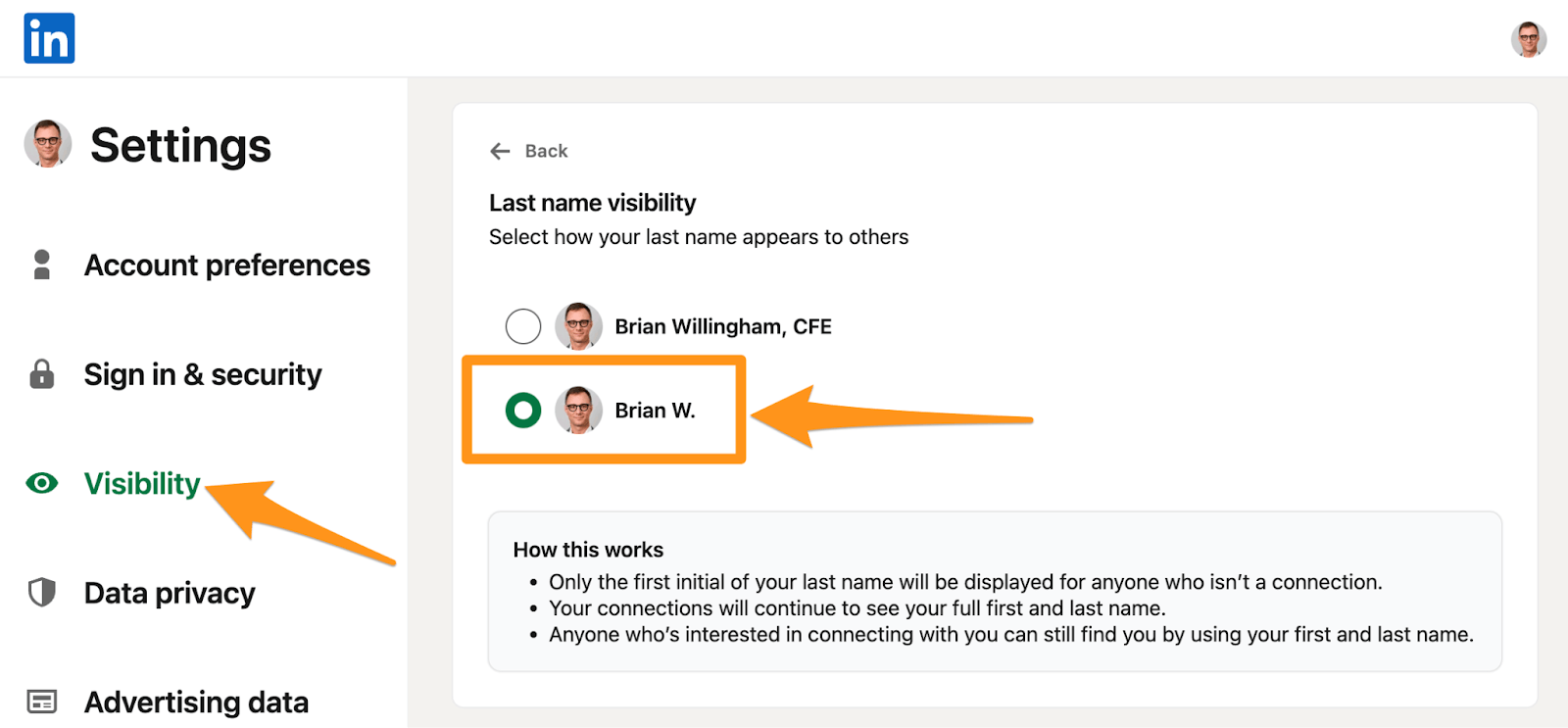
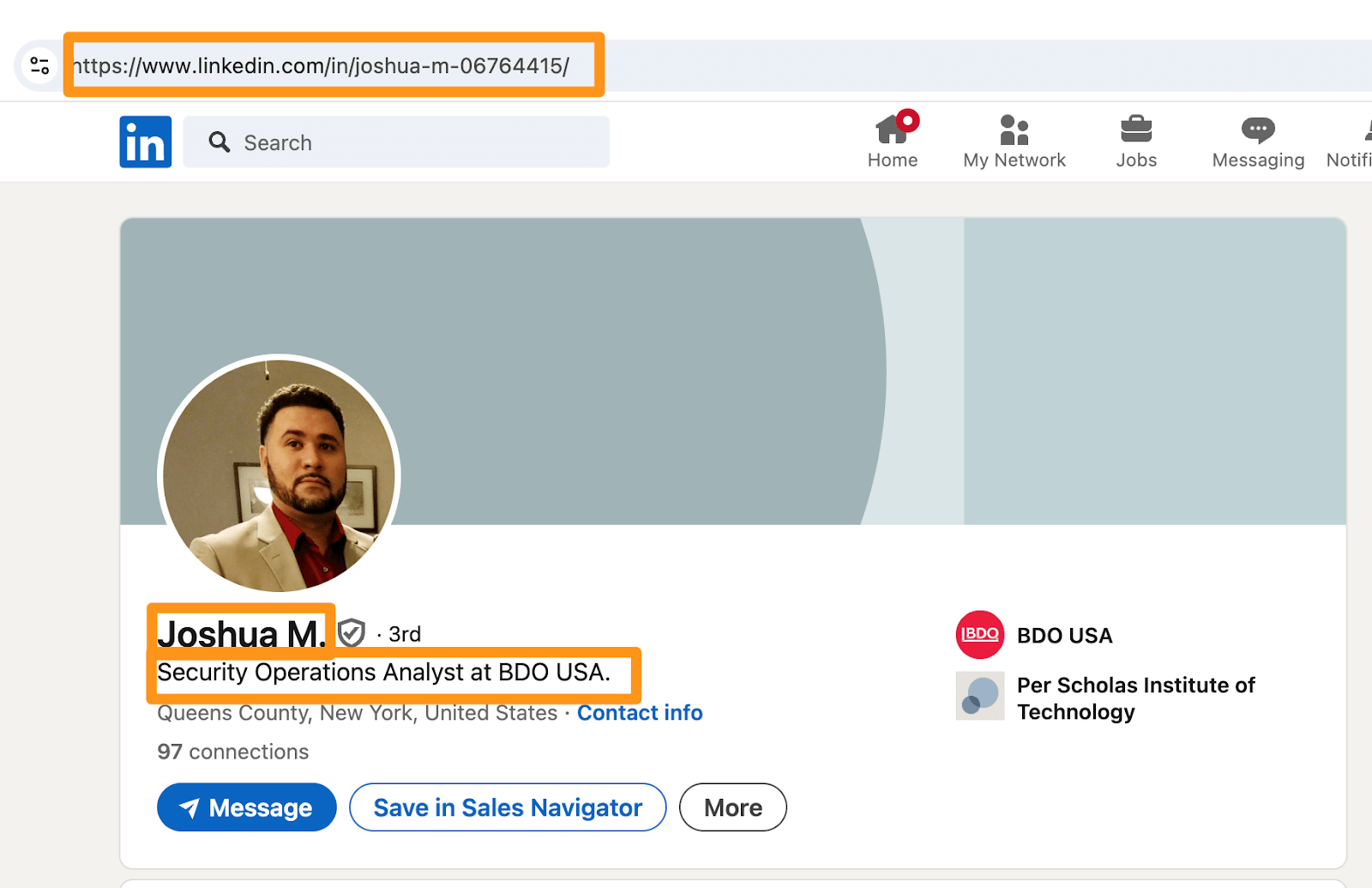
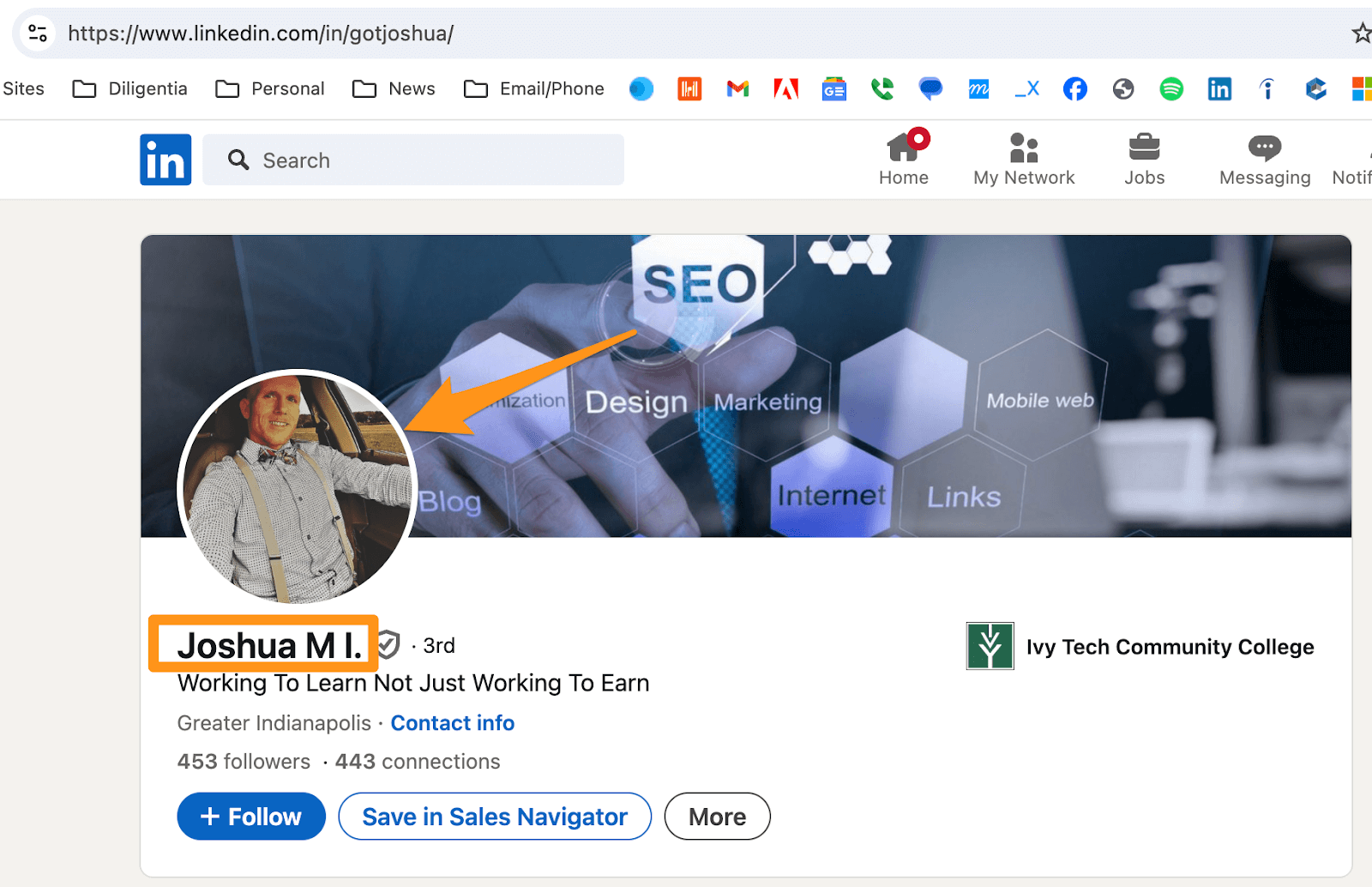
Every so often, you come across a LinkedIn profile that doesn’t contain the person’s full name—for example, “Joshua M.” LinkedIn users can choose to display only their first name and the first letter of their last name for anyone who isn’t a connection by going to settings and privacy, then visibility. 

I get it. 

Some people want to keep some semblance of privacy. 

While some may see the lack of last names as a hindrance and move on, I see it as a fun little challenge. 

The key is finding a pivot point—a point of inflection where you can combine multiple data points. For example, a middle name, date of birth or social media profile might find a data point to help identify who the person is when you pivot to another source. In my case, that might mean plugging the person’s middle name or date of birth into an investigative database to determine their full name. 

There are dozens of ways to determine a person’s last name or entire identity, some of which require deep research, but below, I’ve outlined some of the most common.  

I’ve included six examples of people named “Joshua M.” where no last name is revealed. Note that I’ve got nothing against anyone by the name Joshua. Or “Joshua M.” 

I just thought it would be a fun exercise to find examples of people with the same name. 

I have organized these from the most common way to the more uncommon ones. 

Without further ado …

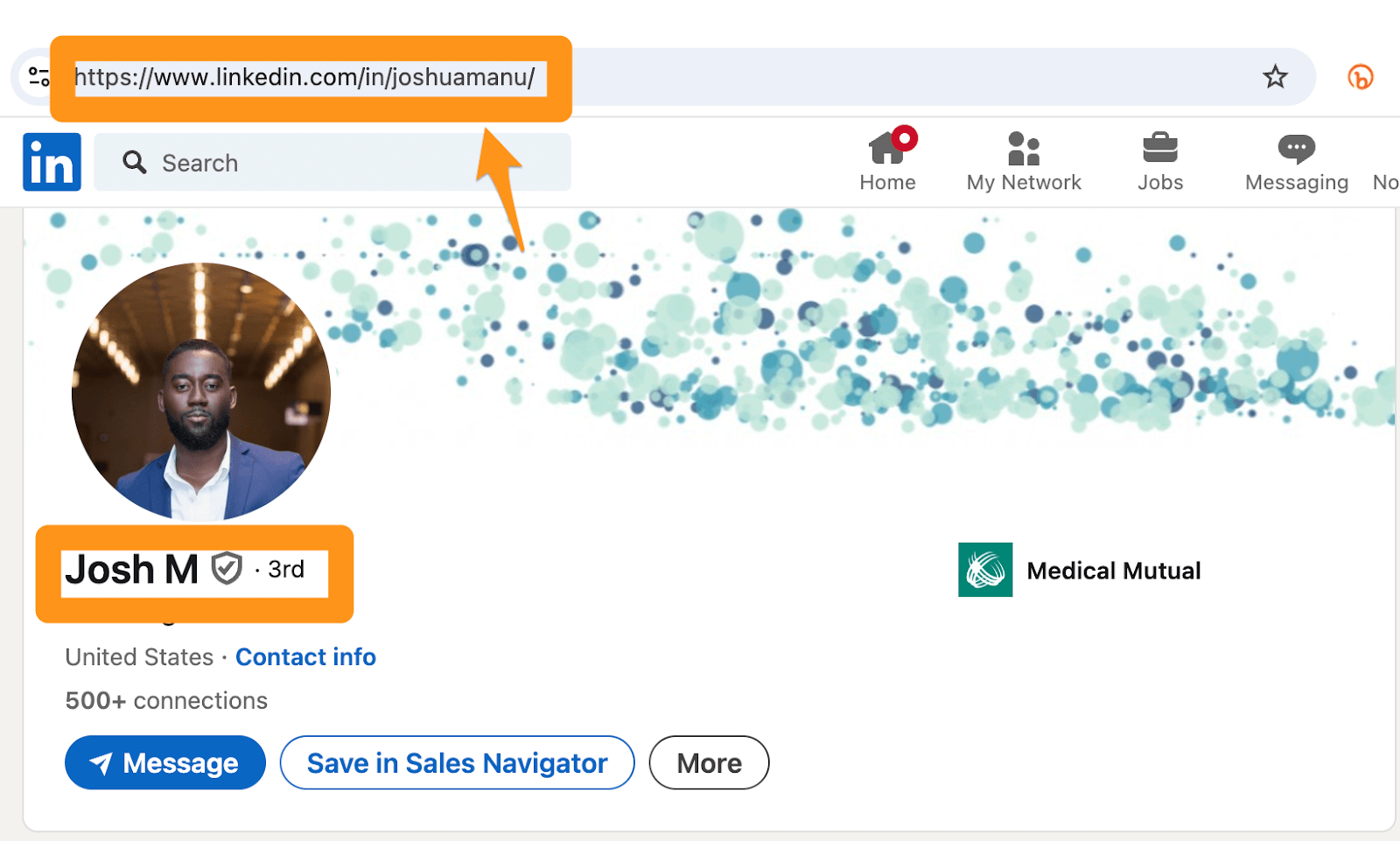
1 URL

The URL is the easiest and most common way to determine a person’s last name. Quite often, when only the initial of the last name is listed, the URL has the entire last name. I suspect the URL was created long before the person decided to go private and forgot to change it. (Here’s how to change your public profile URL on LinkedIn.)

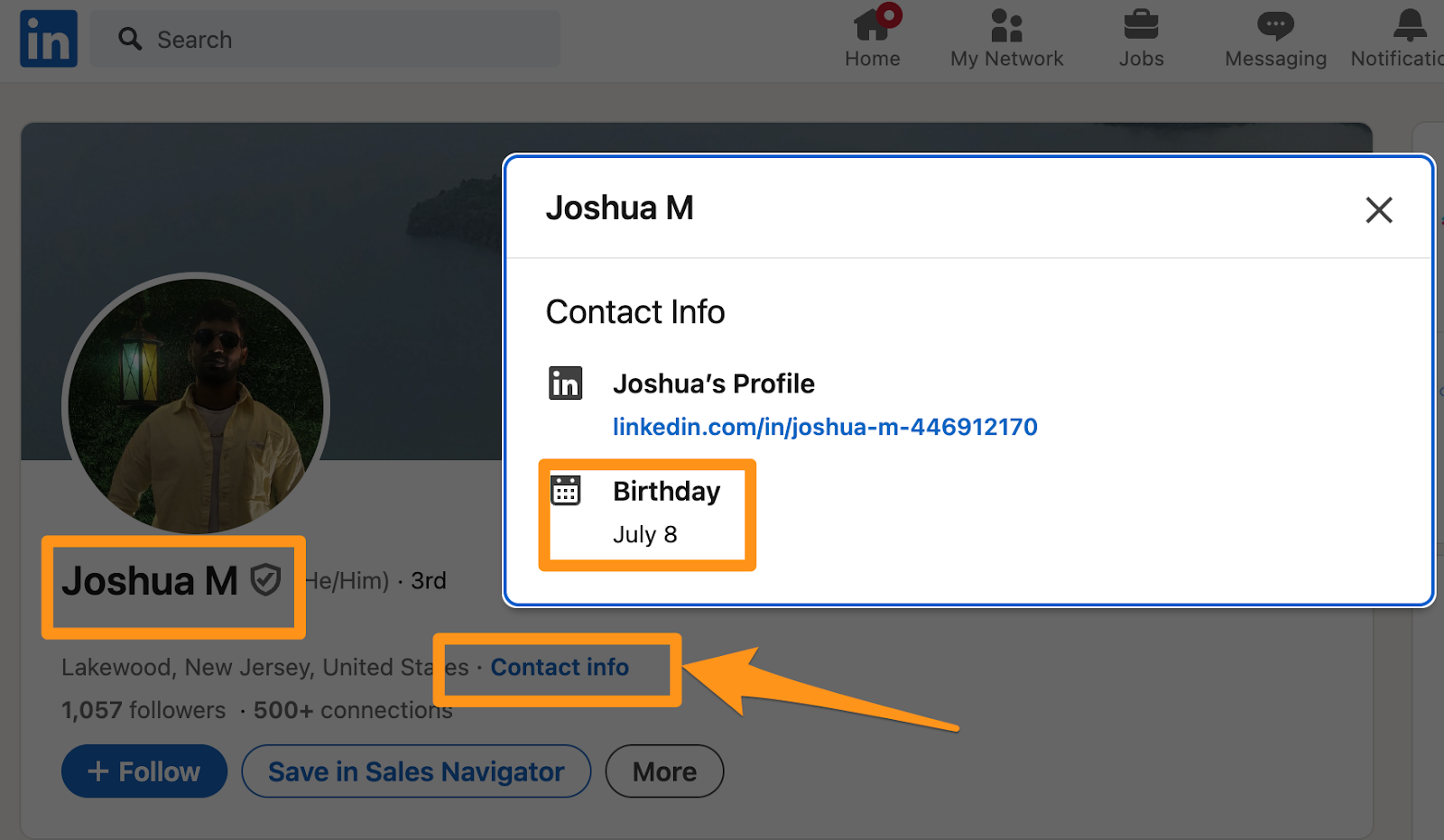
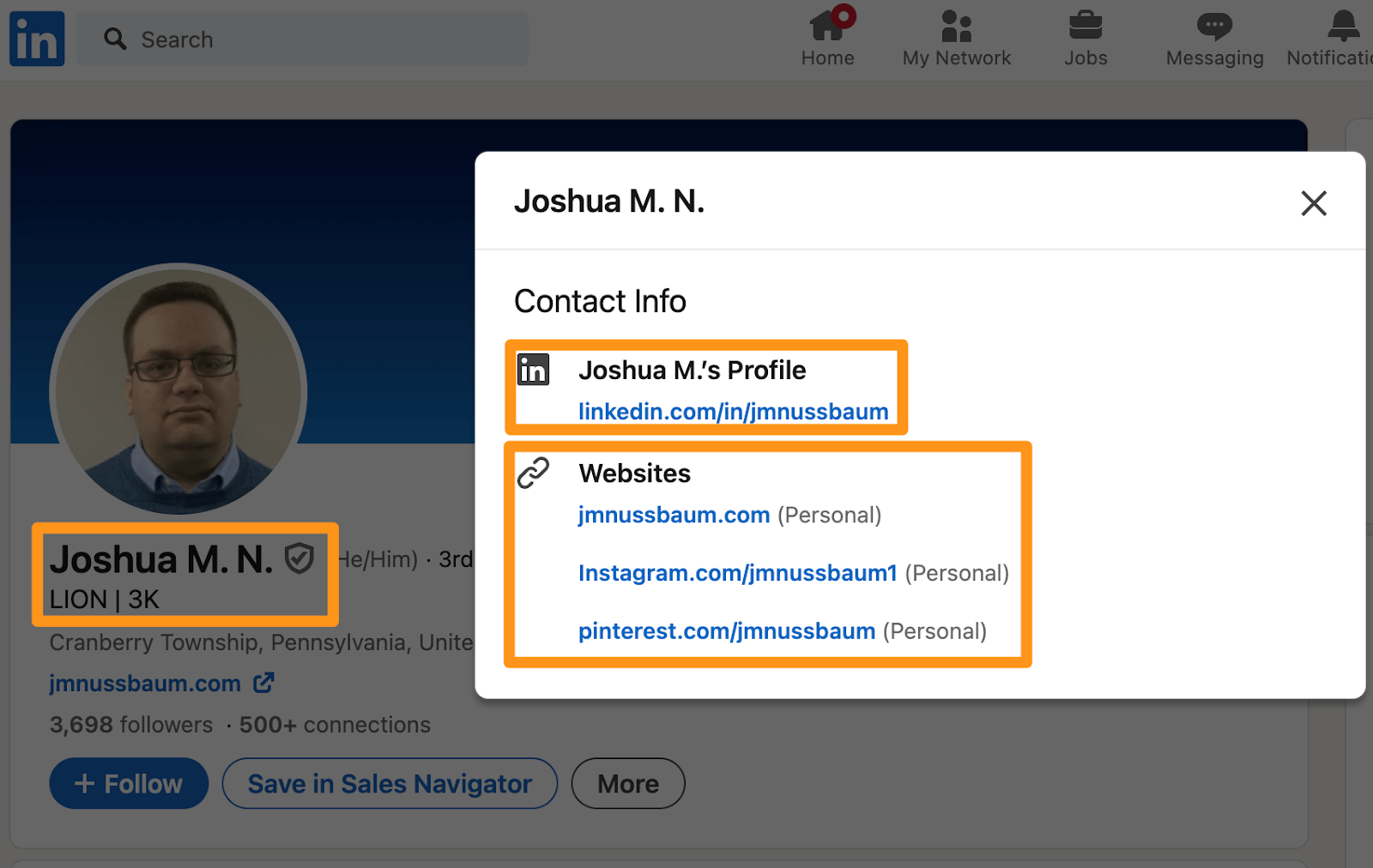
2 Contact Info

Every LinkedIn profile has a link to “Contact Info” underneath their name, which typically contains little information other than what is otherwise available on the profile. But in some cases, you can find an email address, date of birth, personal website link or handle on another social media platform, any of which you can use to pivot. 

3 Credentials

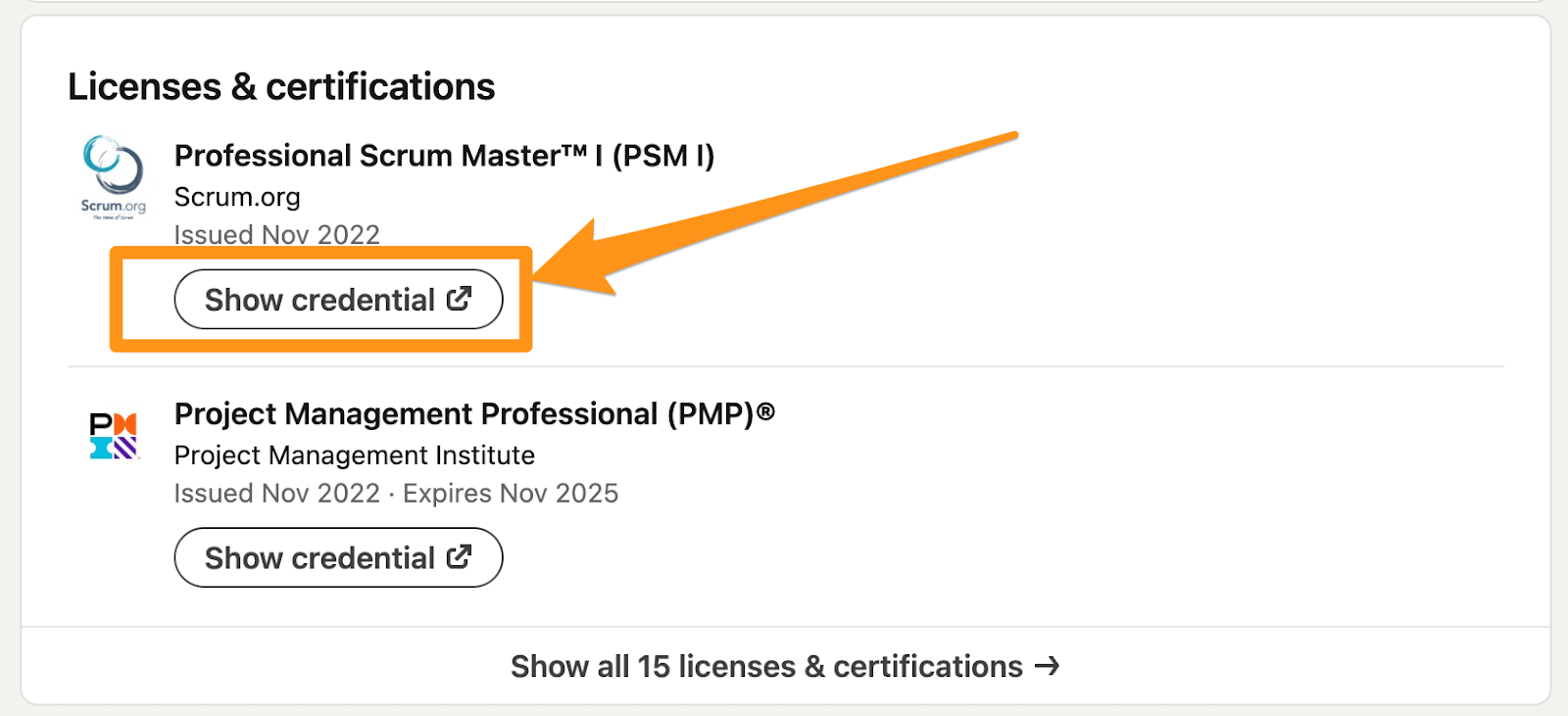
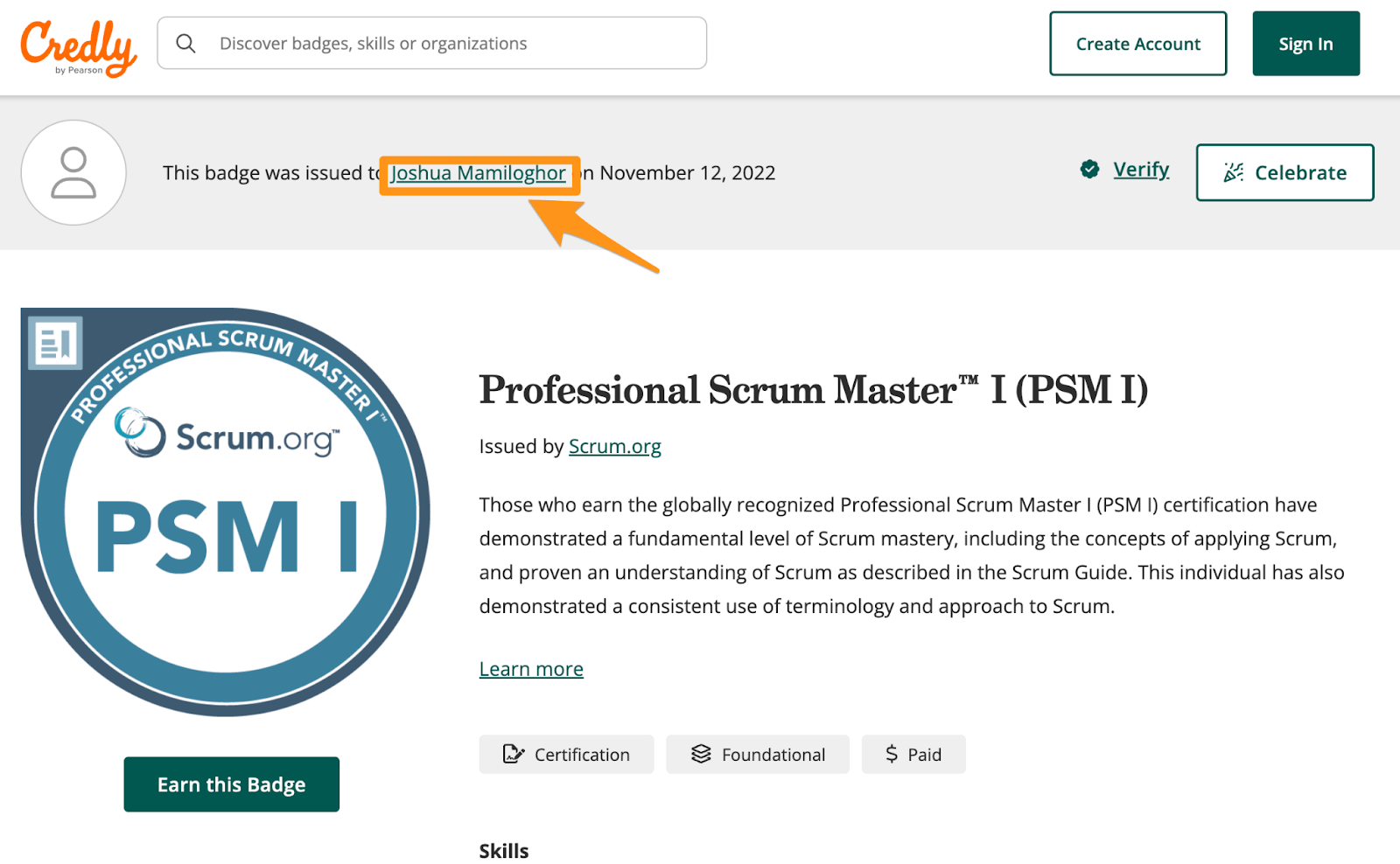
When the URL and contact info come up empty, a credential or professional license might be your answer. Since LinkedIn is a professional social networking platform, people often like displaying their credentials. More commonly, these credentials can be verified by simply clicking on the “Show credential” button, which brings you to a page that shows their full name. 

Voilà!

In other cases, it requires some manual effort. For example, a licensed nurse, a lawyer or a doctor can be verified through the local, state or national board by simply checking their license status. This can be a bit hit or miss, though, since not all of these websites allow you to search by just a first name. 

4 Creative Googling

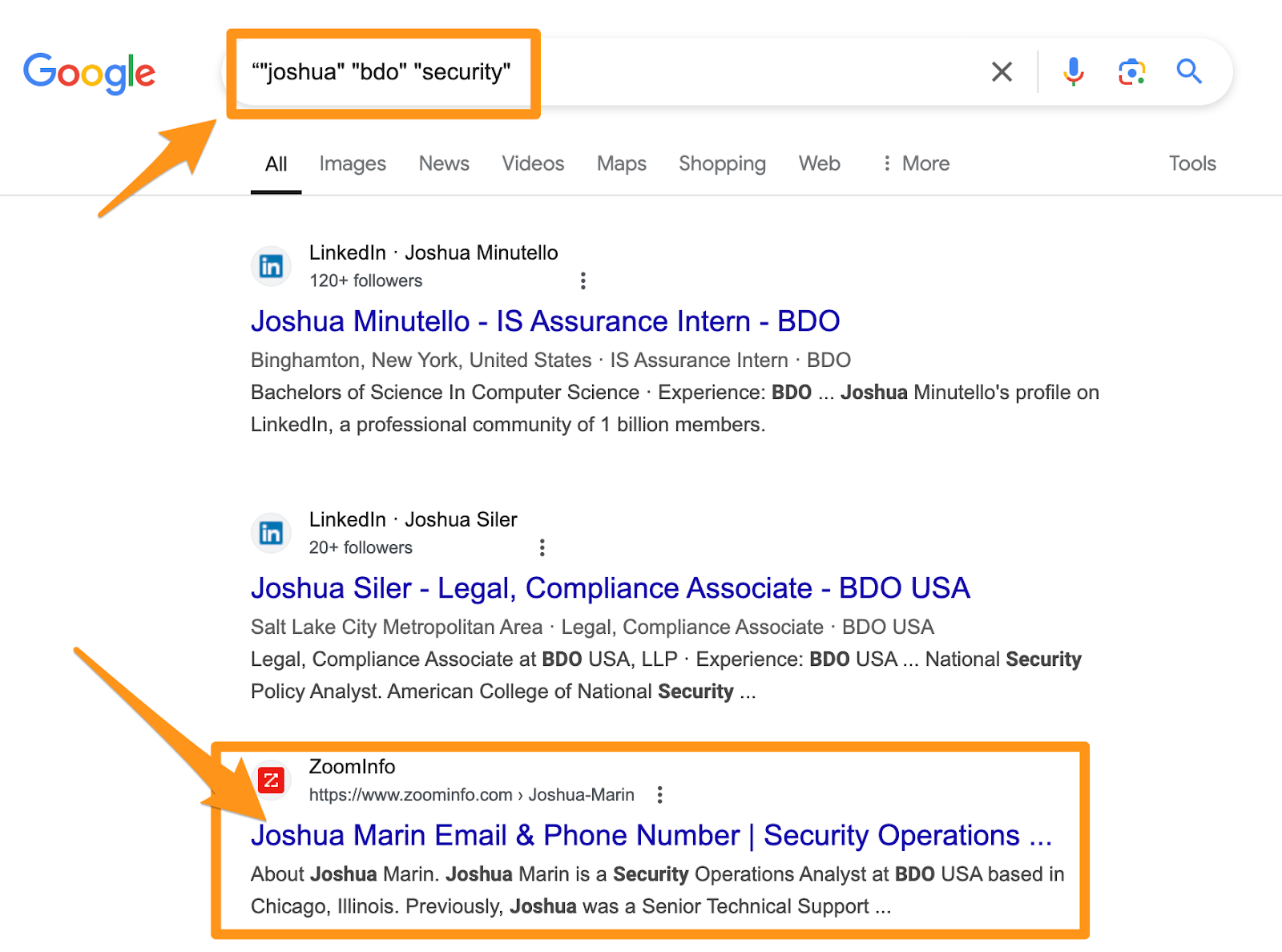
One of the best pivot points is finding unique data on a particular individual. So, even if you only have a person’s first name, like Joshua, but they went to Deep Springs College (the smallest higher education school in the United States) and you know their approximate age, you might get lucky with some googling. So, in this case, we have a guy who works in the security business, and with a not-so-creative but effective Google search, you may be able to identify another online profile for them.

5 Image Search

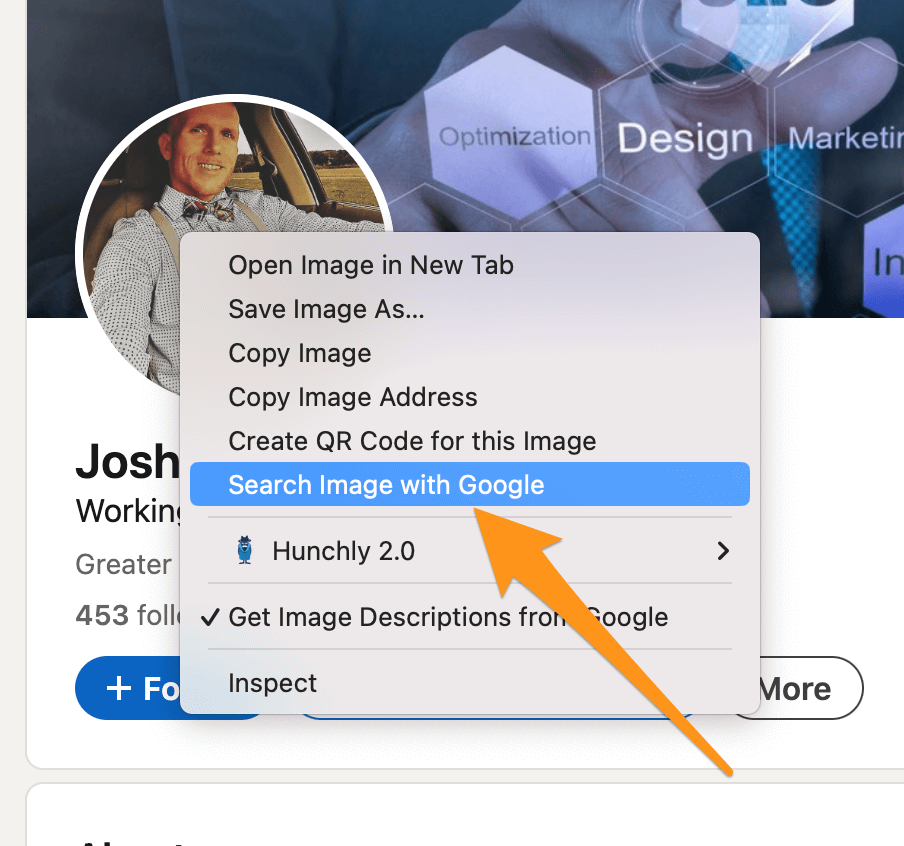
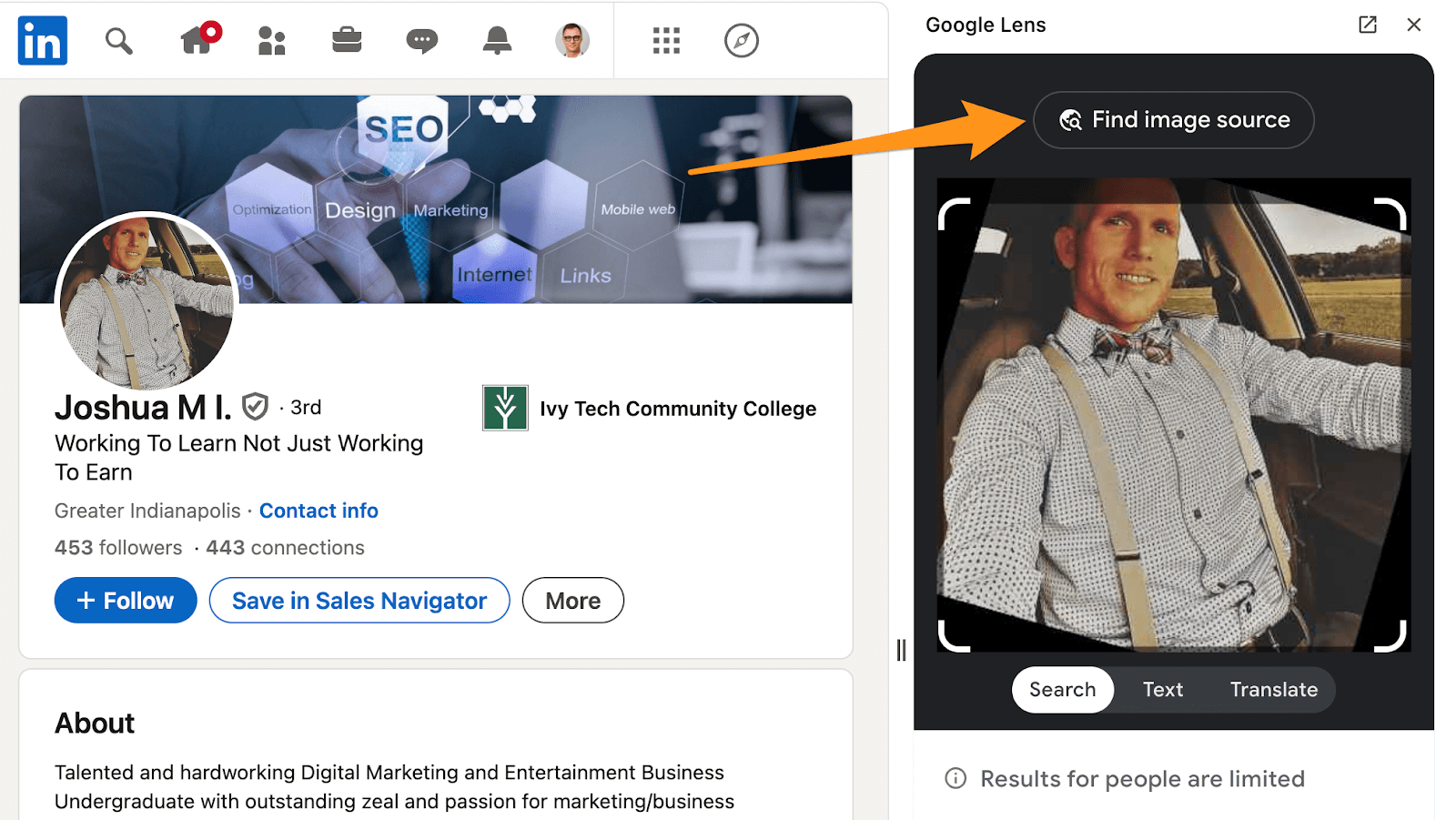
The image of the person can be a good source of leads. There may be some interesting detail in the photo, like a name tag or some unique item, that you can pivot from. You can use some commercially available facial recognition reverse image searches, like FaceCheck.ID or PimEyes. But you can also search the image in Google to see whether the photo has been used elsewhere. In this case, you can see that the user has a Pinterest account with the same exact photo and their full name.

Truth be told, Google image searches for people leave much to be desired. In fact, Google warns that “results for people are limited,” there are times when fortune may favor you.

6 Username

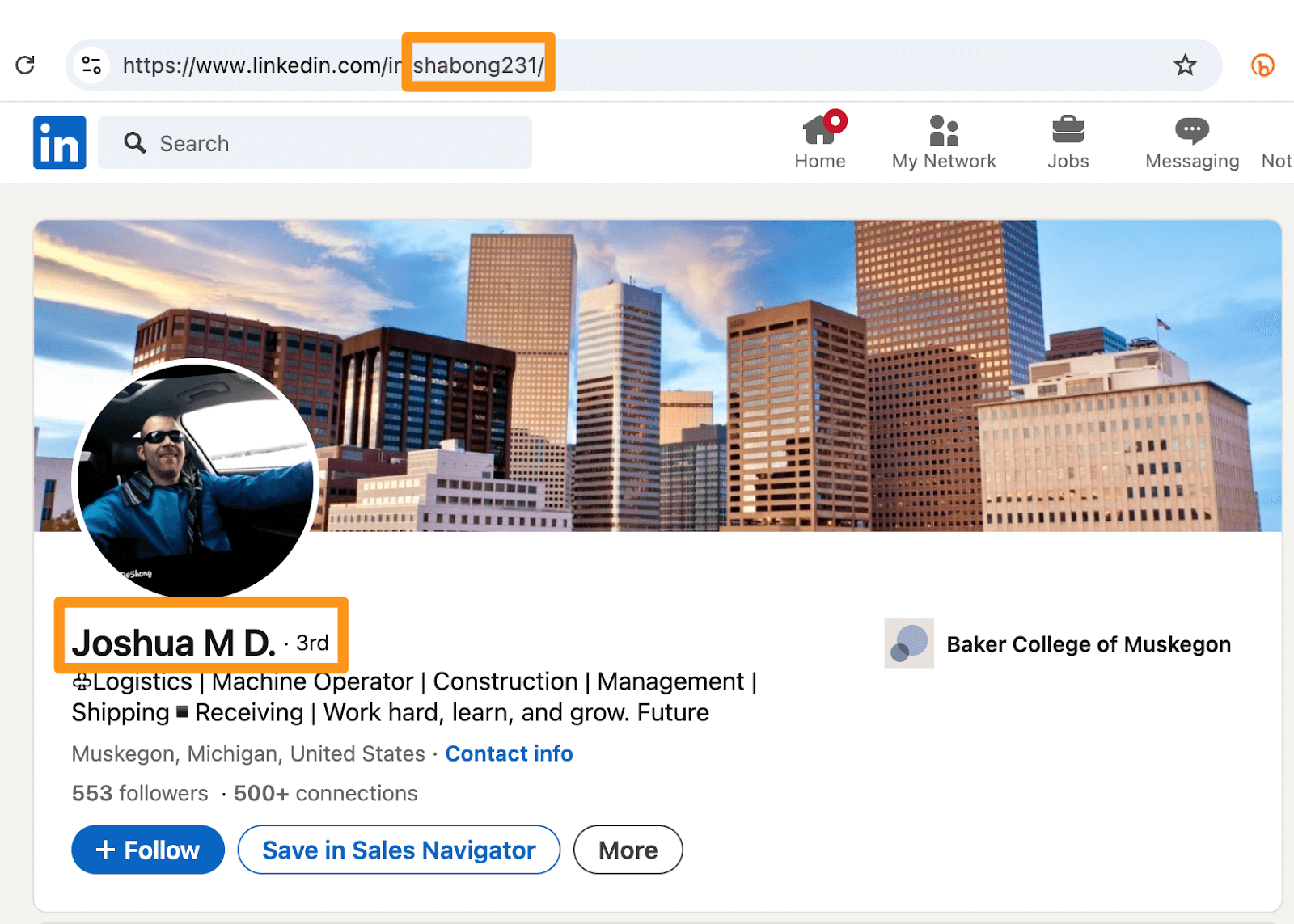
On many social media sites, people use their full name; on others, you will see users have a particular handle or username, like “babykitty1993.” LinkedIn users primarily use their real name in the URL. 

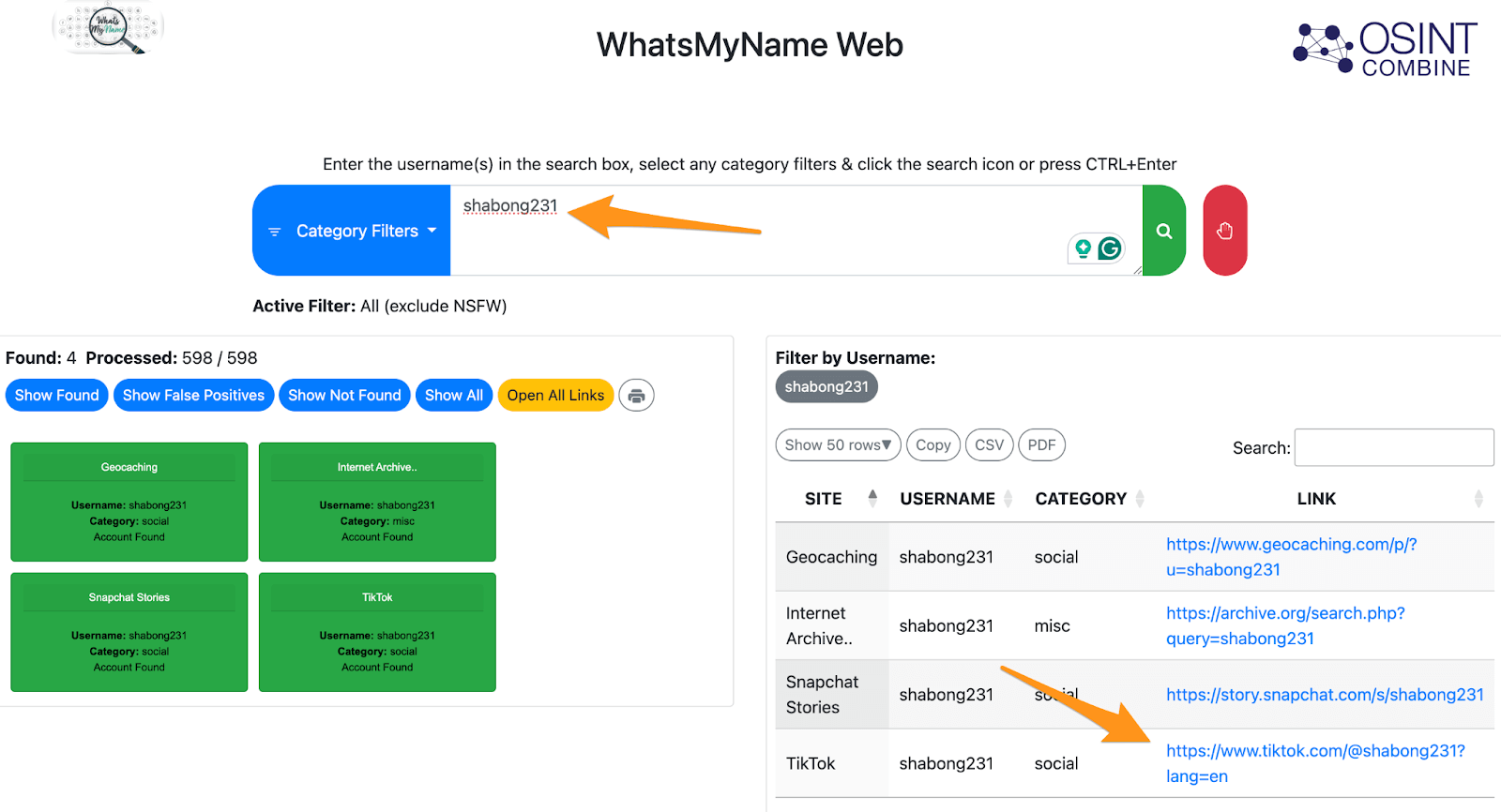
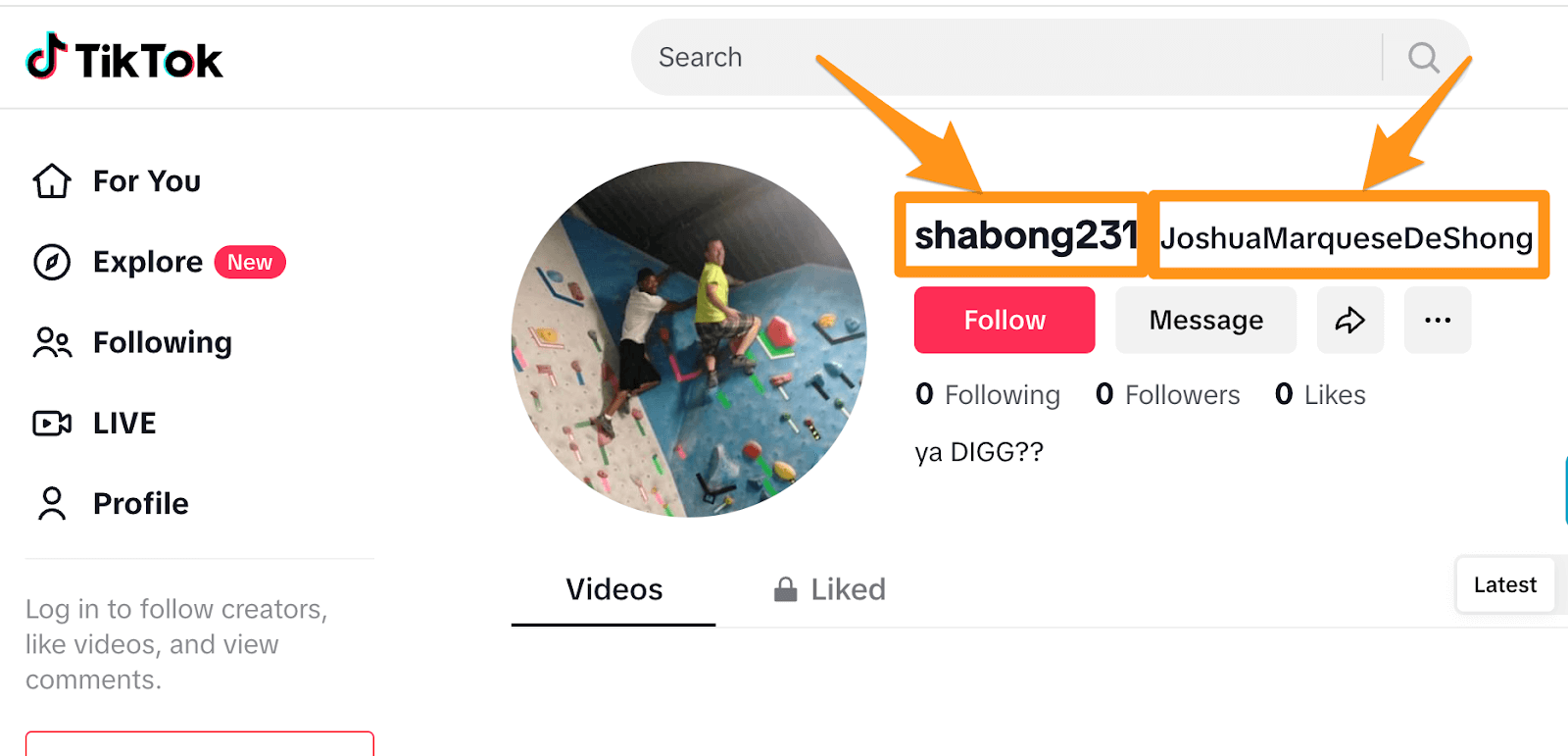
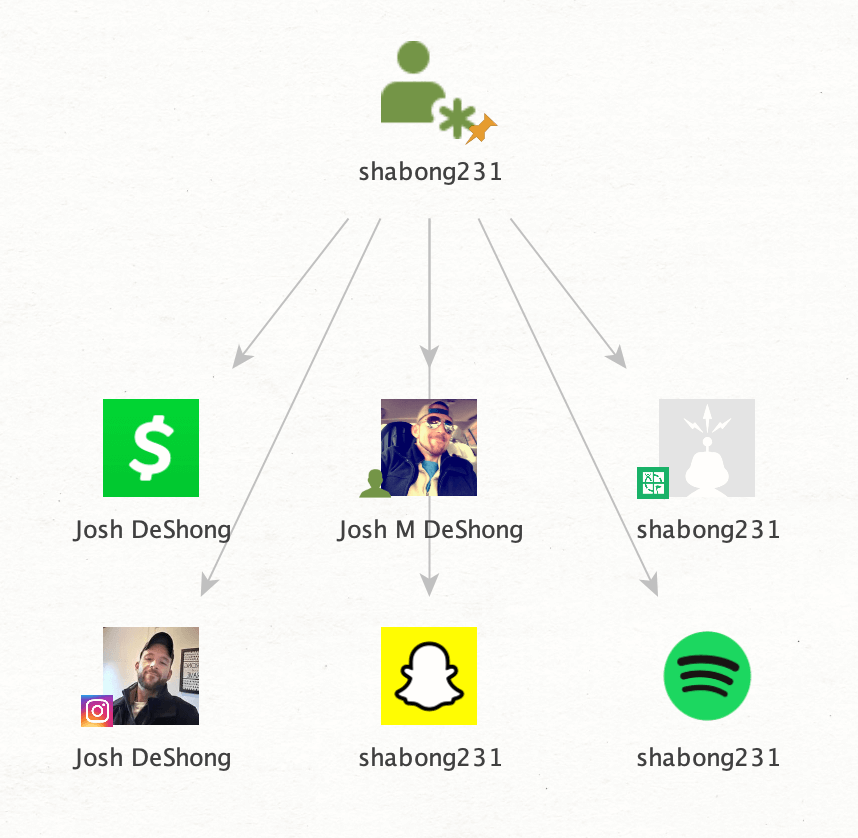
Usernames are typically unique to a person and are often used across multiple platforms. So when you get a username, it’s usually gold. In this case, the user has a particular username in the URL, and by searching that username on WhatsMyName, which searches across hundreds of platforms, you can find other platforms where the user has an account. You can even take it a step further and use OSINT.Industries or Maltego and ShadowDragon to further vet the username on other social media sites.

Screenshot from OSINT.Industries

Screenshot from Maltego / ShadowDragon

Closing

There you have it. Six simple ways to unlock the full name from a LinkedIn profile.

While LinkedIn offers a layer of privacy by allowing users to display only partial names, there are several creative and effective methods for uncovering the full name behind the profile. Whether conducting research, seeking professional connections or satisfying your curiosity, these six techniques can provide the insights you need without needing to resort to more-invasive tactics. 

Happy searching!

Enjoyed What You Read?

Join 2,000+ others to get insider tips and tricks delivered to your inbox from what has been voted the best blog in the investigative industry!

Recently, we have been working with two business owners regarding what they believed were sealed or expunged criminal records.

These cases had very different outcomes.

In the first scenario, a financial institution scrutinized a business owner when he applied for a significant loan. A background check was conducted as part of the evaluation process, and it revealed a felony record for dealing in stolen goods. The business owner, believing that his record had been expunged, was taken aback by this revelation and questioned the result.

In the second case, a man was selling his business and was subject to a background check as part of that process. The businessman believed that an old criminal case from his college days had been sealed, but he wanted to double-check. The client ran a TruthFinder search on himself and didn’t find the record. This was not terribly surprising, given our previous testing of TruthFinder. Not only did we find the criminal record, but we also found a second criminal case against him that he had completely forgotten about. Neither of the cases were sealed, and both were open to the public.

Neither of these situations was as straightforward as they seemed.

In the first scenario, the business owner had gone through the entire process of sealing and removing his record from the public realm. So, if anyone ever went to the court and searched the official records, the result would come back with no records.

However, we found the record in numerous investigative databases, and it turns out that the financial institution had also found the record in one of those databases. There is a dirty little secret in the world of public records: many of these local jurisdictions sell these records to various database aggregators, so once they are out in the wild, so to speak, it’s difficult to rein them back in. So, in this case, the record had been sealed many years after it was filed, so while it was removed from the official records, the record remained in the reports that could be obtained from dozens (if not hundreds) of various database providers that maintain these records.

The client is now going through the resource-intensive process of removing the record from these various database providers.

In the second scenario, the client was adamant that the case he was aware of was sealed. After all, he didn’t find it on TruthFinder. But as we have found before, TruthFinder’s criminal record repository can give you a false sense of security. So we dug our heels in, thinking that we were going to have to get creative about finding any record of the case, like by contacting the police or checking old police blotters.

So we were surprised when it came up in a few databases and even more surprised when a second case came up. The court where the offense took place also confirmed the records and sent us copies of the cases. Both of the cases were really old and, frankly, not particularly meaningful given that the client hadn’t been in any trouble for 20+ years, save for a few minor run-ins with the police in college. Nevertheless, they were pretty serious offenses, and their discovery could jeopardize the entire deal.

What are the takeaways from these two scenarios?

  • If you are a businessperson and subject to potential scrutiny, you should conduct your own due diligence to ensure that any purportedly sealed or expunged records are not out there. Don’t just assume that nobody will be able to find these records once they’re sealed. Nothing could potentially kill a deal faster than lying on a background investigation questionnaire.
  • Even in cases where a record is officially sealed with the court, it may exist in perpetuity in various other investigative databases because many counties and courts sell their information to third parties. Removing the records from the various databases is relatively straightforward, but it’s a time-consuming process. Intel Techniques’ Data Removal Guide is a good place to start.
  • For any motivated party, there are still many other ways to find criminal offenses, including calls for service records through local law enforcement.
  • The various online database “background check” providers can give you a false sense of security. If you’re seeking an affordable method to uncover some personal but incomplete information, TruthFinder might be a viable option. However, if your goal is to obtain reliable and comprehensive information more than half the time from reputable sources, it may be better to consult a professional.

Enjoyed What You Read?

Join 2,000+ others to get insider tips and tricks delivered to your inbox from what has been voted the best blog in the investigative industry!

I can’t seem to wrap my head around a bizarre phenomenon in the due diligence background investigation space: lying or omitting information on a background check questionnaire.

So, let me lay out a scenario for you.

The Scenario

A private equity firm is considering making a multimillion-dollar investment into a company. The private equity firm will do its due diligence on the company’s financials, reputation and legal issues. Before the deal is completed, one of the final pieces of due diligence is for the private equity firm to do a background investigation on some of the company’s key principals. The firm likes the business and is ready to make the deal but wants to be sure that the executive team members do not have any significant issues that the purchaser should be aware of. After all, the firm isn’t just buying the company, it is also acquiring a group of executives to run it. The private equity firm has an obligation to its investors not to employ a bunch of felons.

As part of that process, the private equity firm typically retains a third-party investigative firm to conduct some due diligence background investigation on the company’s principals in which it is investing.

As part of that process, the company may provide some forms for the principals to fill out, like an authorization to release information and a background investigation form. The authorization helps with things like employment history and education history. Or, if a credit report is part of the process, which is usually reserved for those in a financial capacity, the release is also necessary.

The background investigation questionnaire asks the executives for some personal information (full name, date of birth, etc.) and information on their personal and professional history, such as names of employers and schools attended. The questionnaire may also ask whether the person has been involved in any civil litigation or bankruptcy cases or has a criminal history.

In any case, the background investigation questionnaire has a dual purpose. The first is to create a concise document with all personal details, and the second is to allow the person filling out the questionnaire to self-reveal certain pieces of information, like a previous DWI, divorce or landlord-tenant case.

Usually, these are solid executives with pristine backgrounds from big-name schools and some high-end professional jobs. These executives have been part of this process before, having worked for some prestigious employers or been the subject of due diligence from other banks or financial firms that have been scrutinized. More often than not, these executives know what to expect.

In other cases, companies have grown over the years from small mom-and-pop shops to small-to-mid-sized businesses, and these professionals have never really been questioned about their background nor been scrutinized by investors or banks.

It’s usually with this latter group that I have seen issues pop up.

Over the years, I have personally seen hundreds of instances where executives have omitted, falsified or misrepresented information. I guess I shouldn’t be surprised, but this is what boggles my mind.

These executives, who have obviously been pretty successful businesspeople, think it would be smart to omit, falsify or misrepresent information on their background check questionnaire submitted to a private investigator.

Mind blown. 🤯

So let’s play this out. When filling out these forms, these executives have two options:

Full Disclosure

So what if you decide to fully disclose whatever your past issues were? I imagine that these executives might be thinking, “What if I reveal personal information that could not be known unless I revealed it to them?”

No matter how bad it is and how much you hope nobody will ever find out, it will probably come up anyway. And if it doesn’t come up, at least you were upfront and honest about it, allowing the executive to get in front of the narrative to explain the situation.

Jason Feifer recently wrote about an employee revealing his past conviction history on his blog. The employee could have told his manager about his background or waited for his manager to discover the news. He chose to disclose the information. The employee owned the information. This way, he could explain it himself and humanize the situation. And he got the job.

Disclose Nothing

On the opposite end of the spectrum, the executive may choose not to disclose anything.

Say the executive has some minor, not-so-significant criminal history or a legal fight with a former business partner or possibly a more serious battle with a former spouse that they don’t want to disclose (maybe their employer doesn’t know about it).

Instead of fully disclosing the information, the executive rolls the dice and hopes nothing is found. Or maybe they think the forms and background check are all pomp and circumstance and aren’t really searching for anything. Or maybe they think the old criminal record was expunged from their record long ago and can’t be found.

So maybe the investigator doesn’t find anything, and the coast is clear.

But more often than not, these issues arise, and now the private equity firm is questioning everything. Now, it’s a matter of trust.

Why would they hide this?

Did they think we wouldn’t find out?

Seeds of Doubt

Just in the past few years, I have seen falsified degrees, unreported disciplinary actions, undisclosed business disputes with allegations of stealing, lengthy criminal sentences with jail time and executives who had been charged with possession of child pornography.

All of these have led to some serious questions about trust.

Sometimes, it is more nuanced, like fudging dates of employment to hide an undisclosed position they were fired from or a period of unemployment or listing professional organizations that they weren’t really a part of. Maybe a military history wasn’t quite what they disclosed.

While these are a bit more nuanced, all the scenarios create a seed of doubt. They create suspicion, leading the private equity firm or investors to question or doubt something previously believed or accepted without hesitation. Skepticism or uncertainty arises in the trust, belief or confidence in a particular situation or individual.

And sometimes, it can lead to a deal falling apart.

Conclusion

As the saying goes, one lie is enough to question all truths.

The most epic example of this is George Santos, who started with misrepresentations and half-truths that eventually led to outright lies, a full-blown criminal investigation and an ouster from Congress.

My suggestion, 100-times-out-of-100, is to be upfront and honest.

Dishonesty, whether small or significant, can plant seeds of doubt that undermine trust.

In business and life, everything starts with trust.

Enjoyed What You Read?

Join 2,000+ others to get insider tips and tricks delivered to your inbox from what has been voted the best blog in the investigative industry!

Dozens of websites offer background checks for a few dollars. And if you haven’t had the pleasure, you can google “background check” and get ready to be bombarded.

Go ahead. We’ll wait.

Most of the dozens of services offered by these firms are for things like tenant screenings and run-of-the-mill pre-employment backgrounds. The firms do a few things pretty well, like verifying that a person exists, determining if they were involved in any serious crimes (in the past few years), or learning whether they are sex offenders or appear on terrorist watch lists. With the subject’s permission, you can get some work history or degree verifications for a few extra dollars.

Depending on various factors, these services can range from a few dollars to $500.

But what if you need more than determining whether you are dealing with the proverbial axe murderer,  sex offender or an international terrorist?

What if you’re looking to develop information about a person’s character, potential risks or conflicts, omissions in their reported history, material misrepresentations or ties to fringe groups?

You want to go beyond online sources to find trouble in a person’s past (even if their name wasn’t on it) or go beyond searching back only a few years.

Or maybe you want a deep analysis of their online history, an examination of their 82,000 tweets or a link analysis to identify possible connections to unsavory characters.

This type of deep background check is typically saved for C-level executives, potential business partners, board members, acquisition targets, an adversary in high-stakes litigation or a high-ranking official (unless it’s George Santos, but that’s another post).

The kinds of situations where there is a lot at stake, including reputation, public perception, money or justice.

Those types of no-holds-barred background checks can cost tens of thousands of dollars.

So why do these deep background checks cost so much?

No Single Source

Using a single source of information could save you time and money. And lots of headaches.

Imagine just typing a name into a database and getting all the juicy details that you need. The problem is that there is no single source of information. It just doesn’t exist. There are lots of platforms that claim to provide deep, thorough, nationwide, complete background investigations. They just don’t exist.

Unlike a background screening service that will typically use a single source for things such as criminal records, deep background checks use multiple sources for things like criminal records and in some cases, dozens upon dozens of sources for thoroughness.

For example, for a person living in New York City, I would run through about 8 different sources: a combination of professional investigative databases, state and local databases, and a statewide criminal database, along with sending someone to the courthouse (most lower-level courts in New York City are not covered well online).

Court records, are another prime example — an unbelievably powerful resource for background investigations on so many levels. We might research a dozen or more separate sources for civil and criminal litigation records on an average background investigation.

You read that right, a dozen.

Why?

Because there is no single reliable source. There are local and state court websites, state criminal databases, federal repositories and state repositories. Then there is the actual court itself, which you might think would be the single-most-reliable source — the particular courthouse in the area where the person lives.

But in some cases, you would be dead wrong.

There are dozens of reasons, but generally, these records are contained in various city, county, state and federal silos that don’t talk to each other, so there are mountains of records scattered everywhere. And if you want to actually be “comprehensive,” you need to do this research in each county and state where a person has lived from the time they turned 18, which in some cases could be dozens of jurisdictions.

Yes, many powerful (and expensive) paid databases aggregate data from all over the country. They are pretty reliable, but none are totally comprehensive.

Resource Intensive

Digging deep is time-consuming and resource intensive.

If you have ever been on social media, you know that doomscrolling is a thing. You could spend hours scrolling before you even blink. But doomscrolling in your personal life usually means you are mindlessly scrolling; reviewing and analyzing social media in an investigation require a whole other level of attention and focus.

And that doesn’t even consider finding the social media profiles in the first place, especially when you are researching John Smith. In a business where time is money, that can be costly. And that’s just one part (albeit an important one) of a deep background check.

It’s easier just to google something and report that as fact. It’s not as easy to do the analysis and dig in.

Court records are another good example. While some databases may be able to identify the existence of a record, the analysis is equally important. What actually happened?  Was that public drunkenness conviction a college-age mistake? Or something more serious? Or was that divorce a nasty knock-down, drag-out fight? Or an amicable separation?

You won’t know until you review and analyze the documents, which you have to collect (often by sending someone to the court), and then you have to read them and draft a concise summary from the dozens of pages of legal mumbo-jumbo.

Analysis

We are in an age of misinformation. The reality is that anyone can post anything online. Some of this is easy to prove or disprove while other things can take some real digging. Doing a bit of googling and reporting a Reddit post as fact is not really doing anyone any favors.

Last year, I was at a conference discussing some advanced open-source investigative techniques, and one of the topics discussed was the spread of misinformation. One of the speakers posted what I thought was a great quote from Mark Twain, which I was going to steal until I realized that Mark Twain never actually said it.

Ironic that the speaker, a trained professional who was discussing the topic of misinformation, posted a fake quote, huh?

Snopes took some time to dig into this, speaking to Twain experts who found no evidence that Twain ever wrote or uttered this phrase.

In the real world, we recently did work on someone who was a bit of a “fake” entrepreneur. It makes me chuckle when I see someone who expounds on their business successes and clings to the false illusion that they are some guru with splashy articles on third-rate websites, self-published prominence, glitzy videos and fancy “awards” from places you have never heard of.

It’s easier just to google something and report that as fact.

It’s not as easy to do the analysis and dig in.

Thoroughness

To be thorough, you need to access various sources, the best of which cost some serious money.

A baseline subscription to LexisNexis (historical public records and news sources), Westlaw (historical public records and news sources), Bloomberg/Bloomberg Law (news and historical legal filings) and Factiva (news) will set you back thousands of dollars a month.

You might be asking yourself, why is it necessary to be so thorough?

In many background checks it may not be necessary, but if there is something on the line where uncovering any bits of information might be helpful, it just may.

For example, we recently found three separate DWI cases over a matter of a few years against a person in some database searches. Several other databases we searched did not have any records of these DWI cases and — get this — the courts where the cases were filed did not have any of the records.

Why?

A basic background check may suffice for some basic questions, but if you are looking to get answers to some nuanced questions, perhaps not.

Because the court expunged the records. In a typical background search for employment purposes, these records could not even be reported. But if an incoming CEO of a major public company has a pretty serious drinking problem, I think that would be something you would want to know.

News media sources are another great example. Nexis and Proquest are amazing sources for general news information and include thousands of sources worldwide. But they don’t include the entire archives of The Wall Street Journal, Reuters or Bloomberg. And historical newspapers are much better represented on places like Newspapers.com.

I was recently working with another investigator who had asked us to help with a deep background check on a hedge fund manager in the context of potential litigation. It was a bit out of the investigator’s wheelhouse, so he asked us to help out. When all was done, we sent the investigator an invoice that included more than $600 in database charges and on-site court fees, which the investigator was quite surprised by.

That was just our cost; no markup included.

Expertise

Expertise comes in all shapes and sizes. For someone with a deep understanding of background investigations, it’s a combination of having expertise in understanding the universe of available information, synthesizing that information into actionable intelligence and understanding your limitations. A finite number of people in the world have the skills, knowledge and expertise to do a truly deep background check.

I’ve spent thousands of hours of work to master this craft. I’ve worked on cases involving some of the highest political offices in the land and have spent hundreds of hours digging into some really powerful people.

And when you have been doing things for this long, you collect what may seem like a lot of “useless” information to most of the world, but it is extraordinarily valuable information in your little bubble. Like access to a database of historical records from California that has been floating around for years and includes things like birth records and divorces dating back to the 1970s. Or how to get historical Financial Industry Regulatory Authority reports from state securities regulators. Or where to go for court searches in California (Baxter Research), Massachusetts (R&R Search), or Illinois (AM Legal Services). Or that Premier Due Diligence can handle public record searches all over the country. And if I need copies of corporate documents quickly, Capitol Services is my go-to.

In this day and age, having a deep bench of knowledge of social media is crucial. While most people have at least a rudimentary knowledge of how to get around social media and scroll through someone’s feed to see if there are any major red flags, it takes some serious amounts of manpower, powerful (and pricey) tools like Maltego and ShadowDragon, or some serious know-how to get beyond that.

Like finding hidden accounts, extracting deep links to groups, close-knit friends and confidants, or membership to extremist group sites.

Getting Your Money’s Worth

The cost of a deep background check is important to consider, but it should not be the primary deciding factor. The decision should be made based on a comprehensive evaluation and how it aligns with the overall strategy and goals.

A basic background check may suffice for some basic questions, but if you are looking to get answers to some nuanced questions, perhaps not.

I will leave you with a famous quote:

Enjoyed What You Read?

Join 2,000+ others to get insider tips and tricks delivered to your inbox from what has been voted the best blog in the investigative industry!