Posts

For attorneys, anonymous online accounts can present serious challenges. Whether it’s a burner social media profile spreading defamatory claims, a blog smearing a client, or a shadowy post tied to ongoing litigation, the central question is always the same: Who is really behind it? That’s where unmasking anonymous accounts comes into play, and it’s an area where private investigators specializing in OSINT (open-source intelligence) can add real value.

To be clear, we’re not talking about anything illicit here. There’s no cloak-and-dagger hacking stuff that’ll land you in hot water. Unmasking an anonymous account requires patience, a solid methodology, and the uncanny ability to connect the dots across the vast—often wild—open web.

How to Start Tracking an Anonymous Account by Using OSINT

To begin the investigative process, it’s essential to gather all visible information. Key data points include usernames, email addresses, writing styles, images, and posting patterns, as these elements can offer valuable insights. Many individuals often use the same username across different platforms, meaning a handle found on X (formerly known as Twitter) may also be present on Reddit and in various forums or professional profiles. Additionally, while a profile photo might seem generic, utilizing a reverse image search can uncover other locations where the image is used and possibly reveal embedded metadata.

Following Digital Clues: How Anonymous Accounts Leave a Trail

The fun part begins with following the digital footprint. Anonymous individuals often leave small traces behind. These traces might include an email address linked to an abandoned social media profile, a domain registration that hasn’t been fully anonymized, or even a LinkedIn profile that follows a similar naming convention. It may also involve tracing the digital interactions of friends, followers, likes, and comments, gradually piecing together a mosaic that reveals the person behind the screen.

Although each piece of information may seem insignificant on its own, when combined, they start to form a clearer picture of a real person. This process encapsulates the essence of OSINT investigations: uncovering scattered clues and organizing them into a cohesive understanding.

Combining OSINT with Public Records for Legal Proof

What really makes these investigations powerful for attorneys is when OSINT is combined with other public record research. Corporate filings, court dockets, property records, and regulatory documents often link digital breadcrumbs to verifiable personal information. For example, a pseudonym mentioned in litigation records or a business registration that lists a previously hidden email address can make all the difference. Or court filings showing a suspiciously similar incident might uncover new leads. This is where unmasking anonymous accounts shifts from internet sleuthing into evidence that can be used strategically in legal proceedings.

In other cases, a group of suspects may surface, and further investigation into their backgrounds might uncover corroborating details that more clearly identify the true account holder. This might involve an account handle that appears suspiciously similar, a record of disseminating false claims, or previous participation in related legal actions.

Why Human Error Is the Weak Link in Online Anonymity

It’s rarely the tech that cracks an anonymous account. It’s the human behind it.

No matter how careful someone thinks they are, human error is the Achilles’ heel. They reuse a username they once used in a college forum. They post a photo without stripping the metadata. Or they leave a trail in the weirdest places—like a Venmo account with public transactions or a Spotify playlist linked to a real name.

It only takes one slip—or one “cracked window”—and the whole hidden identity can come crashing down.

Real Case Study: The Labor Dispute Leak

A Midwest company was under siege.

Anonymous social media accounts were popping up one after another, with each one taking shots at the business and its leadership. Posts accused the company of corruption, mismanagement, and worse. Employees were rattled. Customers were starting to whisper. And the general counsel knew that if the accusations kept up, it could bleed into the courtroom, the press, or both.

The general counsel’s gut told him it wasn’t random. These weren’t trolls from the outside. This had fingerprints indicating it was an inside job.

At the time, the company was knee-deep in a bitter labor dispute. Tensions were running high. Lawsuits were already in motion. And the general counsel had a list of suspects that was comprised of a smattering of disgruntled employees—about ten in total, each with their own grievances.

That gave us a place to start.

When we began digging, though, the trail was thin. Most of the accounts were locked down, and there were no obvious mistakes or sloppy overlaps. We found just one tiny thread: a partial email address exposed in a past data breach. On its own, it wasn’t much.

But when we lined it up against the suspects, one thing stood out: The partial email, with the exact same unique string of digits, was connected to one of the potential suspects. A coincidence? Not likely.

That was the weak link.

With subpoenas in play, the pressure shifted. The accounts went silent almost overnight. No more anonymous smears. No more burner attacks. Just … nothing.

The message was clear.

The Limitations of Unmasking Anonymous Accounts

It’s important to understand that unmasking anonymous accounts, while often effective, is not a guaranteed process. Some individuals are exceptionally skilled at leveraging practices to ensure digital hygiene. They may use encrypted communications, spoofed IP addresses, privacy-first browsers, burner devices, or offshore hosting services that make tracking extremely difficult. Others may avoid leaving metadata, never reuse usernames, and operate with clockwork-level discipline across platforms.

Even with advanced OSINT tools and experienced investigators, there are cases where the digital trail simply runs cold. Also, legal and ethical constraints limit how far investigations can go in terms of hacking, coercion, and crossing privacy boundaries.

That said, anonymity is inherently fragile. The vast majority of people, even experienced bad actors, make mistakes. They overlook a forgotten account, reuse a unique phrase, or upload an image with embedded data. And in the world of OSINT, it only takes one weak link for an entire hidden identity to unravel.

Patience, persistence, and precision remain the investigator’s most powerful assets. While not foolproof, these methods often succeed where gut instinct and guesswork fail.

Final Takeaway: Anonymity Online Doesn’t Mean They Can’t Be Found

After struggling with online defamation or anonymous harassment, many attorneys find themselves stuck, armed with suspicion but no proof. The internet’s anonymity can make it feel like the truth is out of reach, leaving clients vulnerable and legal options limited.

Now you’ve seen how OSINT and public record analysis can change that supposed anonymity. When it comes to everything from username tracking to digital footprint tracing and metadata analysis, private investigators can bring clarity to otherwise murky digital threats. You’ve also learned how these tools turn loose threads into admissible evidence.

Moving forward, if you’re facing an anonymous attack or suspect digital manipulation tied to a legal matter, don’t wait. Leverage professional OSINT investigation to help you transform suspicion into strategy and protect your clients with facts, not just theories

Enjoyed What You Read?

Join 2,000+ others to get insider tips and tricks delivered to your inbox from what has been voted the best blog in the investigative industry!

Picture this: You’re knee-deep in a high-stakes case. The filings are stacked, the depositions have been rehearsed, and the official story is neat. Too neat. Something’s missing.

Now imagine talking to someone who was actually in the room when the decisions got made. They saw the late-night emails, heard the whispered side conversations, and observed the “let’s not put that in writing” moments. And here’s the kicker: They don’t work there anymore.

That distance is power. Former employees aren’t protecting a paycheck or managing office politics. They’re freer, often more candid, and more willing to tell you what really happened before the sanitized version landed in court.

And yet they’re the witnesses attorneys most often overlook.

Why Former Employees Talk When Others Stay Silent

When someone no longer has a job to protect or a manager watching over their shoulder, they’re more candid. That doesn’t mean they’ll spill everything, but it does mean they’re more likely to speak plainly about questionable decisions, compliance gray zones, or just how messy things got before the lawyers showed up.

Even if they don’t have the smoking gun, they often help in subtler ways:

  • Validating suspicions
  • Pointing out overlooked records (e.g., a forgotten report or an internal memo)
  • Identifying who really made the call (and who just nodded and went along with it)

Sometimes, they just give you context. But in many cases, context is as valuable as hard evidence.

How to Track Down Ex-Employees Who Hold the Missing Pieces

Of course, tracking down former employees isn’t always simple. People move. They change industries. Some want nothing to do with anything related to their old job.

That’s why these investigations require more than just Google searches. You need digital sleuthing to find things like resume trails, license databases, and social media breadcrumbs. And when you do find them, how you approach matters. This isn’t a deposition; it’s a conversation. Doors open when you show discretion.

Sorting Truth from Bias: When Ex-Employees Help—and When They Don’t

Some former employees are too far removed to be useful. Others may carry biases or grudges. That’s fine. Every perspective still adds something to the broader picture, as long as it’s vetted and weighed properly. You never know who holds the piece that makes the rest of the puzzle complete.

I’ve seen it more times than I can count: One conversation changes the entire case. It clarifies a timeline. Exposes a blind spot. Sharpens the narrative. Suddenly, a case that felt murky gets a lot clearer.

The Witness Everyone Missed: Why Overlooked Employees Can Crack a Case

I once had a case that was stuck until we tracked down the former executive assistant no one thought to call. We almost missed her because her title sounded too boring to matter. She hadn’t had a flashy title, but she knew everything. And she talked. That one conversation reshaped the entire strategy.

The point is this: Former employees often hold more power than you think. One call, one coffee, or one offhand memory can be the difference between a longshot and a winnable case.

So don’t overlook them. Because the truth is they’ve already seen everything. The only question is whether someone’s bothered to ask.

Why Former Employees Hold the Missing Piece

In case after case, I’ve seen former employees change the entire trajectory of litigation. Sometimes it’s an overlooked assistant who knows everything. Sometimes it’s a single email they remember that no one else thought to check.

Too many attorneys are still walking into court without tapping this resource. They’re chasing documents, deposing executives, and missing the people who have already lived through the decisions that matter most—people who are finally free to talk.

The future of smart litigation strategy is simple: Stop overlooking the obvious. Former employees aren’t just background players. They’re often the ones holding the missing piece of the puzzle. The only question is whether you’ll get vital information from them before it’s too late.

Enjoyed What You Read?

Join 2,000+ others to get insider tips and tricks delivered to your inbox from what has been voted the best blog in the investigative industry!

At first glance, agreeing to work with nearly impossible deadlines and challenging objectives seems like a recipe for stress and potential failure.

For many, it might even seem crazy.

But for investigators, it’s often just another day on the job—and there are surprising positives to these situations.

Private investigators are often brought in as a last resort, not the first line of defense. This means we’re no strangers to unreasonable requests, tight timelines, and seemingly unattainable outcomes. Take, for instance, the calls we get with urgent deadlines like “I need this done yesterday” or expectations that feel borderline absurd.

Most people would say walking into a job with such odds isn’t good business practice.

After all, who wants to risk failure?

But here’s the thing: These challenges also bring unique opportunities.

Standing Out by Taking on the Tough Jobs

When faced with impossible tasks, you can only do what’s realistic. Transparency about what’s achievable is key. You can still make a lasting impression by managing expectations honestly and delivering your best effort. Clients begin to see you as someone willing to tackle challenges others avoid, an invaluable position.

Being their go-to resource for tough jobs means you stay at the top of mind, build trust, and earn repeat business (hopefully with less time-sensitive projects in the future).

A Boost to Your Bottom Line

Desperation often shifts the conversation away from budgets or rates. I’m not suggesting exploiting the situation, but time-sensitive, high-stakes work usually justifies premium fees. These jobs often require immediate, intensive effort, and the resources they demand can be profitable for your business.

When You Get to Be the Hero

Sometimes, you’re lucky enough to achieve the desired result, which feels incredible when it happens. Just recently, we faced one of those daunting tasks. With limited time and an already full plate, we were asked to find a 60-year-old grand jury case—that didn’t result in an indictment—related to a recently accused sexual abuser.

If you know anything about grand jury cases, you know how elusive they can be—especially when no charges were filed. These cases often vanish into thin air, with no public record available.

But in just two days, we found it.

The result? We uncovered critical information that might have otherwise remained buried and were able to play the role of heroes for the day.

Even When You’re Not the Hero

The truth is, you won’t always get the “win.” But even when you don’t deliver the impossible, your effort and willingness to give it a shot still speak volumes. Clients remember the people who step up when the stakes are high, and the reputation you build can drive future opportunities and long-term growth.

Taking on the “impossible” may not be ideal or easy—but when approached with the right mindset, it can be an opportunity to shine, build trust, and even strengthen your bottom line.

Enjoyed What You Read?

Join 2,000+ others to get insider tips and tricks delivered to your inbox from what has been voted the best blog in the investigative industry!

I spend a lot of time on LinkedIn. In part, I am on there to catch up on peers, colleagues and industry trends, but truth be told, I am primarily on there conducting investigations in the context of legal matters, where I am trying to track down some former company employees who can discuss corporate malfeasance, policies or insights into business practices. I am also finding some human intelligence for discreet source inquiries. 

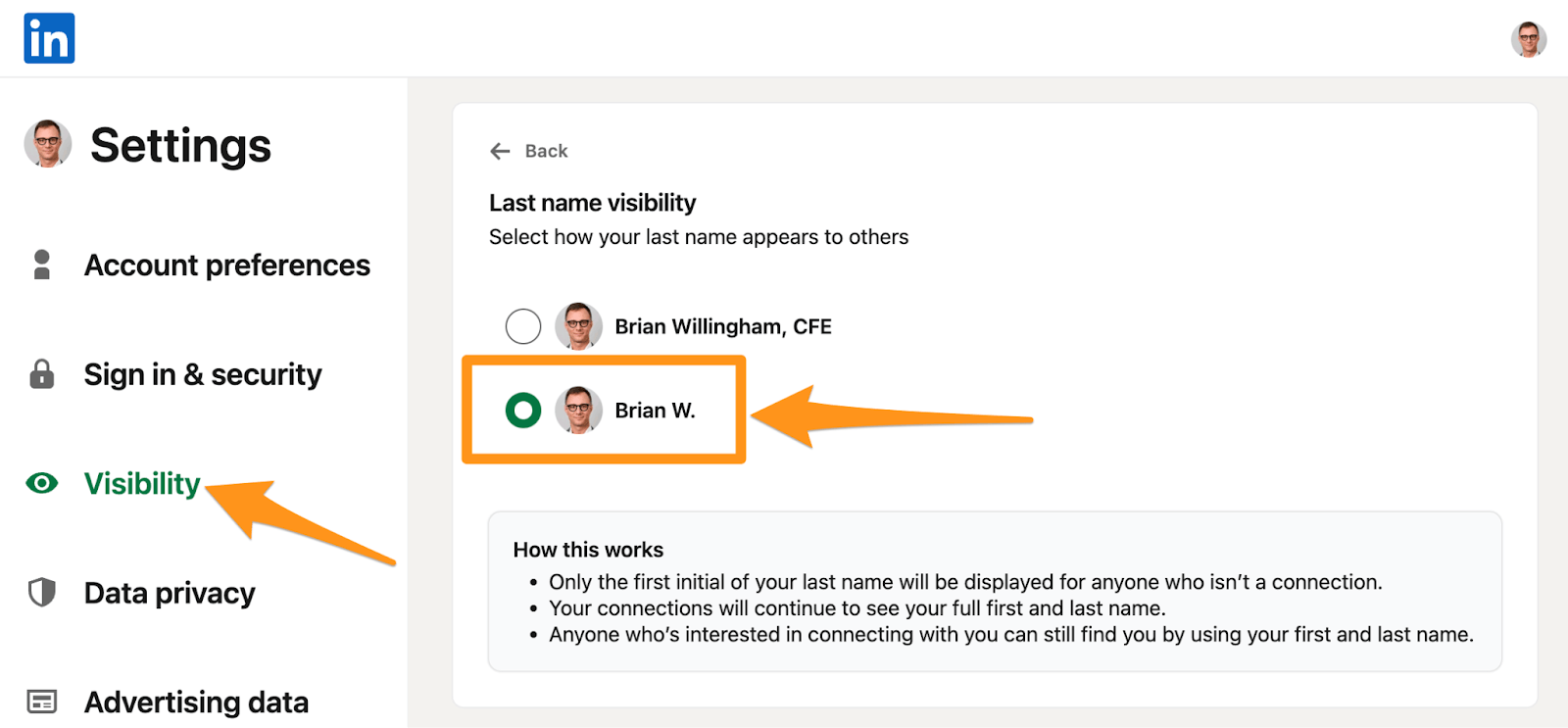
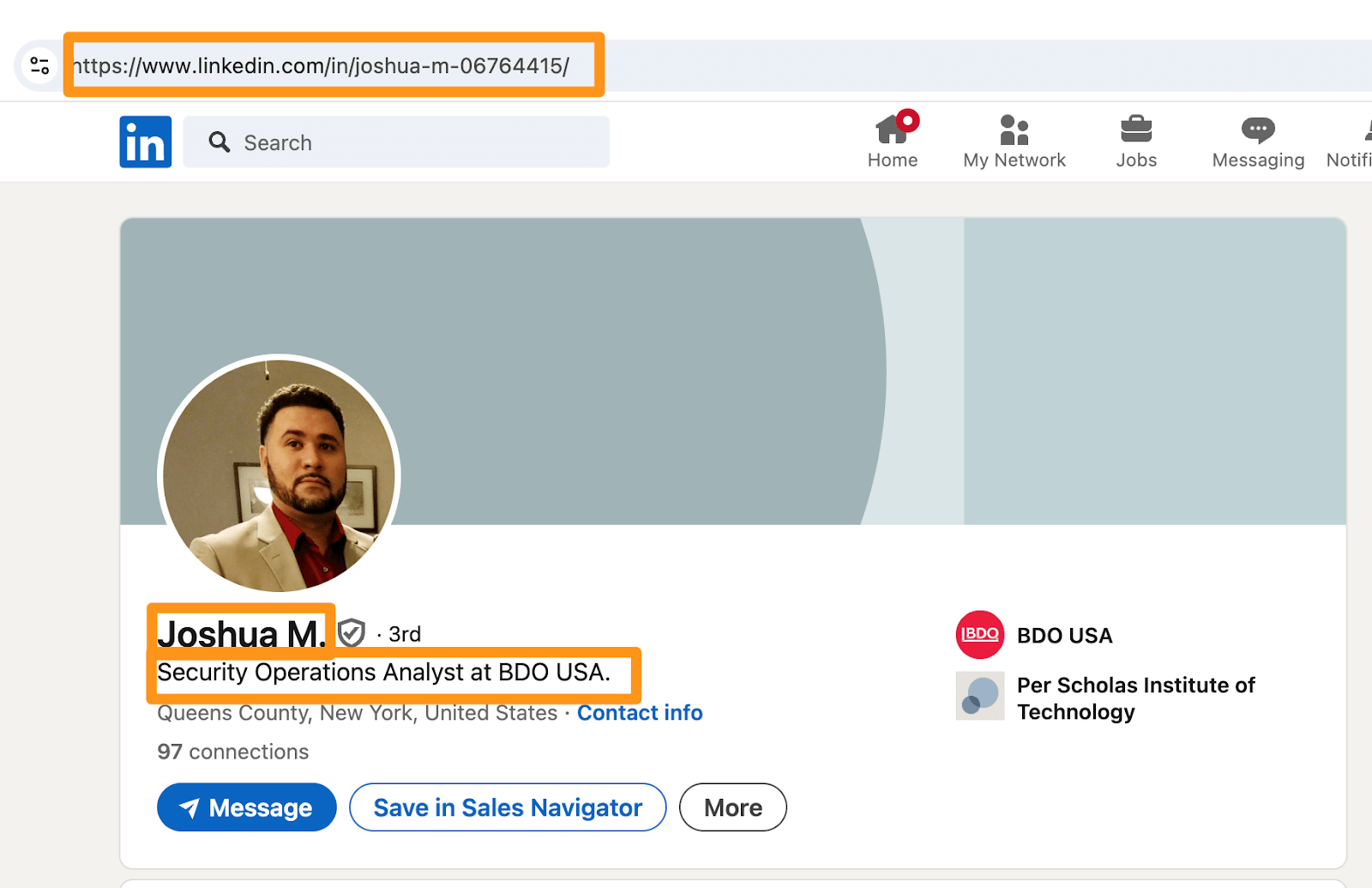
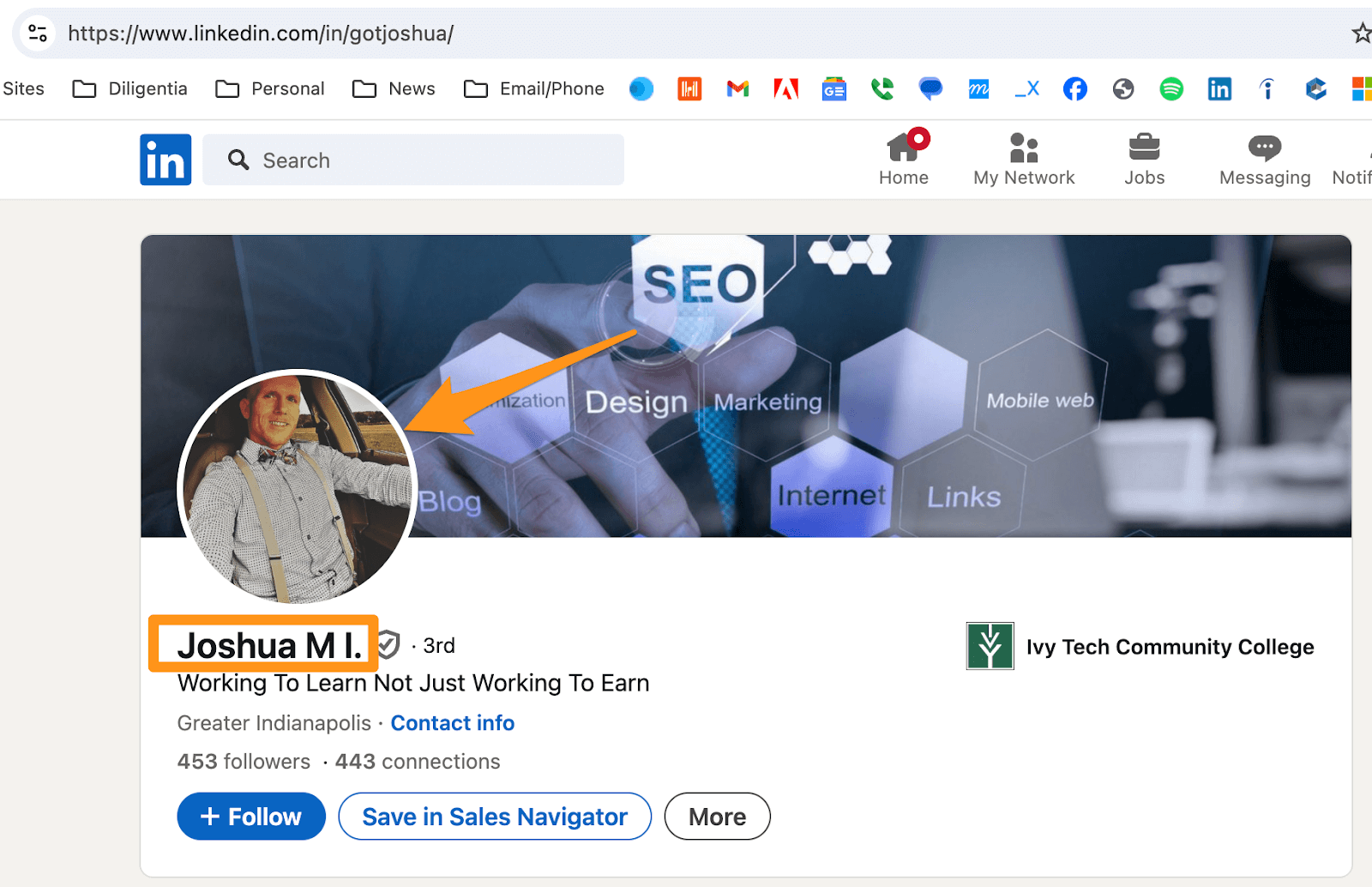
Every so often, you come across a LinkedIn profile that doesn’t contain the person’s full name—for example, “Joshua M.” LinkedIn users can choose to display only their first name and the first letter of their last name for anyone who isn’t a connection by going to settings and privacy, then visibility. 

I get it. 

Some people want to keep some semblance of privacy. 

While some may see the lack of last names as a hindrance and move on, I see it as a fun little challenge. 

The key is finding a pivot point—a point of inflection where you can combine multiple data points. For example, a middle name, date of birth or social media profile might find a data point to help identify who the person is when you pivot to another source. In my case, that might mean plugging the person’s middle name or date of birth into an investigative database to determine their full name. 

There are dozens of ways to determine a person’s last name or entire identity, some of which require deep research, but below, I’ve outlined some of the most common.  

I’ve included six examples of people named “Joshua M.” where no last name is revealed. Note that I’ve got nothing against anyone by the name Joshua. Or “Joshua M.” 

I just thought it would be a fun exercise to find examples of people with the same name. 

I have organized these from the most common way to the more uncommon ones. 

Without further ado …

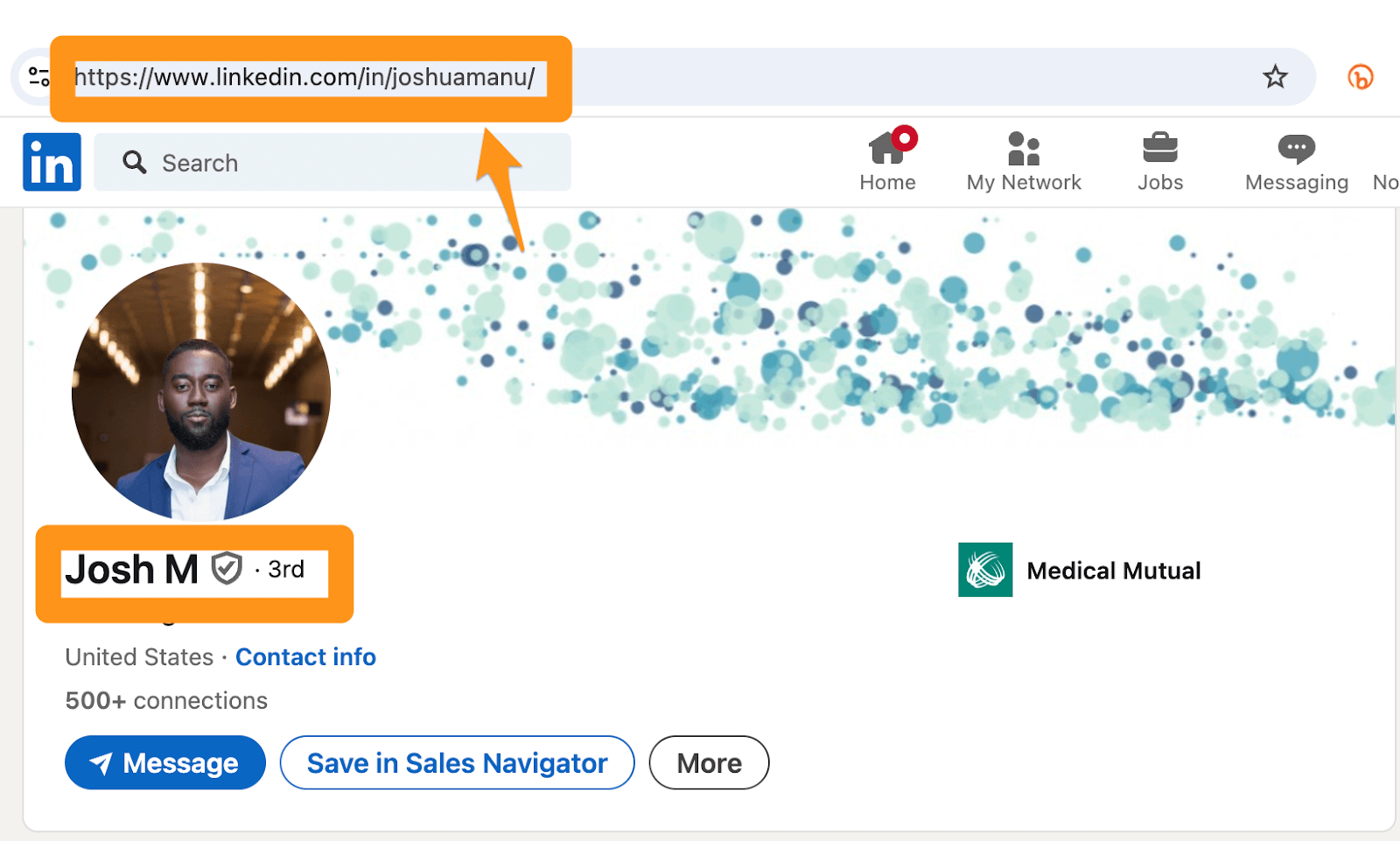
1 URL

The URL is the easiest and most common way to determine a person’s last name. Quite often, when only the initial of the last name is listed, the URL has the entire last name. I suspect the URL was created long before the person decided to go private and forgot to change it. (Here’s how to change your public profile URL on LinkedIn.)

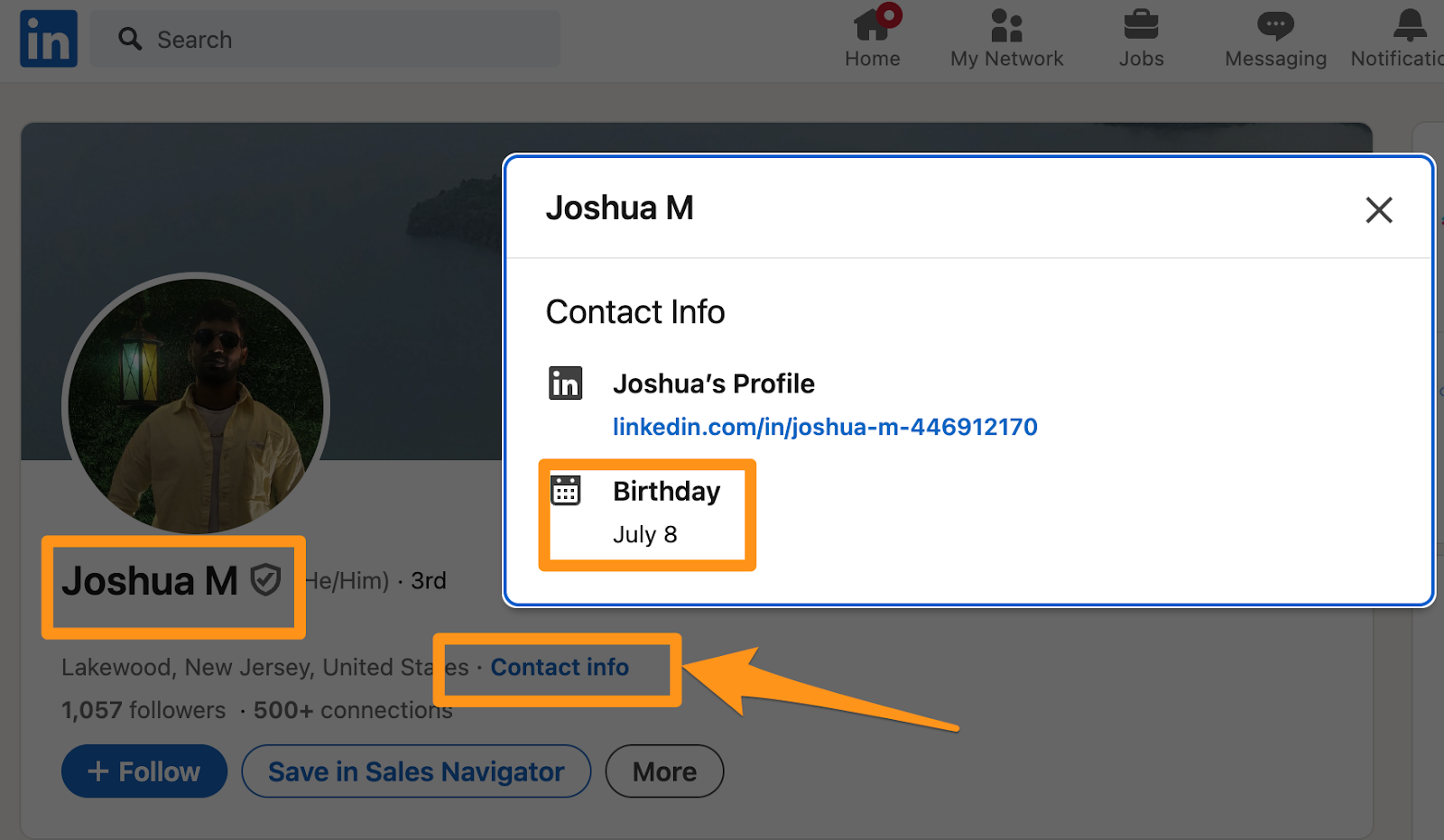
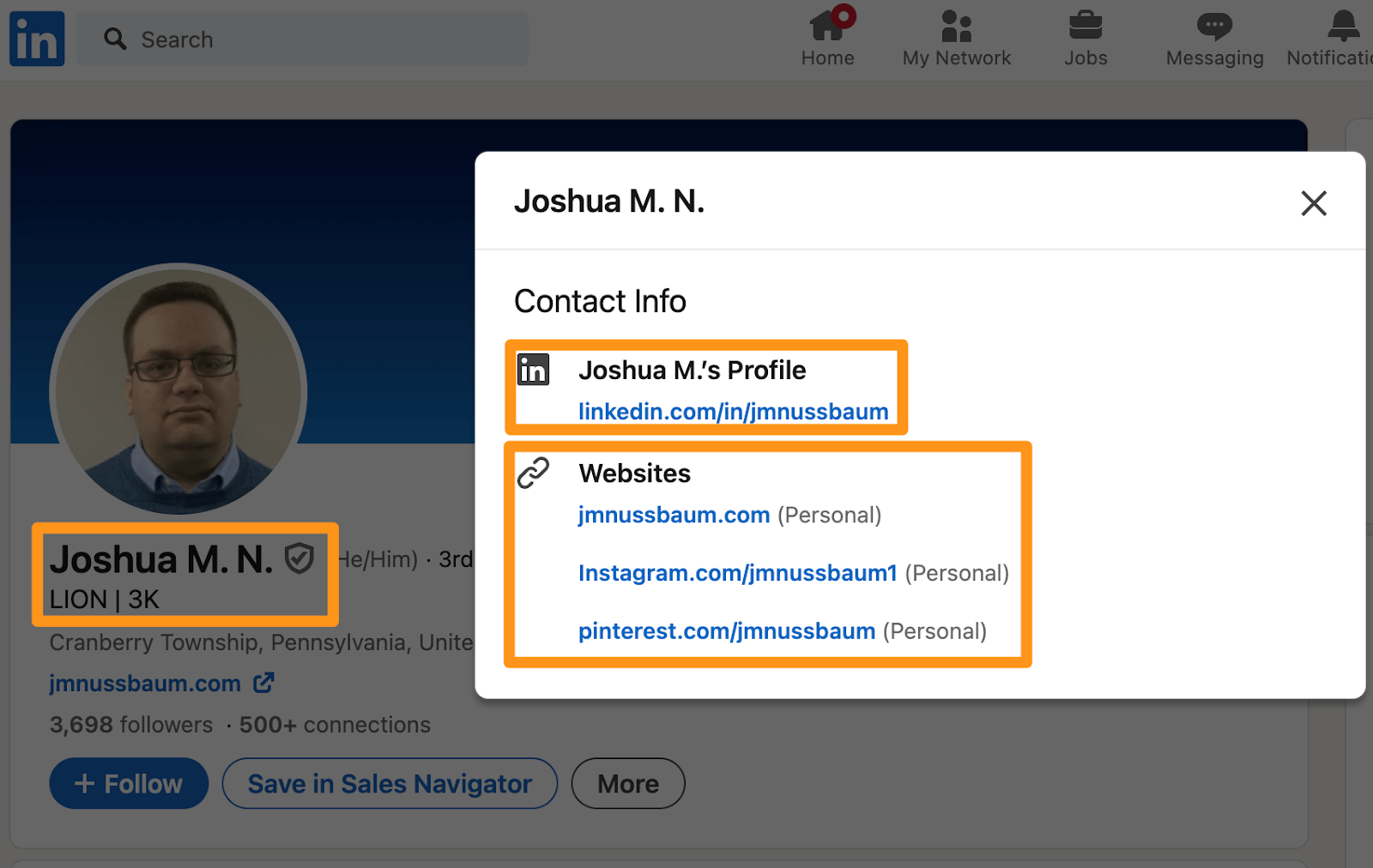
2 Contact Info

Every LinkedIn profile has a link to “Contact Info” underneath their name, which typically contains little information other than what is otherwise available on the profile. But in some cases, you can find an email address, date of birth, personal website link or handle on another social media platform, any of which you can use to pivot. 

3 Credentials

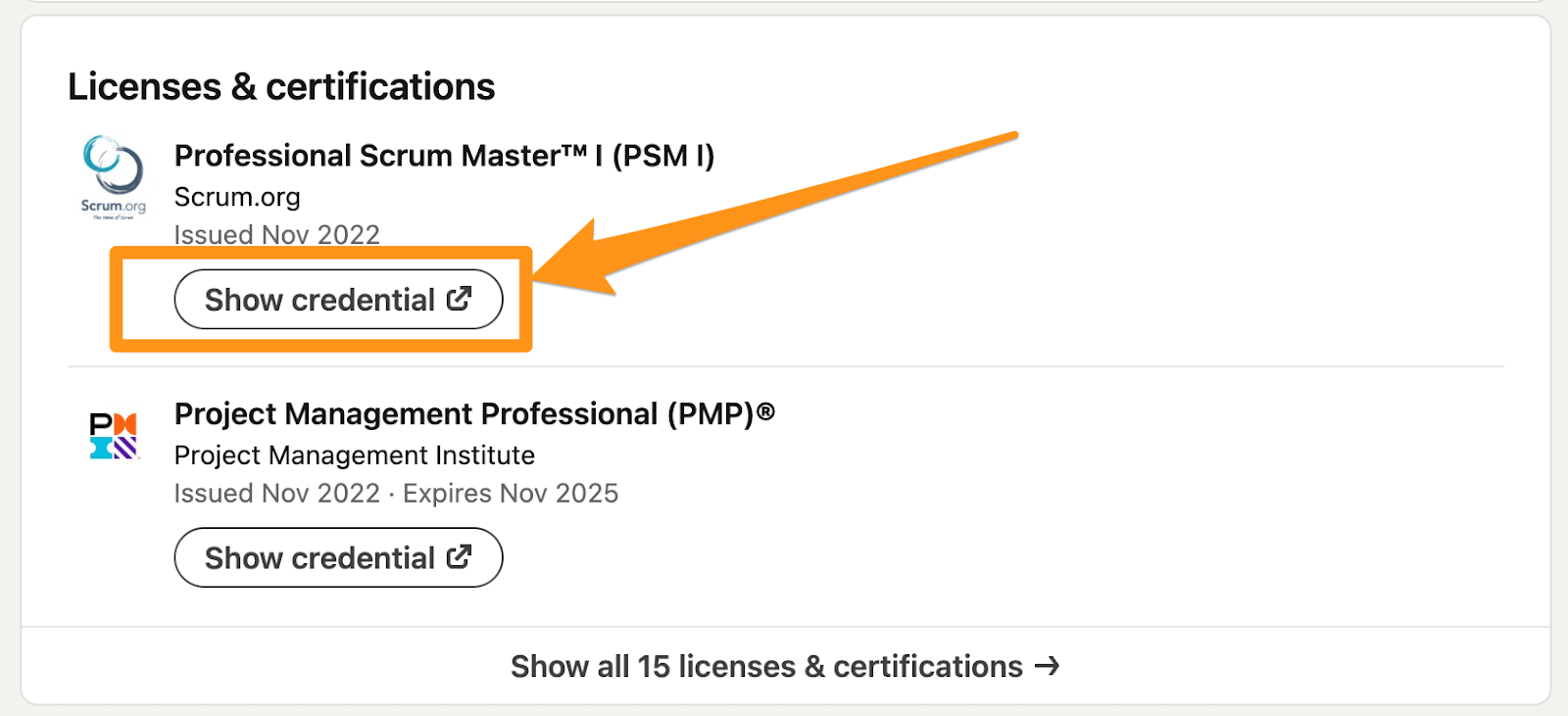
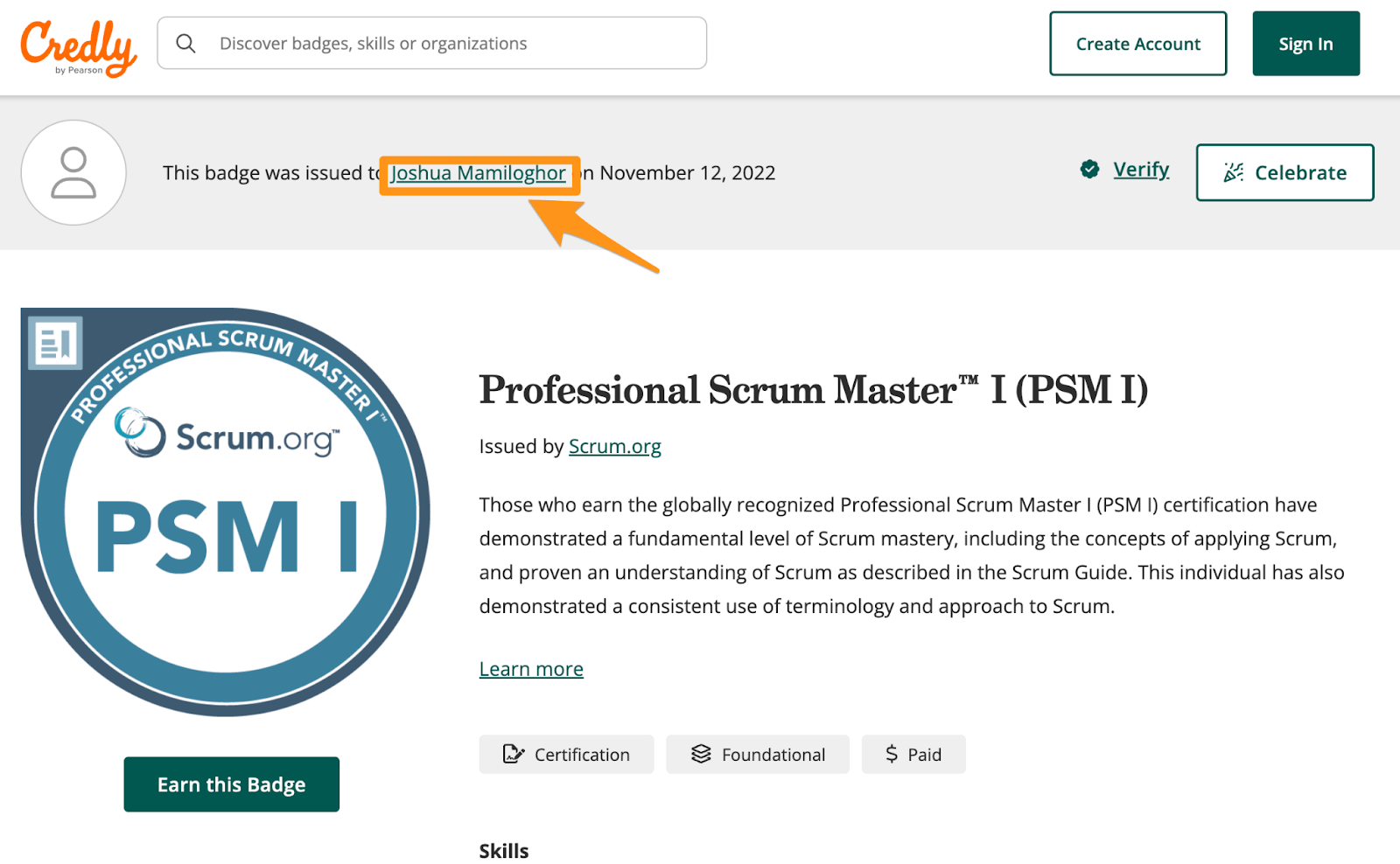
When the URL and contact info come up empty, a credential or professional license might be your answer. Since LinkedIn is a professional social networking platform, people often like displaying their credentials. More commonly, these credentials can be verified by simply clicking on the “Show credential” button, which brings you to a page that shows their full name. 

Voilà!

In other cases, it requires some manual effort. For example, a licensed nurse, a lawyer or a doctor can be verified through the local, state or national board by simply checking their license status. This can be a bit hit or miss, though, since not all of these websites allow you to search by just a first name. 

4 Creative Googling

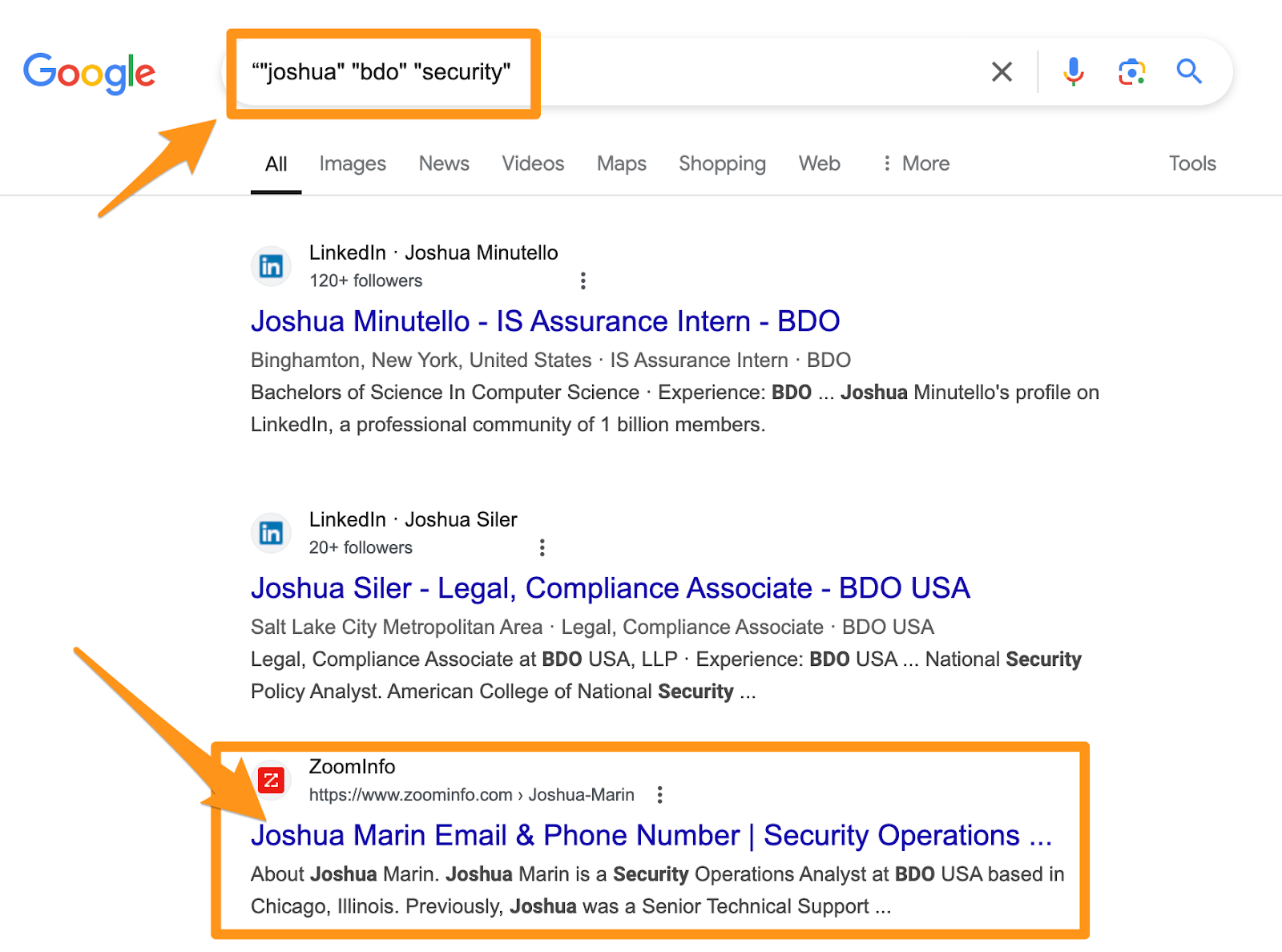
One of the best pivot points is finding unique data on a particular individual. So, even if you only have a person’s first name, like Joshua, but they went to Deep Springs College (the smallest higher education school in the United States) and you know their approximate age, you might get lucky with some googling. So, in this case, we have a guy who works in the security business, and with a not-so-creative but effective Google search, you may be able to identify another online profile for them.

5 Image Search

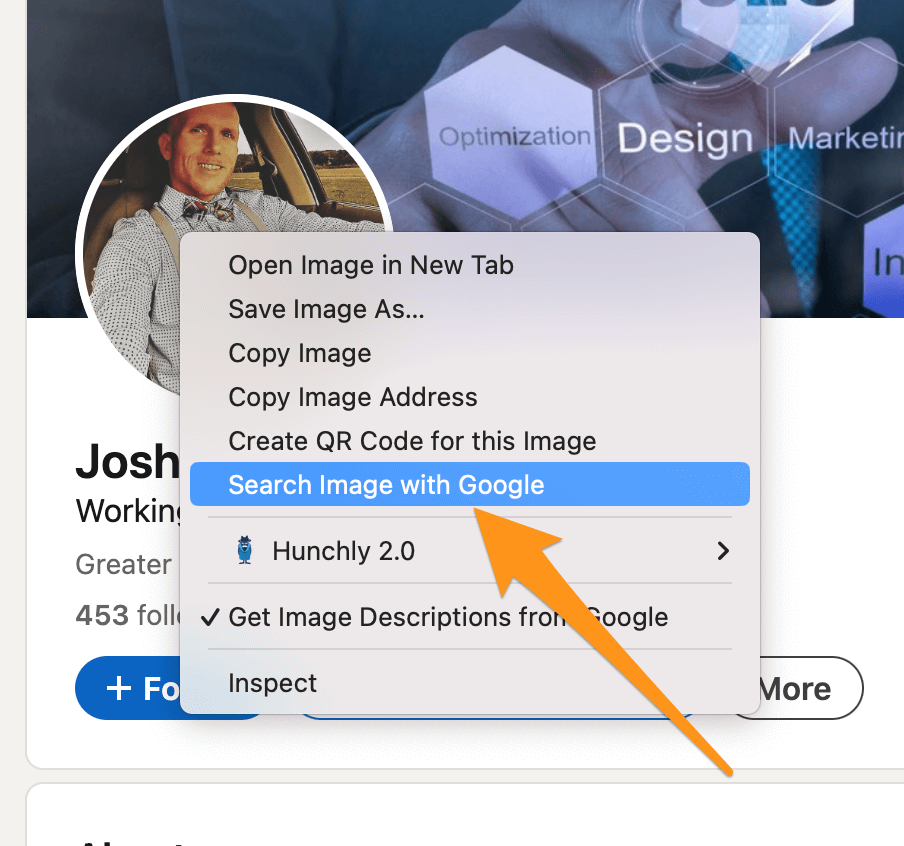
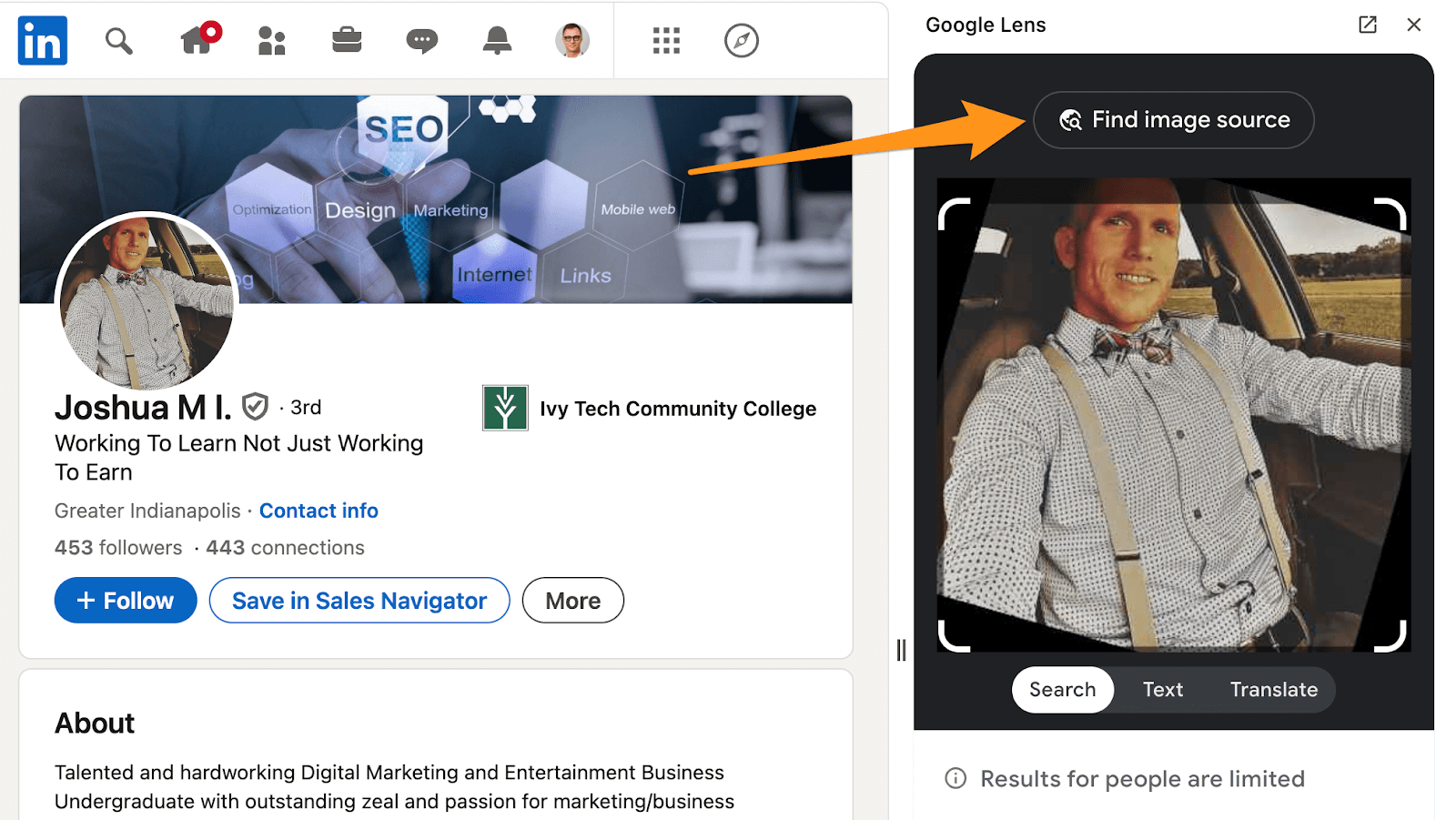
The image of the person can be a good source of leads. There may be some interesting detail in the photo, like a name tag or some unique item, that you can pivot from. You can use some commercially available facial recognition reverse image searches, like FaceCheck.ID or PimEyes. But you can also search the image in Google to see whether the photo has been used elsewhere. In this case, you can see that the user has a Pinterest account with the same exact photo and their full name.

Truth be told, Google image searches for people leave much to be desired. In fact, Google warns that “results for people are limited,” there are times when fortune may favor you.

6 Username

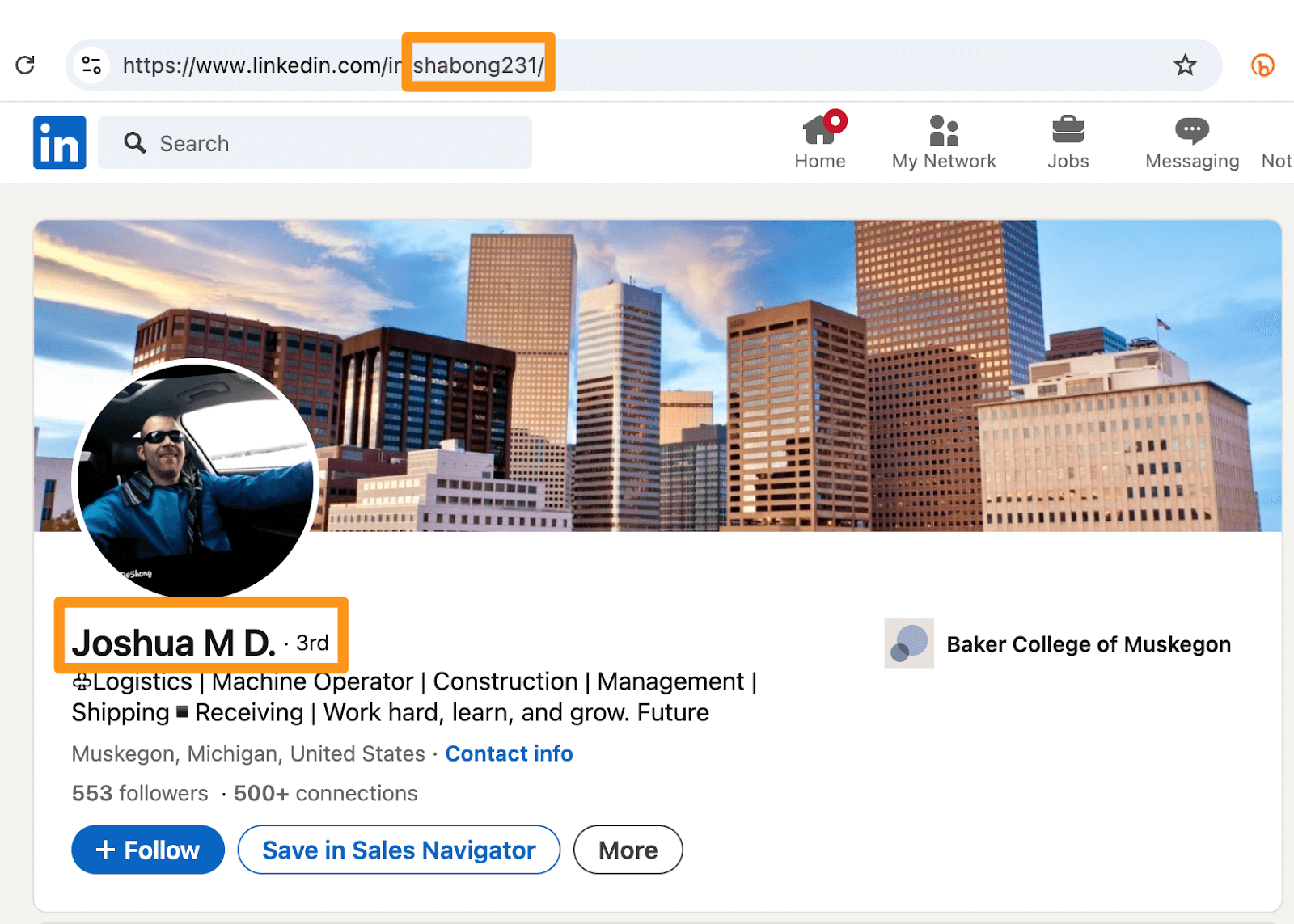
On many social media sites, people use their full name; on others, you will see users have a particular handle or username, like “babykitty1993.” LinkedIn users primarily use their real name in the URL. 

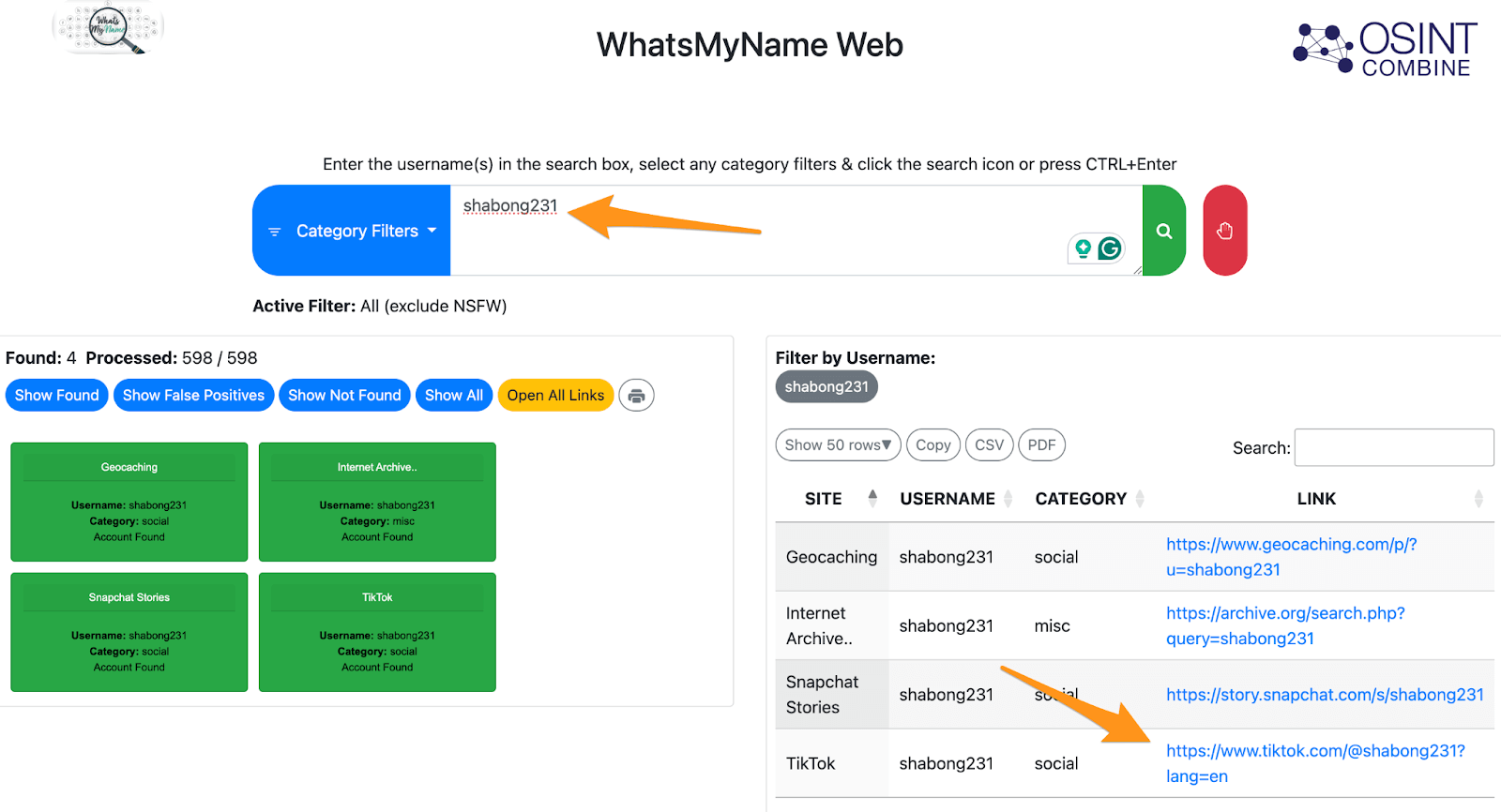
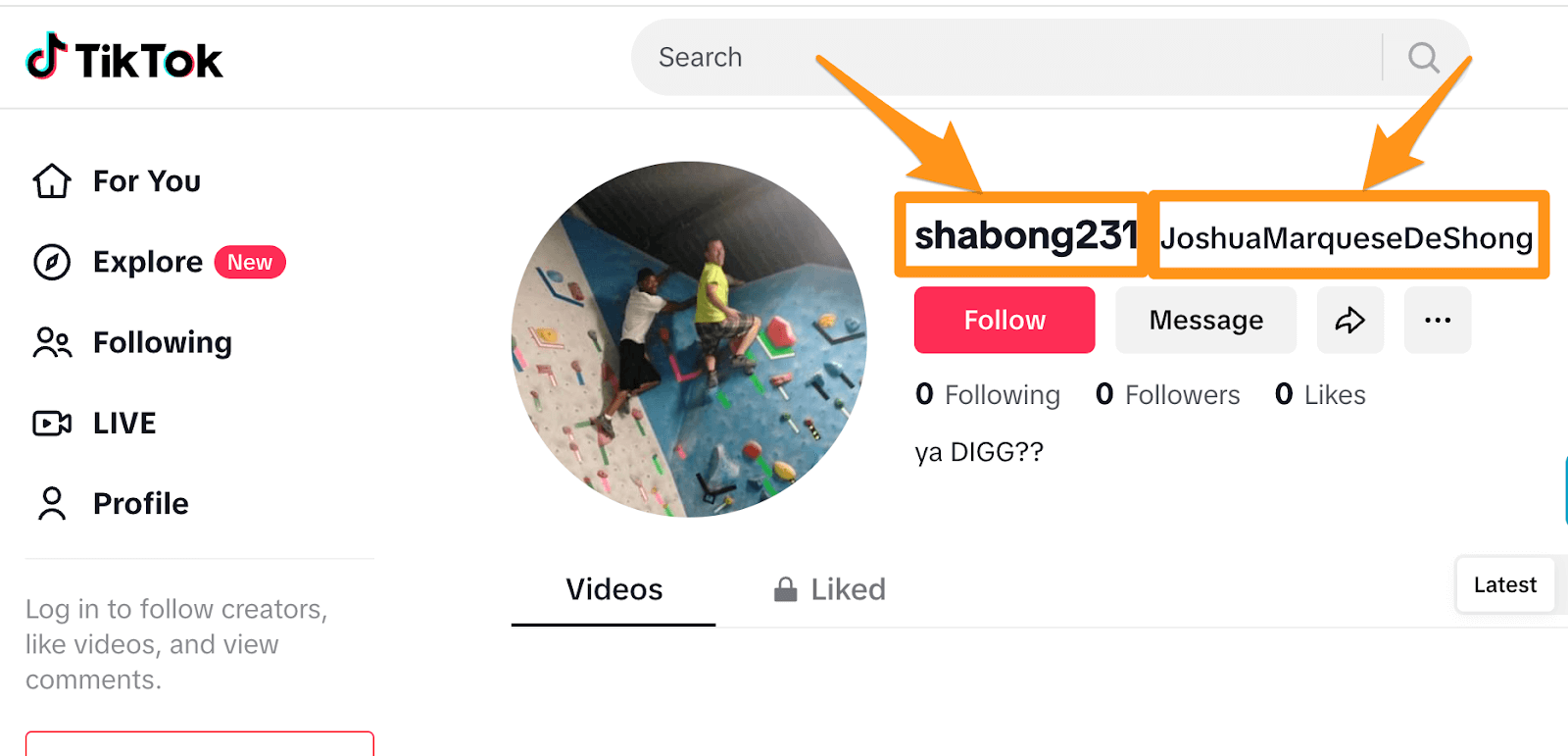
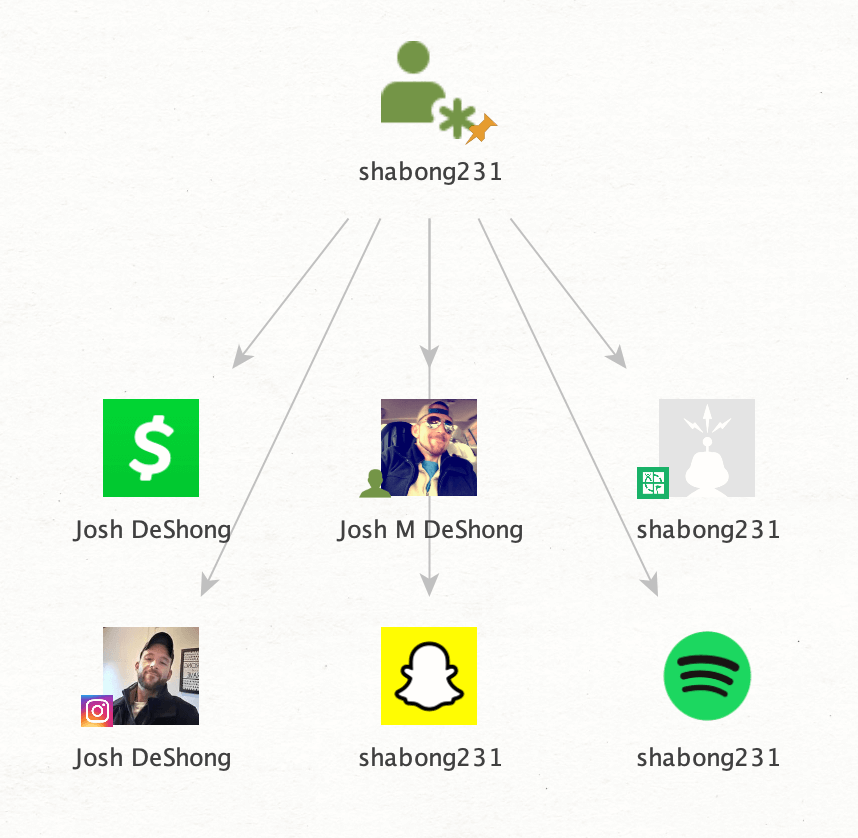
Usernames are typically unique to a person and are often used across multiple platforms. So when you get a username, it’s usually gold. In this case, the user has a particular username in the URL, and by searching that username on WhatsMyName, which searches across hundreds of platforms, you can find other platforms where the user has an account. You can even take it a step further and use OSINT.Industries or Maltego and ShadowDragon to further vet the username on other social media sites.

Screenshot from OSINT.Industries

Screenshot from Maltego / ShadowDragon

Closing

There you have it. Six simple ways to unlock the full name from a LinkedIn profile.

While LinkedIn offers a layer of privacy by allowing users to display only partial names, there are several creative and effective methods for uncovering the full name behind the profile. Whether conducting research, seeking professional connections or satisfying your curiosity, these six techniques can provide the insights you need without needing to resort to more-invasive tactics. 

Happy searching!

Enjoyed What You Read?

Join 2,000+ others to get insider tips and tricks delivered to your inbox from what has been voted the best blog in the investigative industry!

I’ve written many times about public misconceptions of our industry, including that some folks think all private investigators do surveillance, mostly on cheating spouses. They imagine us in the bushes with binoculars, spying on people.

The other thing we supposedly do all the time is find bank accounts all over the world and dutifully report this information to our clients, no questions asked.

I don’t do surveillance work. I did, quite some time ago, but it’s just not my thing.

For very different reasons, I never have—and never will—perform any kind of bank searches. I’ve written, spoken, and posted about shady operators out there who are willing to get this information. And I’ve stated repeatedly that I won’t do bank searches of any kind.

That hasn’t stopped people from asking me to, though. Every few weeks, I get an inquiry—sometimes from attorneys, fellow private investigators, or some Jane off the street who just needs Joe’s account information because he owes her money.

Legally, of course, there are ways to obtain banking information, including through permission from the account holder or through a legal authority, like a court order, subpoena, or search warrant. There is also the off chance that banking information may appear in some publicly available filing, such as a court filing, UCC filing, or the like, but it’s a rare case. Even so, the pieces of information that are accessible through permissions or public filings are generally not what people are looking for when they ask about bank searches. They are looking for the “wink, wink” bank searches where you just show them where all the money is.

I constantly see inquiries on private investigator message boards about how to get bank records and information about investment accounts. Recently, I came across a price list for an investigator offering personal or business bank account searches—for about $1,000 each.

Of course, I see the appeal in offering this service, but I just won’t do it. My answer to anyone who inquires usually goes something like this:

No.

There is no legal way to obtain banking information without permission from the account holder or legal authority.

None.

I don’t do bank searches. I know quite a few firms out there do it, but I don’t.

And I won’t do it.

Ever.

Let us start with the most obvious reason.

The Laws

Banks can only disclose information with proper legal authority.

The laws are pretty straightforward: There is no legal way to get bank records without proper legal authority.

The Right to Financial Privacy Act prohibits financial institutions from disclosing bank records or account information about individual customers to governmental agencies without: 1) the customer’s consent, 2) a court order, 3) a subpoena, 4) a search warrant, or 5) some type of other formal demand, with limited exceptions.

The Financial Services Modernization Act of 1999, commonly called the Gramm-Leach-Bliley Act, made it illegal to obtain bank information under false pretenses.

Why, do you ask, was this enacted? Because “investigators” were calling banks, pretending to be the person with the account, and obtaining financial information.

Within these laws, there are some limited exceptions. For example, GLBA allows bank searches for “State-licensed private investigators acting under court authorization to collect child support from a person adjudged delinquent.” But 99.99999% of people looking for bank records aren’t collecting child support. They are looking for some other reason.

Frankly, it’s easier and safer to just say no to all bank searches instead of playing a game of Twister to stay within the very limited permissions and exceptions. Or to describe that one time, when I was looking for a needle in a stack of needles and found a copy of bank statements in a legal filing. There just aren’t enough of the legal kind to make it worth my while. Why risk it?

There you go. That seems pretty cut-and-dried to me.

Frankly, this article should end here.

But if you want to hear more about why I keep saying no, here you go:

Ethics

My privacy standards are non-negotiable.

Close your eyes for a moment and imagine a world where anyone can find out how much money you have in your accounts.

That. Is. Frightening.

And it’s a scammer’s dream scenario.

It also horrifies me that some investigators put GPS trackers on vehicles instead of following them the old-fashioned way. That gets me pretty fired up, too. (Generally, GPS trackers can be legally placed on a vehicle you own, but not on anyone else’s.)

Nevertheless, a Nevada private investigator, for some reason, thought it was a good idea to put a tracker on the Reno mayor’s vehicle. He claimed it was “nothing personal,” but he’s still getting sued.

When a thing like this happens (and it happens pretty frequently), all I can think about is this: What if some creep put a GPS tracker on my teenage daughter’s car? I don’t care what the stated reason might be. In my eyes, it’s an outrageous invasion of privacy.

It’s stalking.

Period.

I get that some people may think traditional surveillance methods are also an outrageous invasion of privacy. Personally, I think there’s a big distinction here. In traditional surveillance, you’re observing someone from public spaces and finding out what they’re up to by following them—from a safe distance, using your own guts, skills, and simple tech like a camera with a long lens. But when you plant a spyware device on a car, there’s no skill and no distance; that device can follow people onto private property—24/7—and you can observe their movements the lazy way, by watching a screen in the comfort of your own creepy “batcave.”

The law defines the limits of legal surveillance by what places people can reasonably expect privacy—such as inside their homes or behind a high fence. If you’ve got to fly a drone or climb over a fence to go onto private property, you can’t legally get the shot. To my mind (and according to the laws in many states), GPS trackers violate that expectation of privacy in a similar vein.

And so do bank searches.

My privacy standards are non-negotiable.

Don’t you expect your banking information to be kept private?

But what if you, the investigator, have some really good reasons to use the GPS tracker … or access the bank account information? You’re the good guys. This is a tool you need, in order to defeat the bad guys on the other side.

When I ask prospective clients why they want me to fetch them some financial data, I get responses like: “We’re trying to find out where this creep is hiding his money, which he’s refusing to pay to his ex-wife and kids.”

I call those kinds of ethics “situational,” where the end supposedly justifies the unethical or illegal means.

I don’t subscribe to that. I have a set of legal, ethical, and moral standards, and I stick to them.

Doesn’t matter the situation.

Transparency

I don’t trust “secret sources.”

Every single person whom I have ever had the pleasure of speaking with about bank searches, and every single piece of written material I have ever seen about bank searches, have a few things in common: “We can’t reveal our source(s),” “it’s proprietary data,” and “it’s GLBA and FCRA compliant.”

They usually throw “trade secret” somewhere in there.

You might be saying to yourself, “Brian, give me a break. They’re not going to tell you how they do it!”

Maybe not. But if you can’t tell me how it’s done, and I can’t explain it to my client, I won’t touch it.

Period.

I won’t stick my head in the sand and just pretend it’s above board if I don’t know for sure.

You can. I won’t.

I can just imagine myself in front of a jury, trying to explain how I came across the bank account information that’s been submitted as evidence at trial: “I don’t know where it came from. I paid some guy to get it for me.”

How do you think that would go over in court?

But if you can’t tell me how it’s done, and I can’t explain it to my client, I won’t touch it.

It’s like paying someone for the contents of someone’s email inbox. The only way to get that data is through hacking, phishing, or some other illegal means.

Here’s the thing: Secret sources have a massive reliability problem. Is this “secret source” doing something illegal to obtain the information? Is the data fabricated? And if I have to testify about this, how’s that going to look to the judge and/or the jury?

The biggest problem is that what most PIs call “trade secrets” tend to be a thin cover for illegal activity. Just ask Anthony Pellicano. He was known as the private investigator to the stars, who could get information that nobody else could find, via means that were a Pellicano trade secret. “I don’t care how you get information,” one Pellicano attorney-client said. And then it was discovered that he was wiretapping phones, threatening witnesses, and paying off police officers for confidential information.

Pellicano served jail time.

And so did some of his clients.

Suddenly, people cared how he got the information. They cared from behind bars.

Unreliability

I wouldn’t bank on the results of these searches.

The results of these bank searches are extraordinarily inconsistent. These firms know it and set expectations low: Nearly every firm I’ve seen pitching these services has claimed that they are not 100% reliable.

This arouses a deep suspicion in me …

I admit that my suspicion is mainly anecdotal, based on stories told to me by investigators I know who have used the most notable firms in this space. In one case it was a personal matter—they were trying to find accounts for a family member. In the other case, the investigators used it for work relating to divorce and other legal matters.

For both investigators, the bank searches came up empty.

Like, zero.

No bank accounts in the entire United States.

In the case of the family member, it turns out there were two known accounts, NOT hidden behind six shell companies, that the bank account investigator simply didn’t find.

Seems like it should have been a pretty easy case—on the scale of breaking into your kid’s piggy bank versus breaching Fort Knox.

I’ve gotten my hands on how one firm does it: They use what they’re calling “proprietary software” that’s based on “algorithms” and data from “third-party providers,” which analyze the transactions and verify data. This firm claims that everyone who has written a check or transferred funds would be in the SWIFT payment system.

So if this is some legit technique, authenticated through the SWIFT system, what accounts for the big, whopping misfires my colleagues have told me about?

I am not willing to put my reputation on the line for some fly-by-night firm …

How is this “proprietary software” so unreliable?

I’m thinking of those claw machine games at seedy carnivals: The toys in the box are right there, enticing you, easily within reach. Nobody truly understands how the claw works, but you deploy it all the same. Occasionally, it fetches a treasure. Sometimes it snags some trash.

But usually, the damn thing comes up empty. 

Reputation

I’m not willing to put my professional standing at stake for an unreliable (and probably unethical) service.

Sometimes the unreliability problem leads to a false negative—a failure to locate existing accounts, say. Other times, a bank search error can actively endanger a case—and my professional reputation.

Let’s just say I happen to hire a bank search firm and pass on those results to my client.

I have no control over what the bank search firm does; I am just trying to help my client. Right?

Except that when I get the results back, it turns out that the firm I hired provided me with bank account information that didn’t actually exist.

That’s embarrassing, but it’s not your fault, of course, because it was the firm that you hired that messed up, not you. So you are not liable.

Or are you?

Does this seem far-fetched? Because this exact thing has happened on at least two occasions that I’m aware of.

In 2009, a Virginia investigator hired a California investigator to obtain information about foreign bank accounts. Despite the investigator finding two purported bank accounts in Puerto Rico, when the client ultimately tried to collect from those two bank accounts, the banks revealed that the accounts did not exist; the investigators fabricated the account information solely to turn a profit. Both the Virginia and California investigator were sued.

I don’t trust “secret sources.”

In or around 2020, a Tennessee investigator was hired to search bank accounts for a husband and wife. The Tennessee investigator hired a Texas investigator who, in turn, found over a million dollars in several overseas bank accounts in Luxembourg, Switzerland, South Africa, and other countries. The problem was this: The accounts did not exist, and litigation ensued against both the Tennessee firm and the Texas firm for providing false information.

That’s more than just embarrassing; it ties your agency to a fraud case and may get you embroiled in litigation. And this is never, ever a good marketing plan for an investigative firm.

Oh, and despite laws against doing so, there have been other private investigators charged with pretexting a bank, trying to ascertain bank information under false pretenses.

Imagine prospective high-profile clients Googling you. What do you want them to find?

In this business, reputation is everything. And I am not willing to put my reputation on the line for some fly-by-night firm …

The One Real Reason

In short, there’s really only one real reason you shouldn’t be doing bank searches: They are not legal, except in the tiny fraction of cases when they are. Sure, there may be some ethical grey areas where you might be able to ascertain some unreliable bank information, but why risk everything for those? And just in case you still need some convincing, I gave you four more reasons.

If those don’t tip the scales, I don’t know what will.

I don’t need to cheat.

But you know what? Just for good measure, I’ll throw in a bonus reason here at the end:

I don’t NEED to do bank searches.

I do very well working my cases the old-fashioned way, using my guts, skills, and simple tech—usually, a laptop and an arsenal of non-secret OSINT  tools that are legal, ethical, and transparent. To me, shady shortcuts like GPS trackers and “secret source” bank searches are cheating.

I don’t need to cheat.

I’m better than that.

And, I’ll wager, so are you.
Enjoyed What You Read?

Join 2,000+ others to get insider tips and tricks delivered to your inbox from what has been voted the best blog in the investigative industry!

Thanks to a recommendation from Hal Humphreys at PI Education, I got a chance to listen to the Bone Valley podcast a few weeks ago while I was driving through Arizona.

It’s nine episodes (nine-plus hours) of pure entertainment that fit perfectly into my weeklong saunter from Phoenix to Sedona to the Grand Canyon and back to Phoenix. Although the atmospheric river dumping on the West Coast put a bit of a damper on things, it was still a great trip.

As for the podcast, the only time I get to listen to one is on these long trips. My commute to work is less than a mile, and sitting around my house listening to a podcast just doesn’t suit me. And working while listening never seems to work for my brain.

The podcast is hosted by Gilbert King, a Pulitzer-winning author, who was tipped off by a Florida sitting judge about Leo Schofield, a man convicted of murdering his wife in 1987. Schofield, who was 21 years old at the time of the murder, has been serving a life sentence even though another man has confessed to the murder. It’s a chilling story about a murder and a miscarriage of justice.

It’s probably the best true crime podcast I have ever listened to.

I know a lot of my colleagues in the business might have some more interesting takes on the criminal defense angle here, but as someone who doesn’t focus on that kind of work, here are a few of my takeaways from the Bone Valley podcast.

Good investigations take time and resources

King and his assistant spent nearly four years on the research and inquiries needed to wrap up their investigation. Think about the number of man hours and amount of resources and money needed to get to the bottom of this. For argument’s sake, let’s just say that King and his assistant each spent 1,500 hours a year on this for four years (12,000 hours total). Even if you don’t include any of their expenses, at a modest hourly rate, you are talking about over $1 million to get to the bottom of one case.

I understand that someone’s life is at stake here, and turning over a criminal conviction is no walk in the park, but it’s a healthy reminder that investigations take time and resources. Investigations are messy and don’t often neatly wrap up in one hour, despite what Jessica Fletcher and Frank Columbo would have us believe.

People don’t like to be wrong

This may seem pretty obvious, but nobody likes to be wrong. And admitting to being wrong is even more complicated. There seems to be a lack of admitting to anything wrong in police work regarding wrongful conviction cases. You often find police officers who go to their graves believing they were right about their work, despite any new evidence, science or confession that may contradict them.

I empathize with the officers. Nobody likes admitting to being wrong.

But getting it right — and not just “being” right — should always be the goal here.

Despite the effect it might have on one’s ego.

There are good facts and bad facts

In criminal defense, there is a saying that there are good facts and bad facts. For example, if you were accused of murdering someone, the fact that your cell phone location was in the same area as the body is a bad fact, but someone else’s DNA (and not yours) being at the scene is a good fact.

King does an excellent job of presenting all of the good and bad facts in defense of Leo—the bad facts being that he was abusive to his wife, a bizarre premonition had by Leo’s father and some interesting eyewitness testimony.

The good facts included the unknown fingerprints, the lack of a murder weapon and a timeline that didn’t add up.  

You’ve got to deal with all of the facts, good and bad.

Ignoring the facts doesn’t change them.

So, those are a few of my takeaways. What did you think of Bone Valley?

Enjoyed What You Read?

Join 2,000+ others to get insider tips and tricks delivered to your inbox from what has been voted the best blog in the investigative industry!

Screen capture tools for saving social media pages and web pages is a topic that comes up frequently for private investigators. There are tons of tools out there, ranging from the simple snipping tools to complex screen capture software that “captures” metadata, timestamps and links.

There are some companies that offer really expensive tools for collecting evidence on a mass enterprise scale, like PageFreezer, X1 Social Discovery and the like. These services can cost thousands of dollars and are designed for big-data collection.

While those are amazing tools for massive cases, that’s not what most of us small investigation shops do.

More often than not, my typical use case would be when I need to:

  1. Screen capture something to add into a report;
  2. Save an entire web page to include as an attachment to a report or collecting “evidence” (I am using that term pretty loosely here); or
  3. Capture some critical piece of information that may disappear from the Interwebs (that’s a technical term).

While most of the work that I do as a private investigator does not end up in court, I constantly have an eye toward how the information is collected in case it ever does end up in court.

So, for example, if I am conducting a sensitive interview, I might want to record the interview (with permission depending on the state you are in), have a second witness with me to validate the conversation or draft a summary of the interview immediately after, and have the person sign an affidavit or declaration. That way, in case the person misremembers something or changes his or her mind, I’ve got some good backup.

Similarly, if I ever need to authenticate any of our background investigation research, I can refer to the court document, news article or corporate filings where we found the information. If needed, I can get certified copies of court documents of government filings to present in court.

More frequently, information for the vast majority of our casework is being collected via the Internet, especially social media. Since that type of information can be deleted or altered at any moment, simply including a link to a web page in our report may not be enough, since by the time it comes up, it may not be there anymore.

The more sensitive the case, the more cautious you need to be.

Warning

Before I get into the meat of this post, I am not a legal expert and don’t pretend to be. If you are doing some serious evidence collection with a lot at stake, you should first consult an expert and/or an attorney.

Don’t rely on what I tell you.

That being said, after years of collecting information, this is the process that I typically go through.

Screen Capture for Quick, Everyday Use

Built-in screenshot applications on Mac and the snipping tool on Windows computers are good if you need to capture something quickly to share. They can easily be stored on your computer and dropped into an email or report, and offer a great visual.

I also use the built-in features of Google Chrome’s “Save as a PDF” to capture an entire web page. These are typically pieces of information that are particularly interesting that I may want to refer to. What I like about this form of data collection over simply just taking a screenshot is that the text is searchable, so I can recall the information by simply searching my computer without much of a problem.

In terms of preserving evidence, neither of these ways is particularly good. Screenshots are just photos and can be easily altered; the same goes for PDFs. It doesn’t take much to alter those, either. 

I’ve got some pretty rudimentary Photoshop skills from 20+ years ago, but I am pretty sure I can alter a screenshot to make it look legit enough that nobody would be able to tell it is a fake.

Not that I would ever do that.

So, even if the initial manner in which you preserve the evidence isn’t the best, it might be important to capture something quickly, because it might be taken down.

Screen Capture for Good-Looking Screenshots, with Extra Protection

As described above, most web browsers give you the option to save as a PDF, which includes the URL and date/time of capture; most of these built-in features give you a jumbled-looking, ugly PDF.

There are several Firefox and Chrome add-ons that make the page look a lot prettier. Fireshot and GoFullPage are two of the most popular (although as of the date of this post, Fireshot for Chrome is not working). I strongly recommend the paid versions of these; they have features like adding a date and full URL.

There are a number of built-in features to make screenshots pretty by using “smart” PDF page splitting, and include the URL and timestamp on the page.

While this is similar to saving a page to a PDF, it makes it look so much better. It will look exactly like the web page as you see it, so it’s familiar to everyone. What you see is what you get; WYSIWYG for you nerds out there.

(Note: GoFullPage looks like they have a “legal” version in the works for legal professionals that seems interesting.)

So, if you need a pain-free way of collecting a web page exactly as you see it, to attach to a report or court filing, this may be a good choice.

Secure Collection

For cases that I think may end up in court or involve scenarios in which authenticity may be challenged, I turn to Hunchly.

This is where things start getting nerdy. But in short, if you need to collect evidence that may be ultimately challenged and attacked in court or elsewhere, you need to start thinking about collecting evidence to be preserved accurately and minimizing the risk of tampering.

For this, I use Hunchly, a lightweight Chrome extension that captures web pages in MHTML format, and that includes a timestamp and maintains links and metadata. What Hunchly captures is automatically timestamped, hashed and stored on your computer hard drive. So, while you are scrolling around the Internet, Hunchly is working in the background saving everything that you are doing in a secure way.

What’s great about this is that you can always go back and search Hunchly for something that you captured, meaning you don’t have to worry about recalling the exact web page of some little nugget of information that you found weeks ago.

All of the data is stored on your computer, where it can be saved for eternity.

I don’t use this in every case I work, but there are cases in which I will. In other cases, I might save a few web pages into Hunchly if they are important. This way, I’ve always got a record of them, in case it ever comes up again. 

Hunchly is not perfect. It doesn’t do a great job with scrolling web pages, like a Facebook or Twitter timeline. It also doesn’t always produce the prettiest looking pages that, for example, I can attach to a court filing.

So what do I typically do?

For sensitive cases, I will capture them through Hunchly; then, to preserve them and capture them, I will use GoFullPage to include in a report or affidavit. This way, I have the secured collection of Hunchly, with the lovely PDF that GoFullPage will produce.

(I spoke to Justin Seitz, founder of Hunchly, and he says that Version 3.0 of Hunchly is going to handle some things much better.)

Hunchly costs $130 per year and it is worth every penny for the peace of mind it affords.

For Secure, Court-Ready Critical Web Pages

The last recommendation is Page Vault. I have been using this company’s product for several years. What I like about Page Vault is that it is designed specifically for legal professionals, so they are speaking the same language as the attorneys I work with.

The captures from Page Vault look great and include all the metadata and secure hashing. But what separates this from other services I mentioned is that it keeps investigators out of the chain of custody of evidence and outsources the technical issues to an outside firm. So if there is a question about the authenticity of the documents, professionals at Page Vault can issue an affidavit about the screen capture process, and Page Vault can serve as an expert witness to describe the technology and storage process behind it.

I am pretty good at some things, but explaining the technology behind the capture process and technical jargon is not one of them.

So, my use case for this would be a one-off situation in which there were a few critical web pages that needed to be authenticated and saved and that may come into question down the road.

Page Vault starts at $100 per page capture, so it can get pricey depending on what you are doing.

Bonus Tools

One thing to consider when archiving web pages is saving the data to Archive.org, Archive.today or another third-party archiving site. As most of you know, Archive.org is the largest repository of historical web pages on the planet. It’s an incredible resource for so many things.

One thing you may not know, though, is that both Archive.org and Archive.today have ways that you can submit a URL to be archived onto their site. I use the Chrome extensions (Archive.org Chrome extension; Archive.today Chrome extension), where you can archive a specific page while you are on it.

I like this method because it’s permanently saved through a third party whose credibility is widely known. Having said that, you have to be careful what you are saving for these services, but you get the point.

Thanks to Steve Mason for starting up this conversation.

Enjoyed What You Read?

Join 2,000+ others to get insider tips and tricks delivered to your inbox from what has been voted the best blog in the investigative industry!

If the Internet age has taught us anything, especially in the last year, it’s that people are not afraid to share their opinions. Whether it be politics, social issues, or politics (see what I did there?), Internet message boards and social media offer platforms where anyone and everyone can make their opinions known.

As a private investigator, opining can be a slippery slope. More often than not, our job is simply to identify and present facts. We leave the judgments regarding guilt, innocence, character, emotion, well-being or state-of-mind to the client.

We are not judges, jurors, psychologists or mind readers.

We are fact finders.

In our line of work, we are often tasked with composing background reports on a variety of people for a variety of reasons. The report may be part of a lawsuit, for an investor, or for a business deal. The first rule of writing these reports is that we NEVER offer our opinion. Our job is to gather information, analyze it, and report the facts in a clear and concise manner that informs our clients and allows them to make informed decisions. The only opinion that matters is the client’s, not ours.

So, while we can tell the client that we identified dozens of photos of what appear to portray drug use with youngish women, calling the person a drug-dealing pimp is not something we would ever do.

Similarly, suggesting that someone is a loving person, “reformed,” or presuming that someone had turned around their life intimates that we are mind readers or psychologists. The truth is, we still get surprised at which facts our clients find relevant to their bottom line and which they find irrelevant.

We were recently provided a portion of a fellow investigator’s report in which the social media section was basically a reflection of how the investigator felt about the person. It contained multiple uses of the word “I” and their personal opinion on the person’s social media presence. The investigator also used descriptive terms about how they felt, like “heartbroken,” and that the person they were investigating was a “shining example for men like him.”

[Side note: Social media is the most dangerous place to start judging people, since people tend to portray their lives on social media as they WISH they were and not always as they are.]

We are not judges, jurors, psychologists or mind readers. We are fact finders.

When investigators offer their opinion, they are essentially controlling the narrative and steering the client’s opinion in a certain direction. Not only that, the investigator may provide an opinion that they are not qualified to make so that the stated opinion is worthless.

In doing background investigations, for example, our job is to identify any potential red flags or issues in a person’s past in order to assist the client in making what is essentially a very important business or personal decision. It is of zero importance if we think that the person being investigated seems like a really nice guy because he donated to a charity for his birthday or if we think that he got a raw deal in life because he seems to love his family.

Of course, if clients want our opinion, we would provide some color and context. But we leave the decision-making up to them.

Let me be clear about something—when you spend hours digging into someone’s life inside and out, you will undoubtedly form an opinion of the person, that’s just human nature. And your gut feeling may help guide you down whatever rabbit hole you end up going down. However, when you are hired by a client to create a report, your personal opinion must remain in your head and never reach the page.

This is not just true in background investigations. If an investigator is doing surveillance for insurance purposes, it doesn’t matter much if they think the person they are surveilling is not injured, it only matters what the facts and evidence say.

Similarly, an investigator may think that they are being lied to by a witness during an interview, but unless they have some facts and evidence to back that up, it’s nearly useless.

As always, we will stick to collecting and reporting the facts.

We’ll leave opinions to armchair quarterbacks and keyboard warriors.

Enjoyed What You Read?

Join 2,000+ others to get insider tips and tricks delivered to your inbox from what has been voted the best blog in the investigative industry!