Posts

For the first time in Diligentia Group’s history, we are hiring. 

Well, that’s sort of a lie. 

We are actually six people strong now, but we’ve never had an open job opening that we needed to fill. In the past, we have hired people I knew, or were at the right place at the right time. I’ve generally taken the approach of “hiring when it hurts,” which I learned from 37 Signals.

As a small business owner, my company is my baby, so finding the right person is just as much about finding the person with the right skillset, as it is about finding the right personality and fit. 

The work we do is pretty fascinating, has taken us to some pretty amazing places, and being part of a small team means we all get our hands dirty. 

And I mean that pretty literally.

We’re looking for a sharp, detail-oriented investigator with 2 to 5 years of experience, a strong background in public records research, OSINT, and data analysis to conduct deep-dive investigations, compile comprehensive reports, and present key findings with clarity and precision. 

The ideal person is a versatile problem-solver with excellent writing skills, hands-on experience with investigative tools, and the ability to juggle multiple projects while uncovering critical insights.

If that sounds interesting, you have the right set of skills, and you want to join a small but growing investigative firm, feel free to drop a line.

Maybe I’ll see you on the other side.


Diligentia Group Senior Analyst Job Opening – March 2025

Company Description

At Diligentia Group, we’re a small but growing investigative firm based in Westchester County, New York, specializing in due diligence, background investigations, and litigation support for businesses, law firms, and financial institutions. We’re all about delivering thorough, accurate, and actionable intelligence that helps our clients make smart decisions and manage risks effectively. Our team of sharp, curious professionals uses advanced research techniques and deep industry knowledge to uncover critical insights with precision and integrity.

Role Description

We’re looking for a Senior Analyst to play a key role in our investigative projects—think due diligence, litigation support, and complex research assignments. If you’re passionate about digging into the details, connecting the dots, and uncovering the bigger picture, this role is for you. You’ll dive into open-source intelligence (OSINT), apply advanced investigative methods, and deliver detailed, insightful reports that help guide strategic decisions and legal strategies. While this role is primarily research-focused, we’re a nimble, adaptable firm where versatility is key. You’ll have the opportunity to contribute to various aspects of investigative work—including conducting witness interviews, locating individuals, and engaging in fieldwork as needed. No two days are the same, and that’s exactly how we like it.

What You’ll Do

  • Conduct deep-dive research using public records, databases, and other sources to uncover relevant information.
  • Analyze data from social media, public records, and online sources to support investigative objectives.
  • Compile comprehensive background reports with clear, concise, and actionable findings.
  • Present key insights through well-crafted written reports and occasional verbal briefings to case managers and clients.
  • Juggle multiple projects simultaneously, meeting deadlines without compromising accuracy or attention to detail.
  • Versatility and adaptability to take on diverse tasks, from deep-dive research to conducting interviews, locating individuals, and occasional fieldwork.

What You Bring

  • Strong expertise in U.S. public records research—litigation documents, corporate filings, regulatory records, and more.
  • Skilled at navigating social media platforms and leveraging them for investigative purposes.
  • Hands-on experience with investigative tools like LexisNexis, Maltego, and other specialized databases.
  • Exceptional writing skills with a knack for turning complex investigative findings into clear, fact-based compelling narratives. If you can make legal jargon sound interesting (or at least readable), you’re our kind of writer.

Requirements

  • Bachelor’s degree in Journalism, Criminal Justice, Political Science, International Relations, or a related field.
  • Minimum of 2–5 years of experience in investigative research, due diligence, litigation support, or a related field, with a strong focus on open-source intelligence (OSINT) and data analysis.
  • Excellent internet research and data analysis skills, with a knack for finding and connecting critical information.
  • Strong analytical thinking with the ability to turn complex data into clear, concise reports.
  • Bonus points if you’re fluent in a second language.

Work Environment

We offer a hybrid work environment, giving you the flexibility to balance work and life. Diligentia Group provides competitive pay, profit sharing, a 401(k) plan, and medical benefits. Plus, you’ll be part of a dynamic, growing team where your work truly makes an impact.

Compensation: $75,000 to $95,000 plus profit sharing.

Apply at https://diligentiagroup.com/private-investigator-senior-analyst-2025/ or send a resume to hireme@diligentiagroup.com

Enjoyed What You Read?

Join 2,000+ others to get insider tips and tricks delivered to your inbox from what has been voted the best blog in the investigative industry!

I spend a lot of time on LinkedIn. In part, I am on there to catch up on peers, colleagues and industry trends, but truth be told, I am primarily on there conducting investigations in the context of legal matters, where I am trying to track down some former company employees who can discuss corporate malfeasance, policies or insights into business practices. I am also finding some human intelligence for discreet source inquiries. 

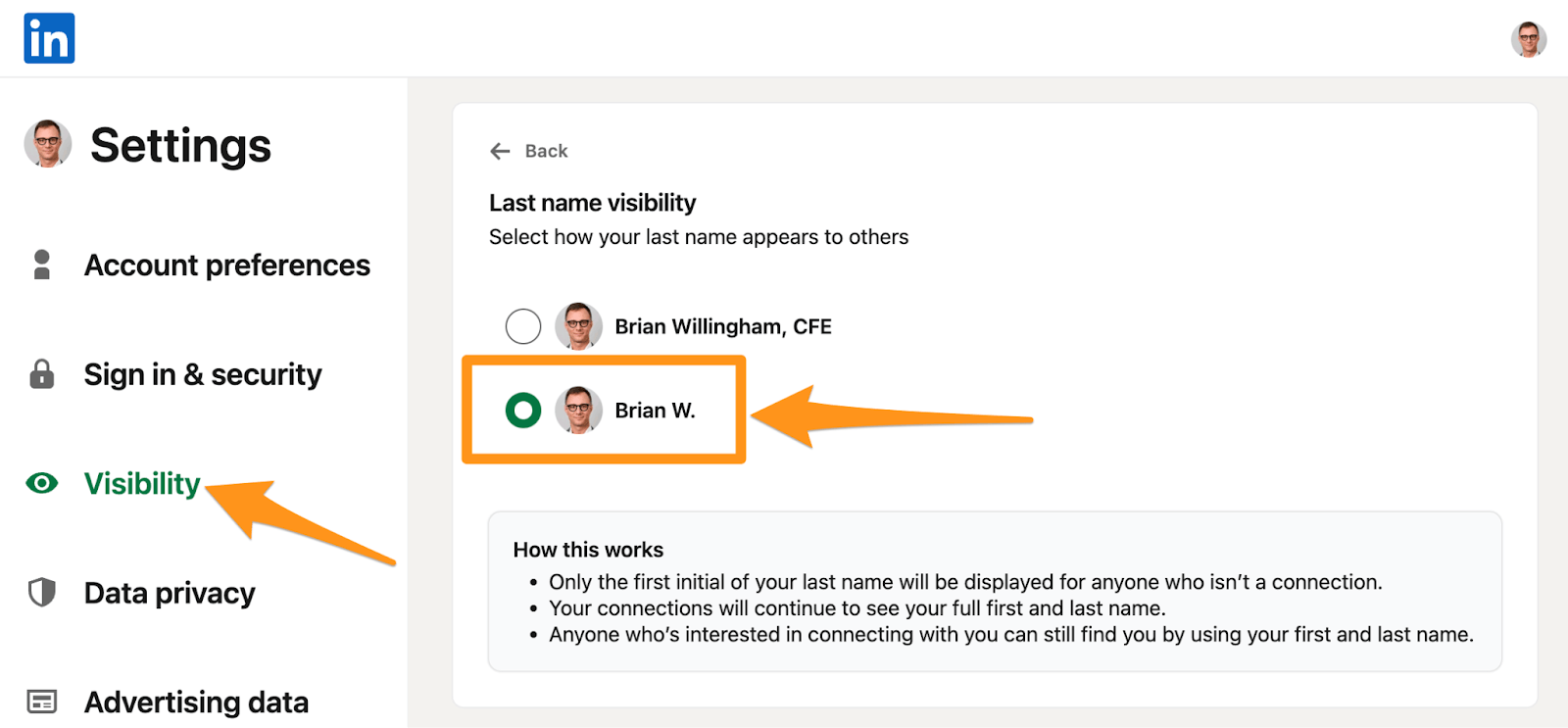
Every so often, you come across a LinkedIn profile that doesn’t contain the person’s full name—for example, “Joshua M.” LinkedIn users can choose to display only their first name and the first letter of their last name for anyone who isn’t a connection by going to settings and privacy, then visibility. 

I get it. 

Some people want to keep some semblance of privacy. 

While some may see the lack of last names as a hindrance and move on, I see it as a fun little challenge. 

The key is finding a pivot point—a point of inflection where you can combine multiple data points. For example, a middle name, date of birth or social media profile might find a data point to help identify who the person is when you pivot to another source. In my case, that might mean plugging the person’s middle name or date of birth into an investigative database to determine their full name. 

There are dozens of ways to determine a person’s last name or entire identity, some of which require deep research, but below, I’ve outlined some of the most common.  

I’ve included six examples of people named “Joshua M.” where no last name is revealed. Note that I’ve got nothing against anyone by the name Joshua. Or “Joshua M.” 

I just thought it would be a fun exercise to find examples of people with the same name. 

I have organized these from the most common way to the more uncommon ones. 

Without further ado …

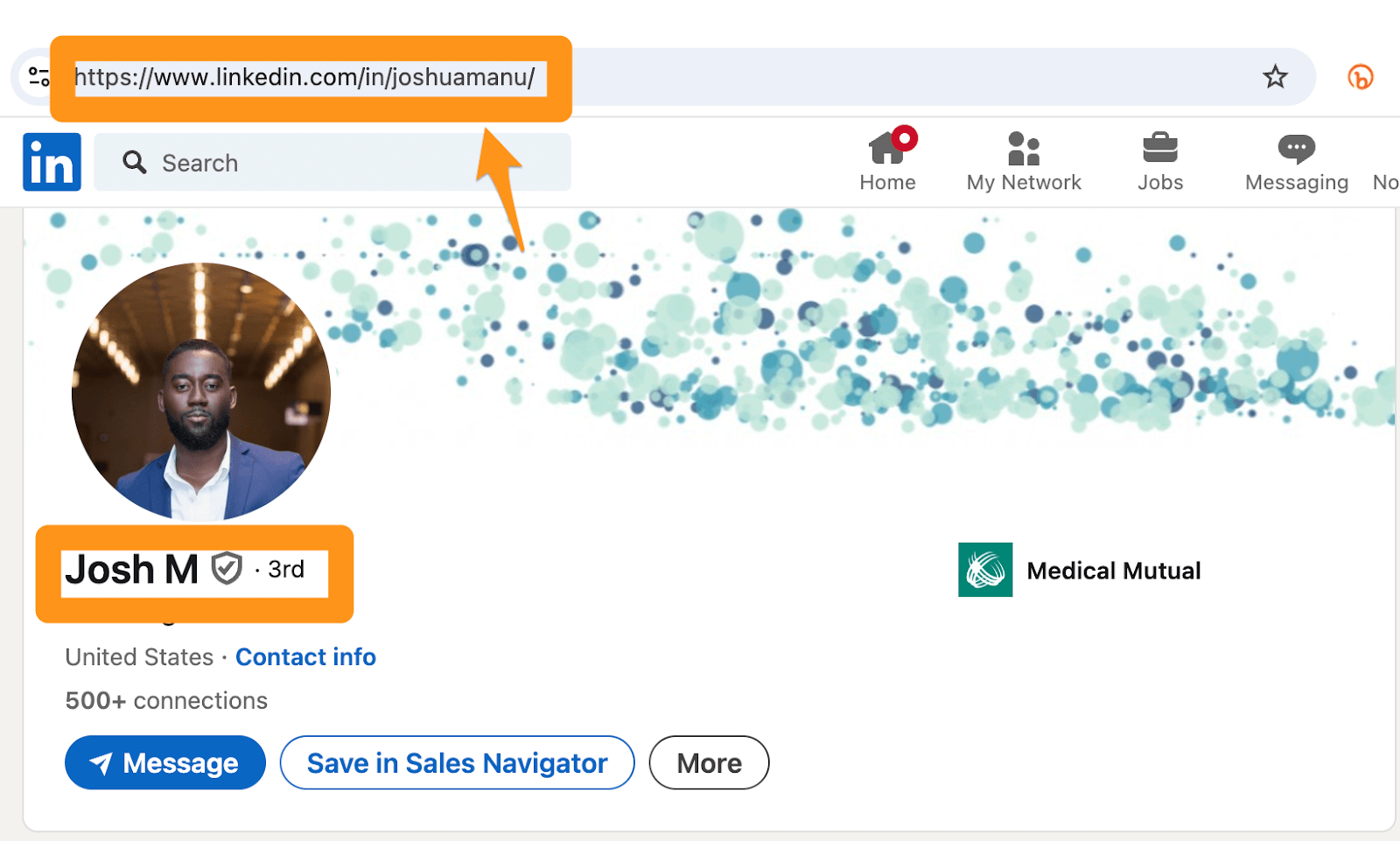
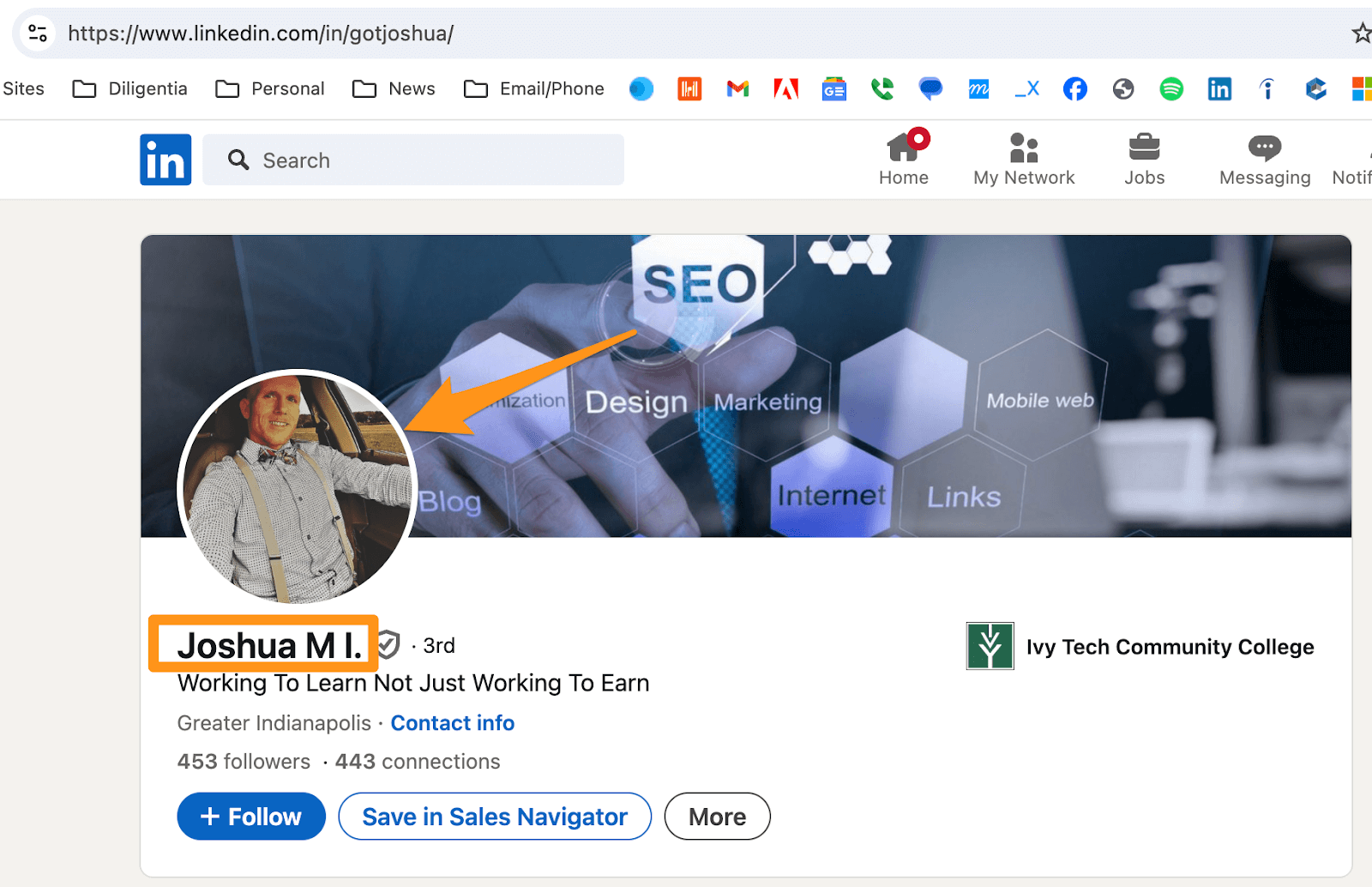
1 URL

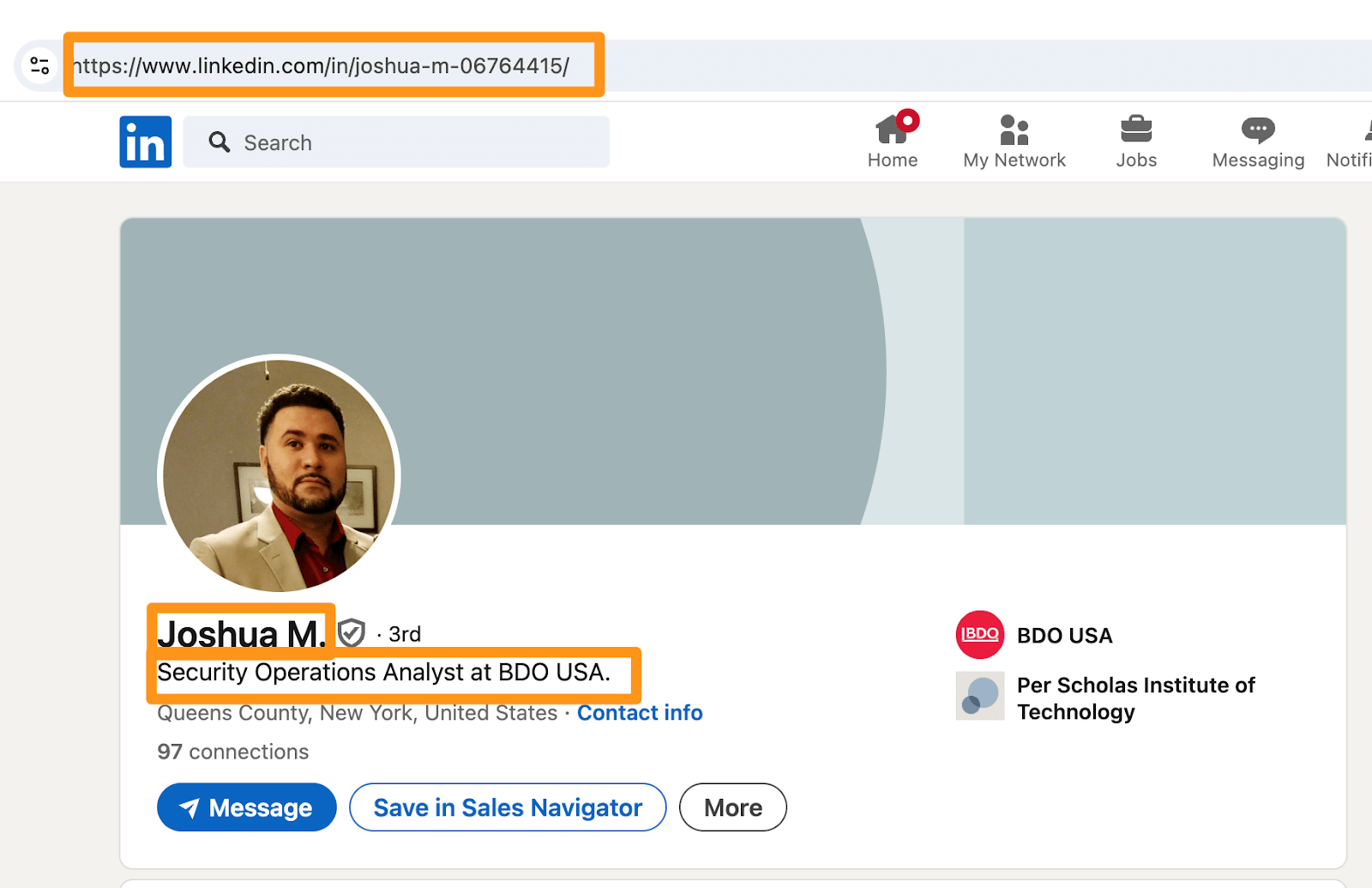
The URL is the easiest and most common way to determine a person’s last name. Quite often, when only the initial of the last name is listed, the URL has the entire last name. I suspect the URL was created long before the person decided to go private and forgot to change it. (Here’s how to change your public profile URL on LinkedIn.)

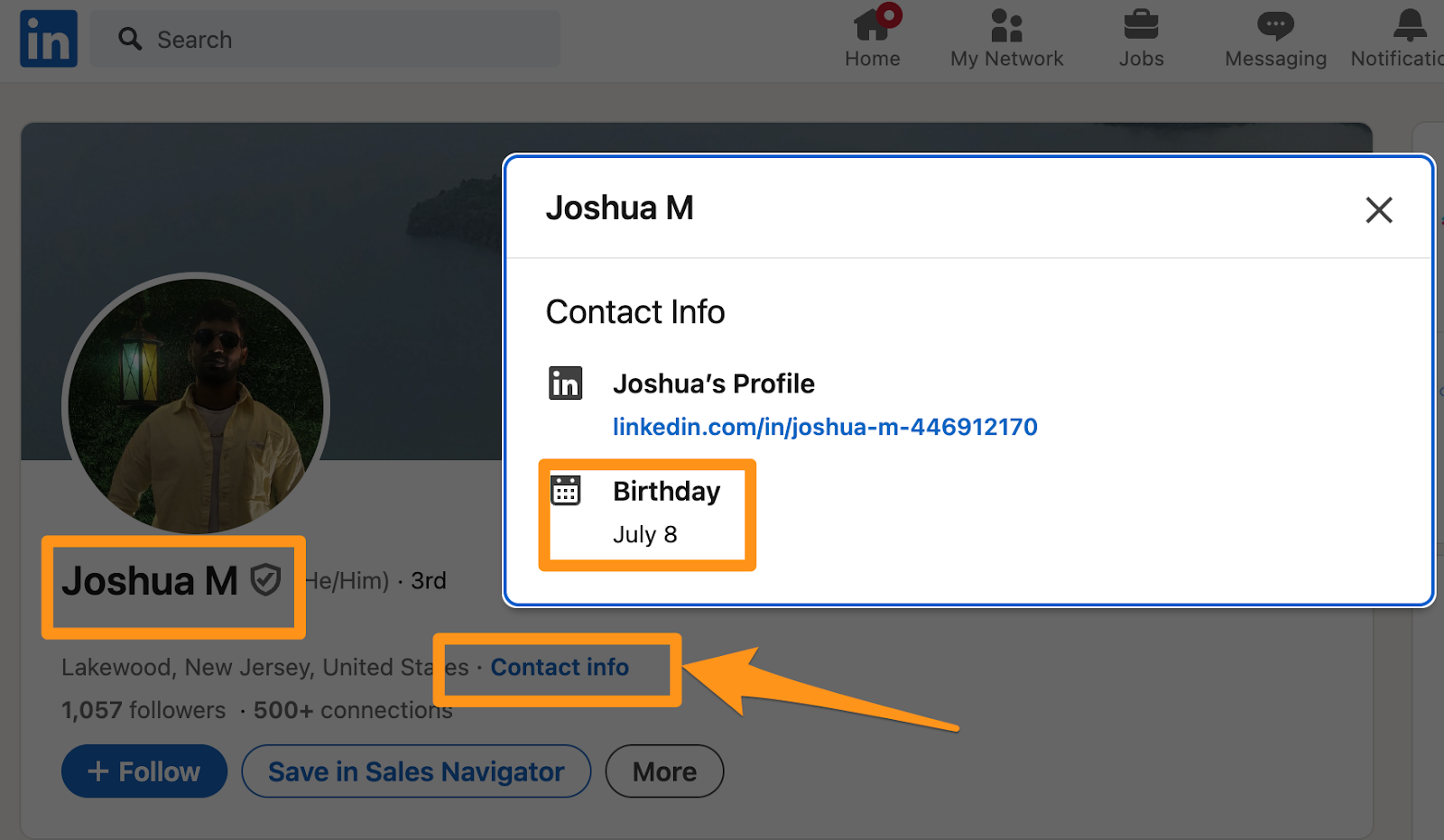
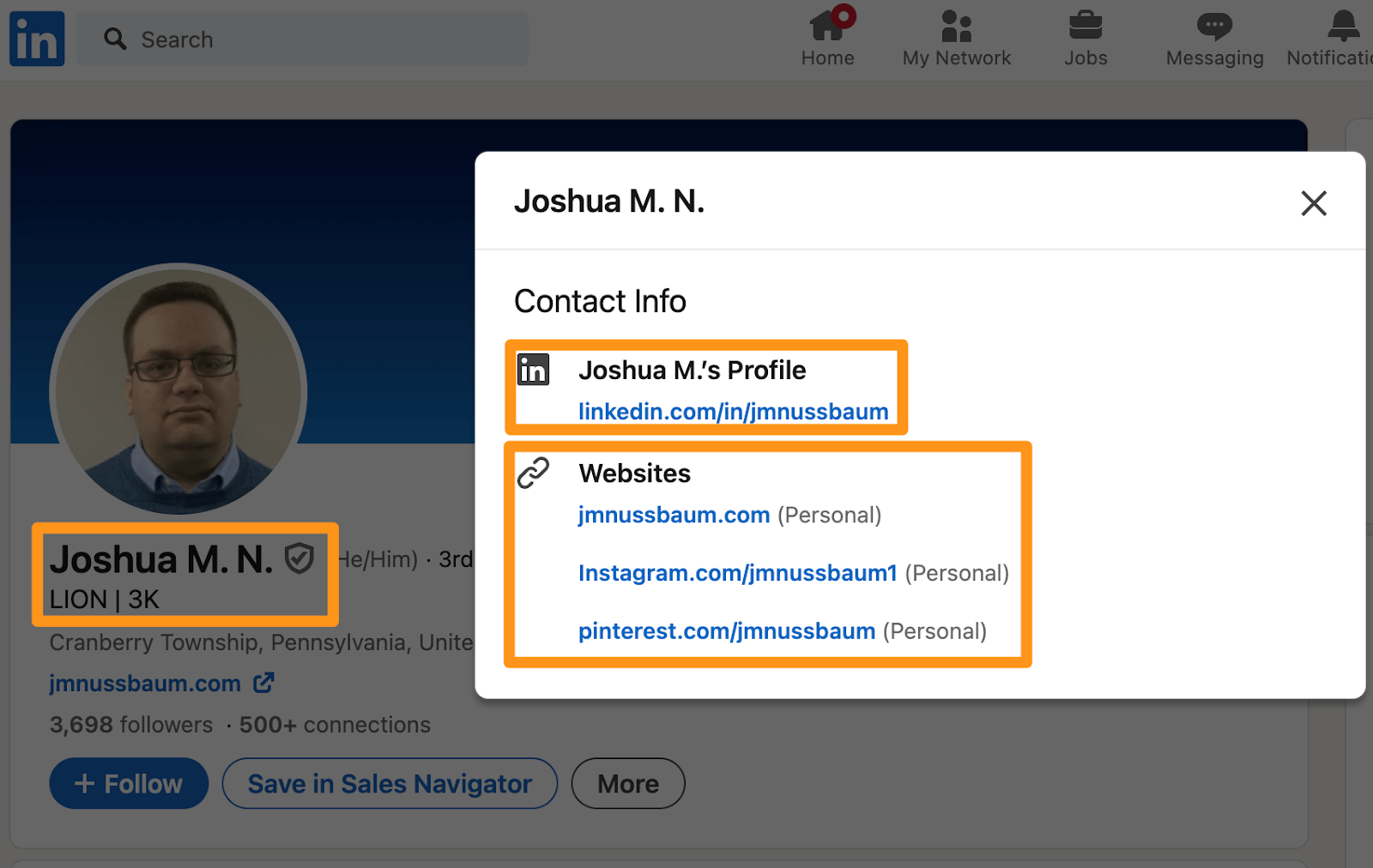
2 Contact Info

Every LinkedIn profile has a link to “Contact Info” underneath their name, which typically contains little information other than what is otherwise available on the profile. But in some cases, you can find an email address, date of birth, personal website link or handle on another social media platform, any of which you can use to pivot. 

3 Credentials

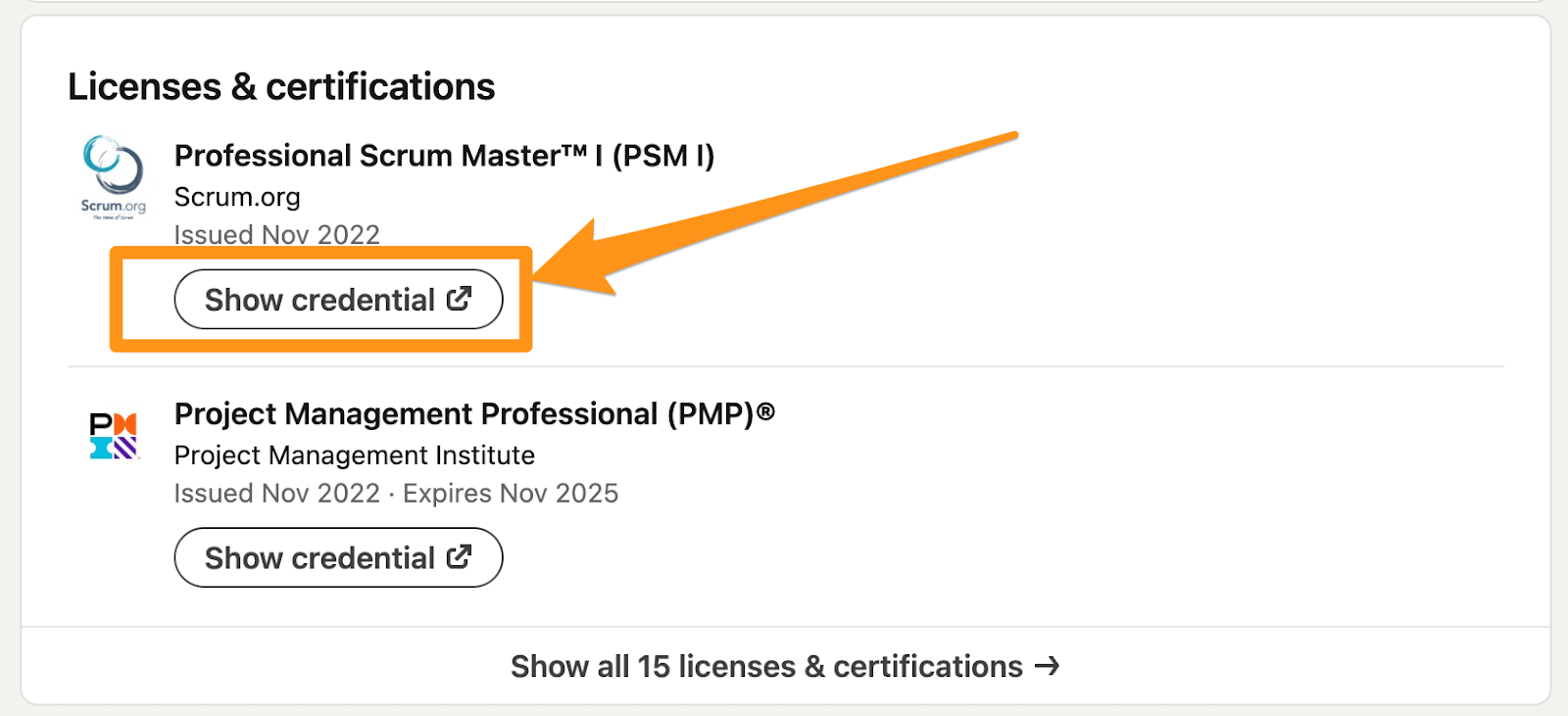
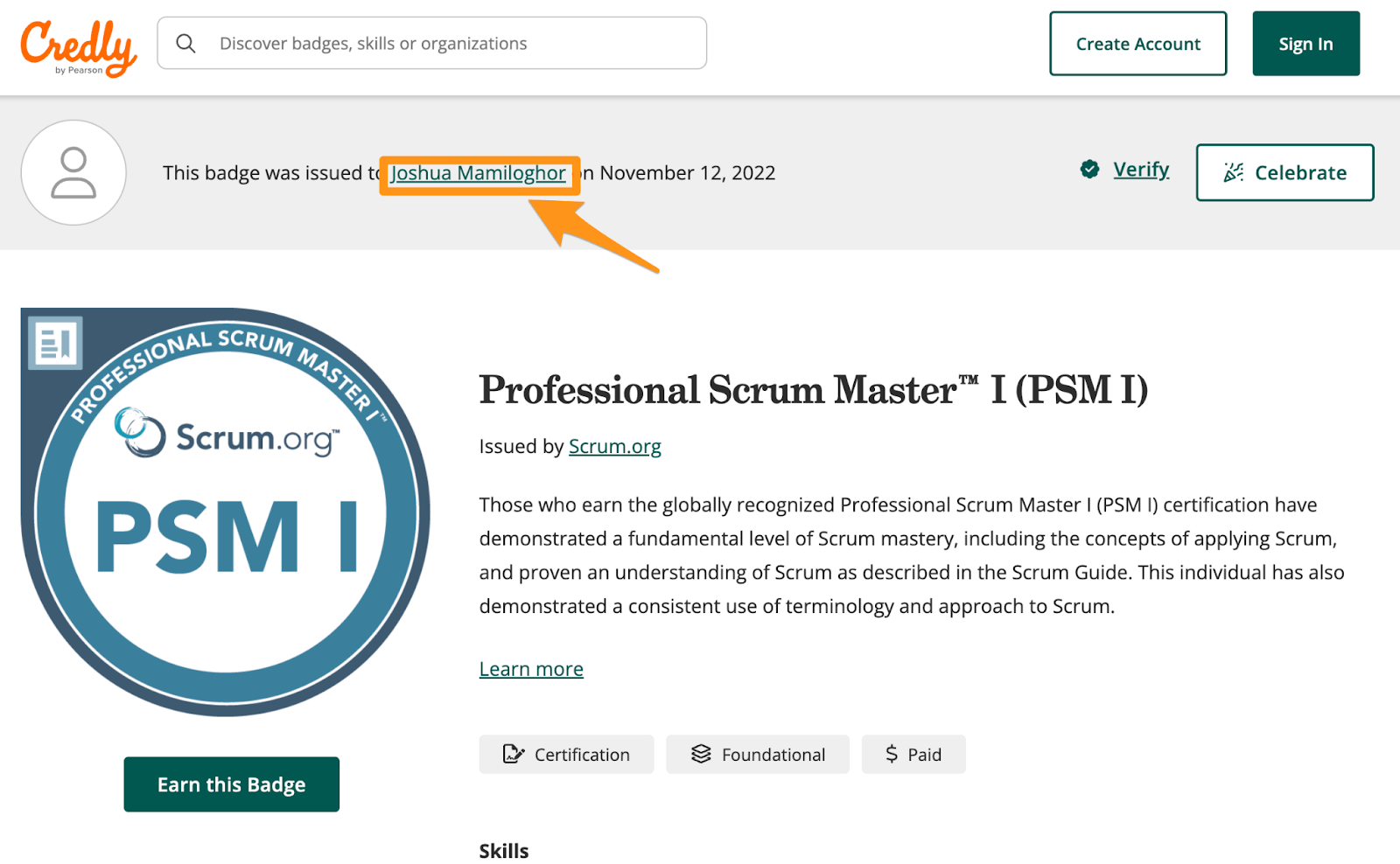
When the URL and contact info come up empty, a credential or professional license might be your answer. Since LinkedIn is a professional social networking platform, people often like displaying their credentials. More commonly, these credentials can be verified by simply clicking on the “Show credential” button, which brings you to a page that shows their full name. 

Voilà!

In other cases, it requires some manual effort. For example, a licensed nurse, a lawyer or a doctor can be verified through the local, state or national board by simply checking their license status. This can be a bit hit or miss, though, since not all of these websites allow you to search by just a first name. 

4 Creative Googling

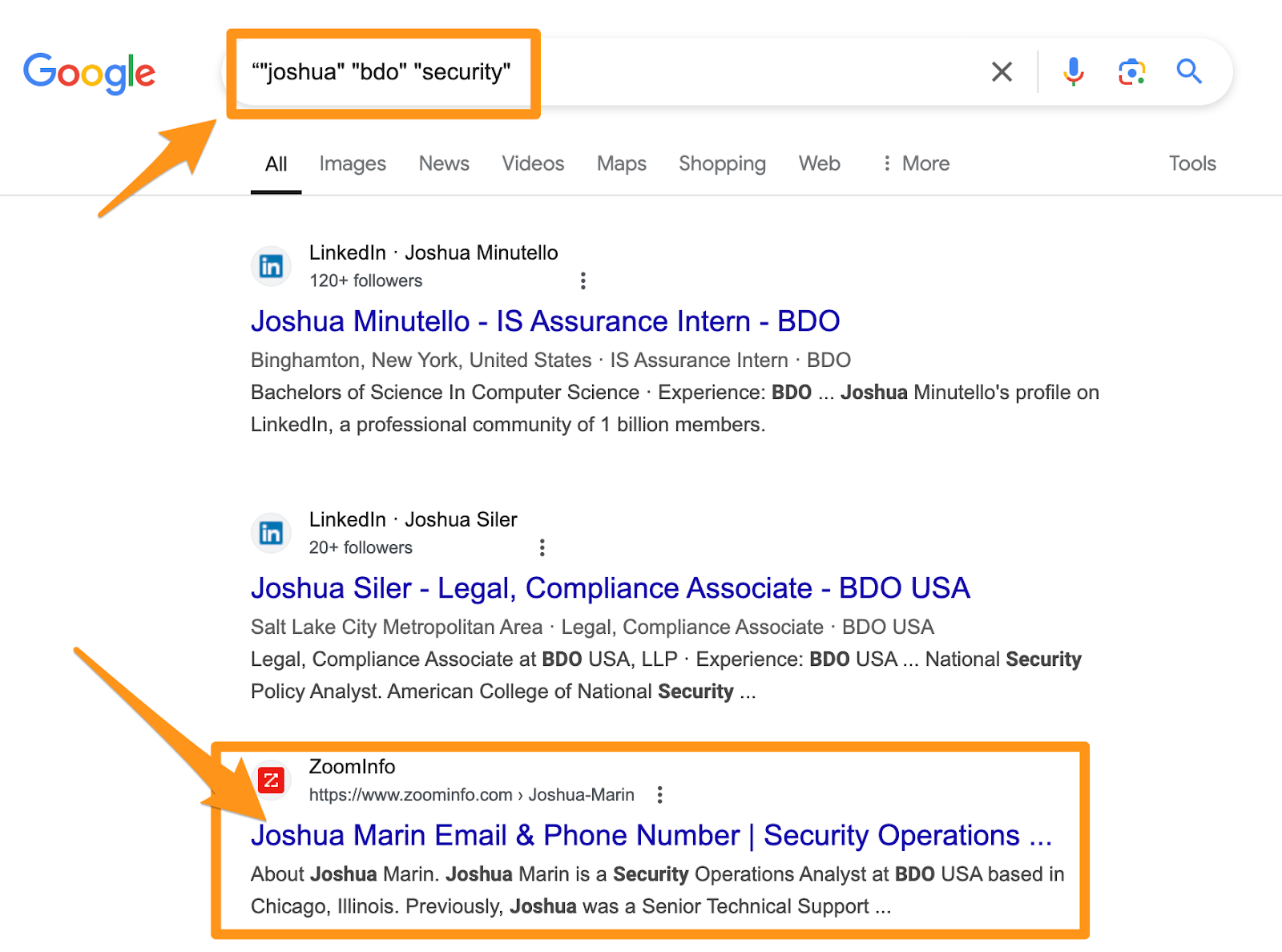
One of the best pivot points is finding unique data on a particular individual. So, even if you only have a person’s first name, like Joshua, but they went to Deep Springs College (the smallest higher education school in the United States) and you know their approximate age, you might get lucky with some googling. So, in this case, we have a guy who works in the security business, and with a not-so-creative but effective Google search, you may be able to identify another online profile for them.

5 Image Search

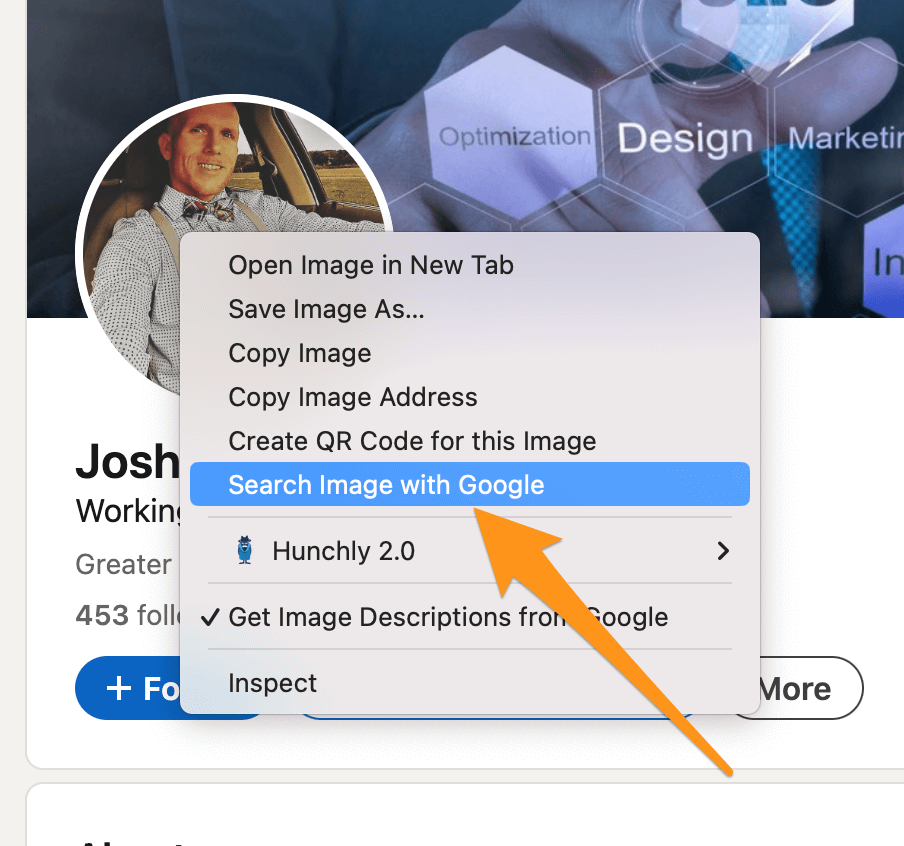
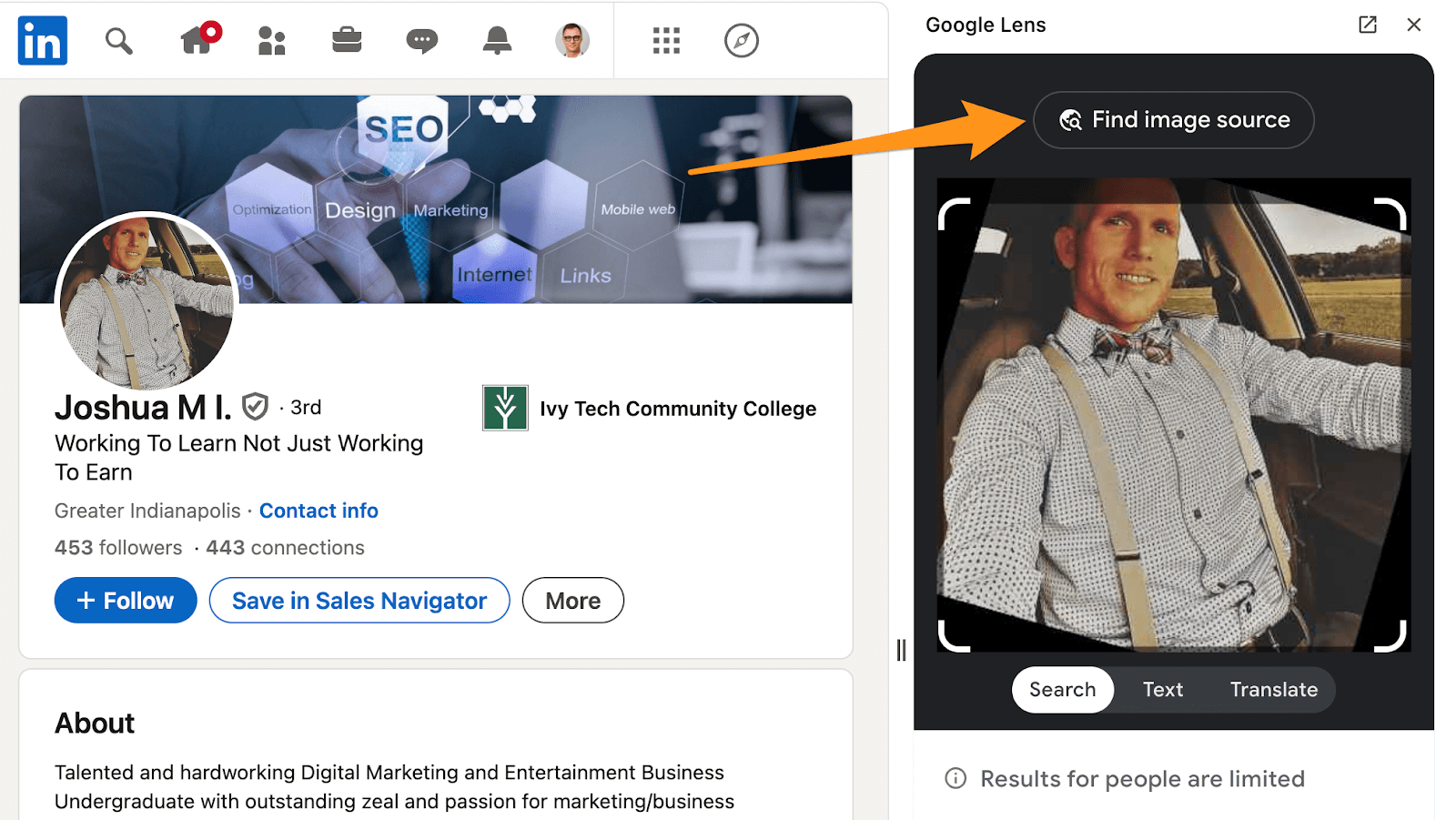
The image of the person can be a good source of leads. There may be some interesting detail in the photo, like a name tag or some unique item, that you can pivot from. You can use some commercially available facial recognition reverse image searches, like FaceCheck.ID or PimEyes. But you can also search the image in Google to see whether the photo has been used elsewhere. In this case, you can see that the user has a Pinterest account with the same exact photo and their full name.

Truth be told, Google image searches for people leave much to be desired. In fact, Google warns that “results for people are limited,” there are times when fortune may favor you.

6 Username

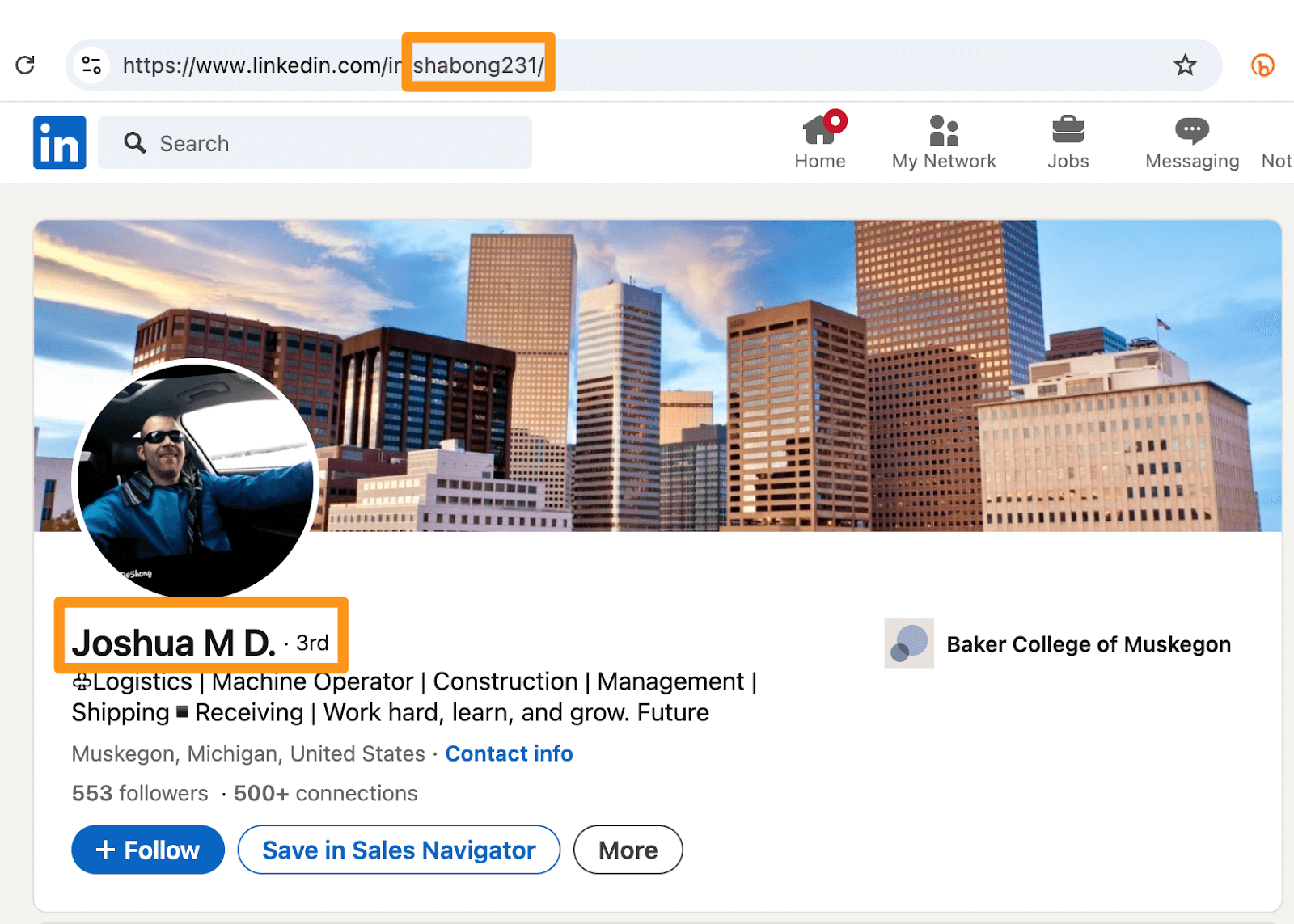
On many social media sites, people use their full name; on others, you will see users have a particular handle or username, like “babykitty1993.” LinkedIn users primarily use their real name in the URL. 

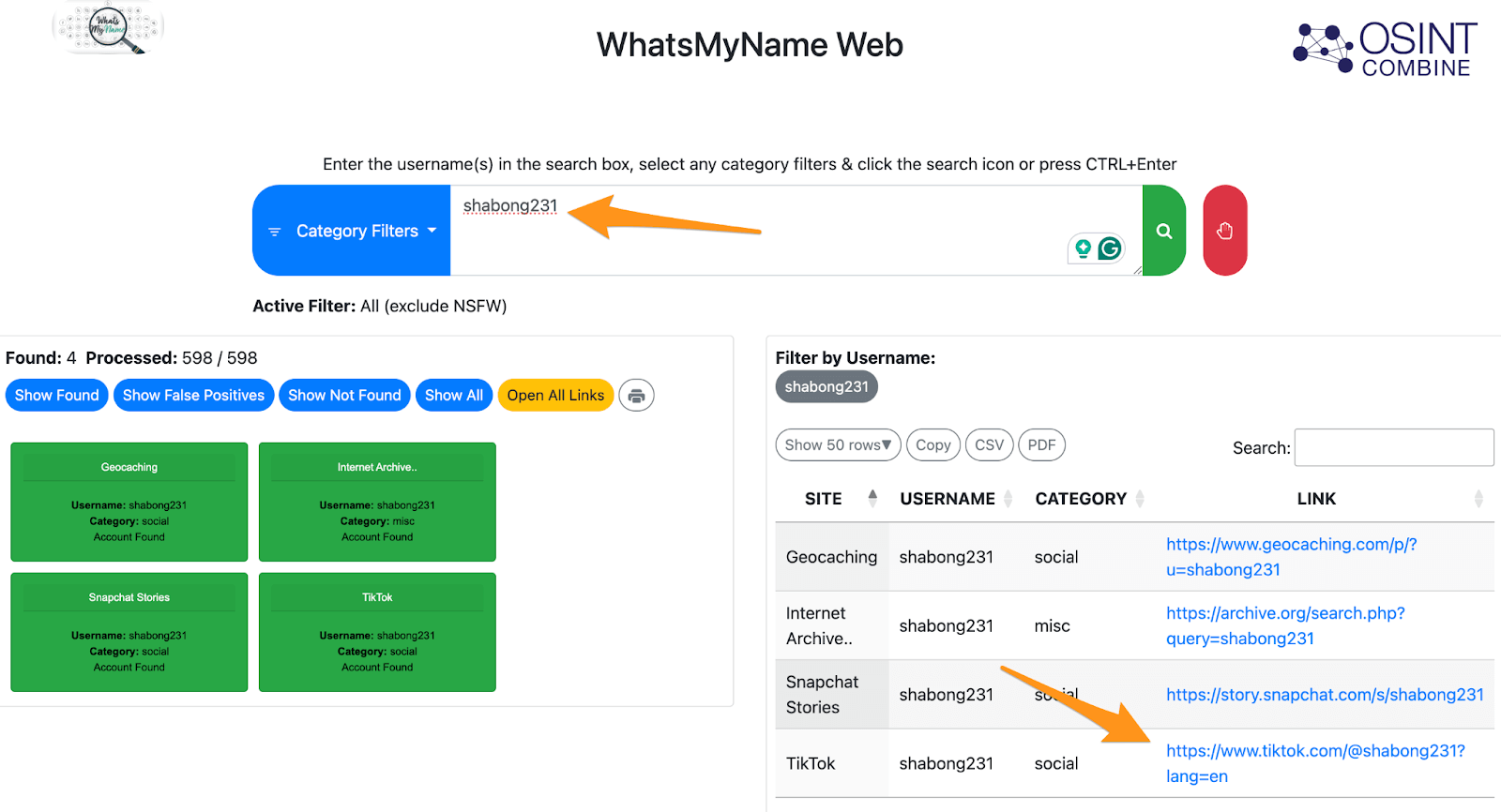
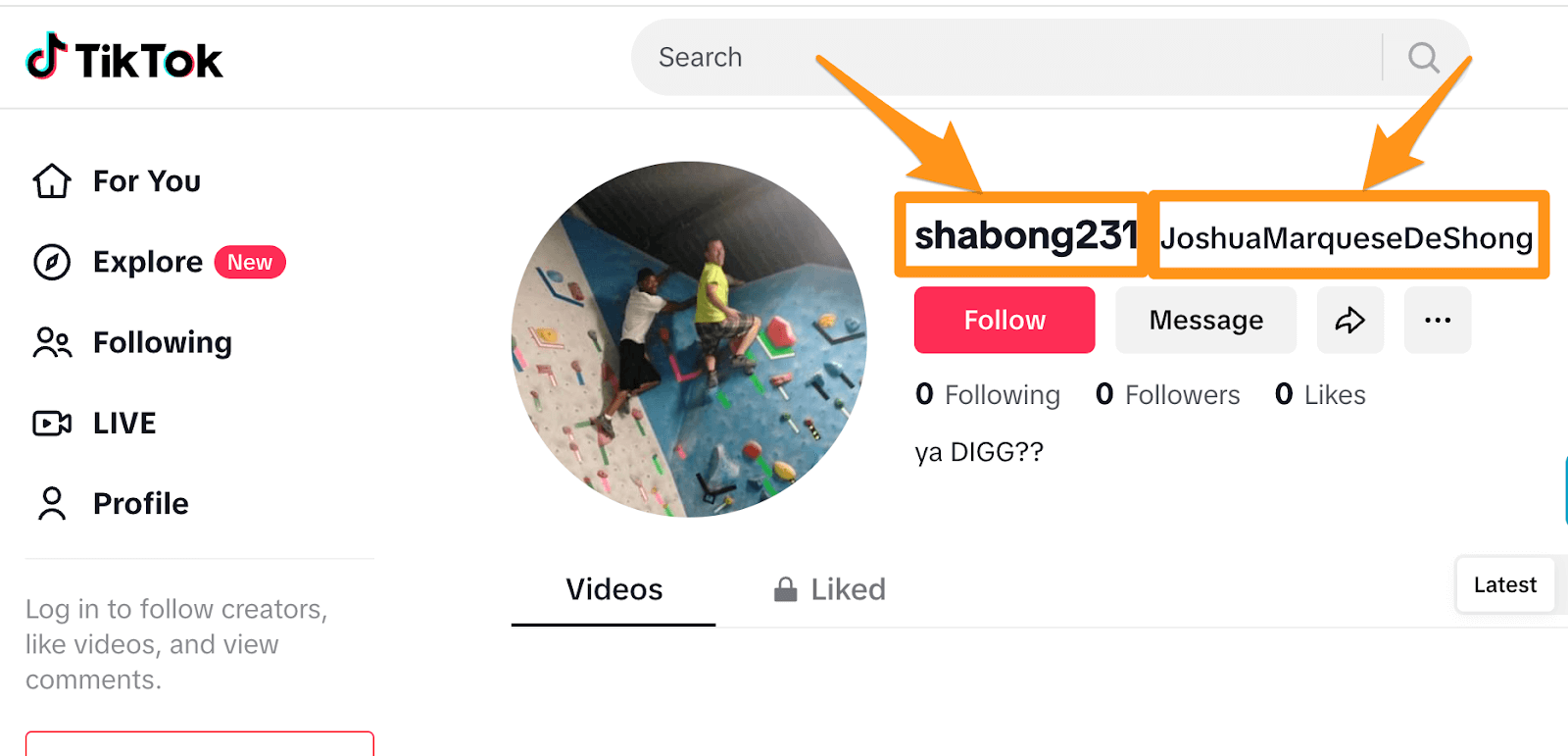
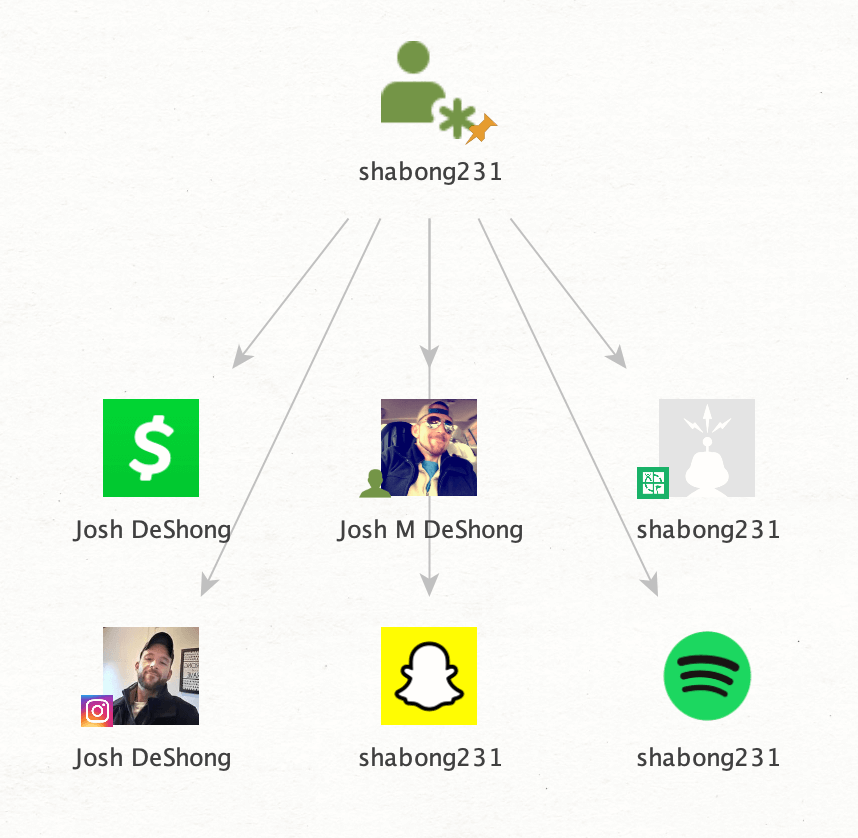
Usernames are typically unique to a person and are often used across multiple platforms. So when you get a username, it’s usually gold. In this case, the user has a particular username in the URL, and by searching that username on WhatsMyName, which searches across hundreds of platforms, you can find other platforms where the user has an account. You can even take it a step further and use OSINT.Industries or Maltego and ShadowDragon to further vet the username on other social media sites.

Screenshot from OSINT.Industries

Screenshot from Maltego / ShadowDragon

Closing

There you have it. Six simple ways to unlock the full name from a LinkedIn profile.

While LinkedIn offers a layer of privacy by allowing users to display only partial names, there are several creative and effective methods for uncovering the full name behind the profile. Whether conducting research, seeking professional connections or satisfying your curiosity, these six techniques can provide the insights you need without needing to resort to more-invasive tactics. 

Happy searching!

Enjoyed What You Read?

Join 2,000+ others to get insider tips and tricks delivered to your inbox from what has been voted the best blog in the investigative industry!